The Dearborn, Michigan-based automaker will make a series of changes to its line of vehicles and production facilities to focus on producing affordable vehicles that better align with customer desires, it announced Monday.
The company will also scrap production of certain larger EVs—including the F-150 Lightning, which it will retool as an electric vehicle with a gas-powered generator—as well as redouble development of smaller, lower-cost cars, including a midsize pickup truck in 2027.
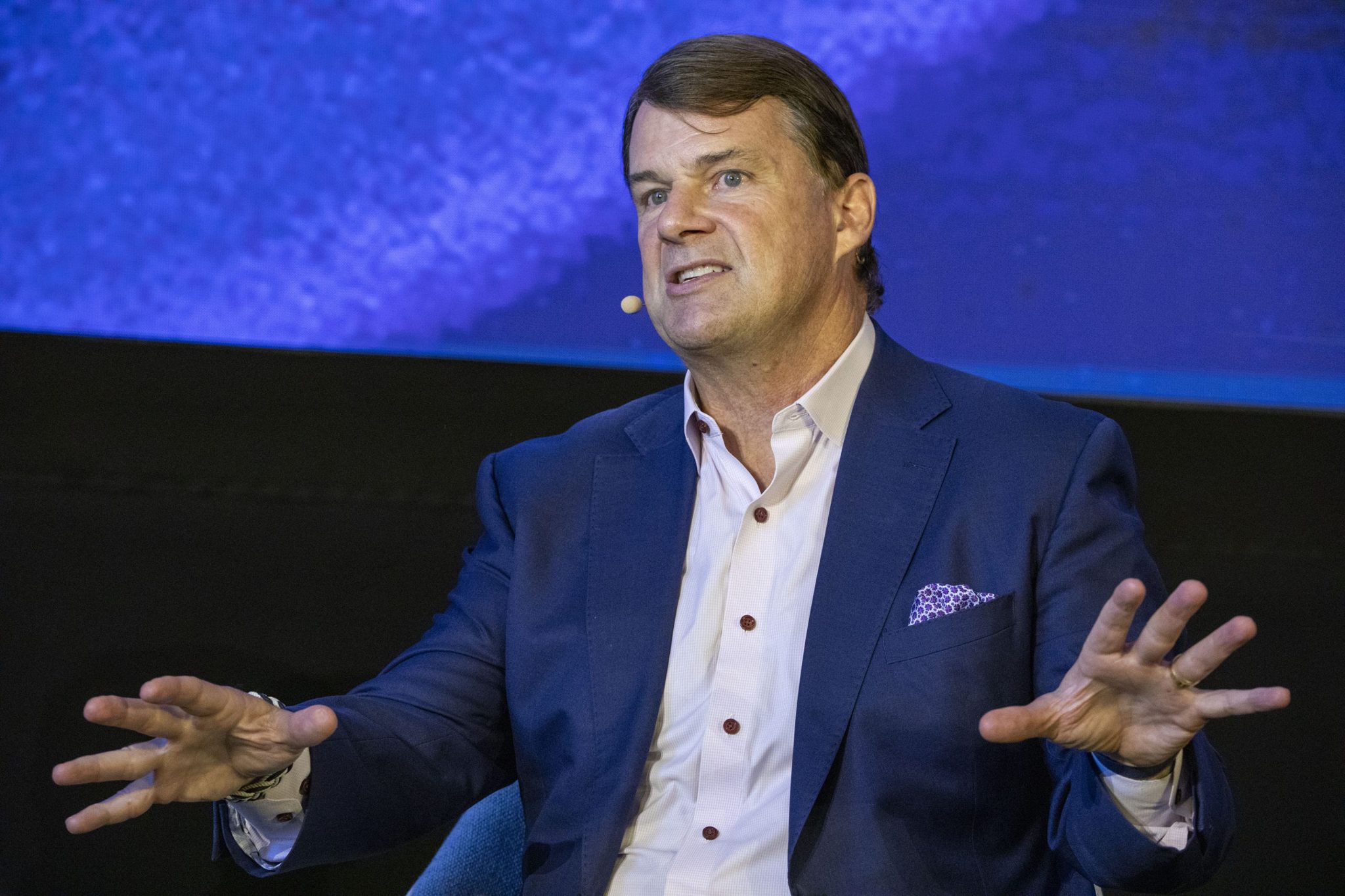
“This is a customer-driven shift to create a stronger, more resilient and more profitable Ford,” Ford president and CEO Jim Farley said in a press release. “The operating reality has changed, and we are redeploying capital into higher-return growth opportunities: Ford Pro, our market-leading trucks and vans, hybrids and high-margin opportunities like our new battery energy storage business.”
As EV demand trends downward, particularly following the end of the federal tax credit in September, Ford had struggled to sustain demand for its Model E line. Farley warned in September the end of the tax credit would throttle EV demand, cutting sales to 5% of total auto volume from roughly 10% to 12% at the time. Earlier this month, the automaker reported it sold 164,925 vehicles in November, a 0.9% year-over-year decline, with EV sales tumbling 61% to 4,247. With $3.6 billion in losses in the first three quarters of this year alone, Ford’s Model E division has lost more than $13 billion in less than three years.
In addition to regulatory challenges, Ford attributed the need to produce smaller, more affordable EVs as well as gas and hybrid vehicles, to battery prices remaining stubbornly high and an affordability crisis shaking consumer brand loyalty. The company said on Monday it would launch five new “affordable” vehicles by the end of the decade, four of which would be assembled domestically. The automaker intends to have 50% of its global vehicle volumes be hybrids, extended-range EVs, and full EVs, by 2030, up from 17% this year.
As a result of the changes to its production focus, Ford will also repurpose some of its facilities, including revamping its Tennessee Electric Vehicle Center into the Tennessee Truck Plant, which will no longer produce EVs, but rather manufacture the new Built Ford Tough truck models beginning in 2029. Its Ohio plant will similarly assemble new gas and hybrid cars in 2029.
Ford said it will employ thousands of workers in the next few years to staff its American plants. After concluding production for the 2025 F-150 Lightning model, Ford will redeploy one-third of that workforce to production on a gas and hybrid model of the F-150.
Ford will book $19.5 billion in charges, most of which will occur in 2026, as a result of the pivot, including an $8.5 billion asset write-down for its Model E division. The automaker raised its EBIT guidance for 2025 to about $7 billion, up from $6 billion, and it reaffirmed its adjusted free cash flow range of between $2 billion and $3 billion.
Ford has struggled to get returns from its ever-growing investment in its EV models, even as it continues to toy with strategy changes. Monday’s announcement follows Ford’s decision in August to invest $2 billion in retooling a Kentucky factory in order to manufacture EVs, as well as rejig its production process to a “universal EV platform” to lower the cost of its models.
Ford said it expects its Model E to be profitable by 2029; in early 2023, it predicted profitability by 2026.
At the time of the Kentucky factory announcement, analysts were hesitant to laud the company, warning that if Ford did not make a compelling product, its billions of dollars poured into factory changes and fresh vehicle production would be for nought, particularly as EV demand stays hot and cold.
“If the vehicles don’t appeal due to being EVs, then billions will be wasted,” Morningstar equity strategist David Whiston told Fortunein August. “That’s why you need a great product, great range, and lower battery cost and vehicle manufacturing techniques.”
He added, “The challenge is, do you have a great product or not? [It’s] hard to get excited about a vehicle you can’t see yet.”