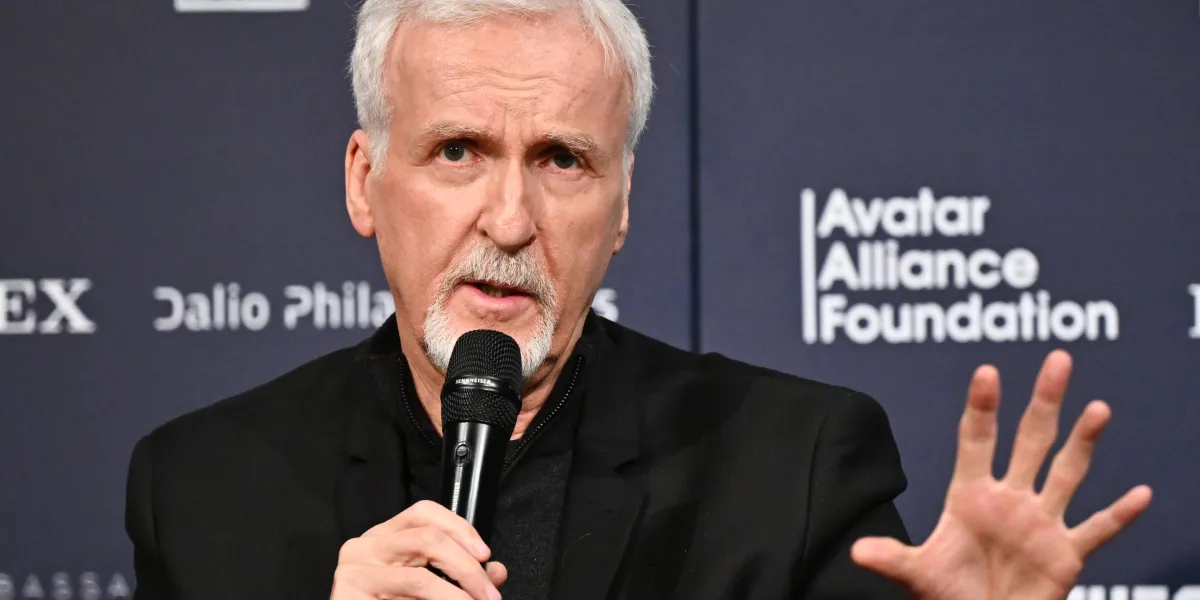
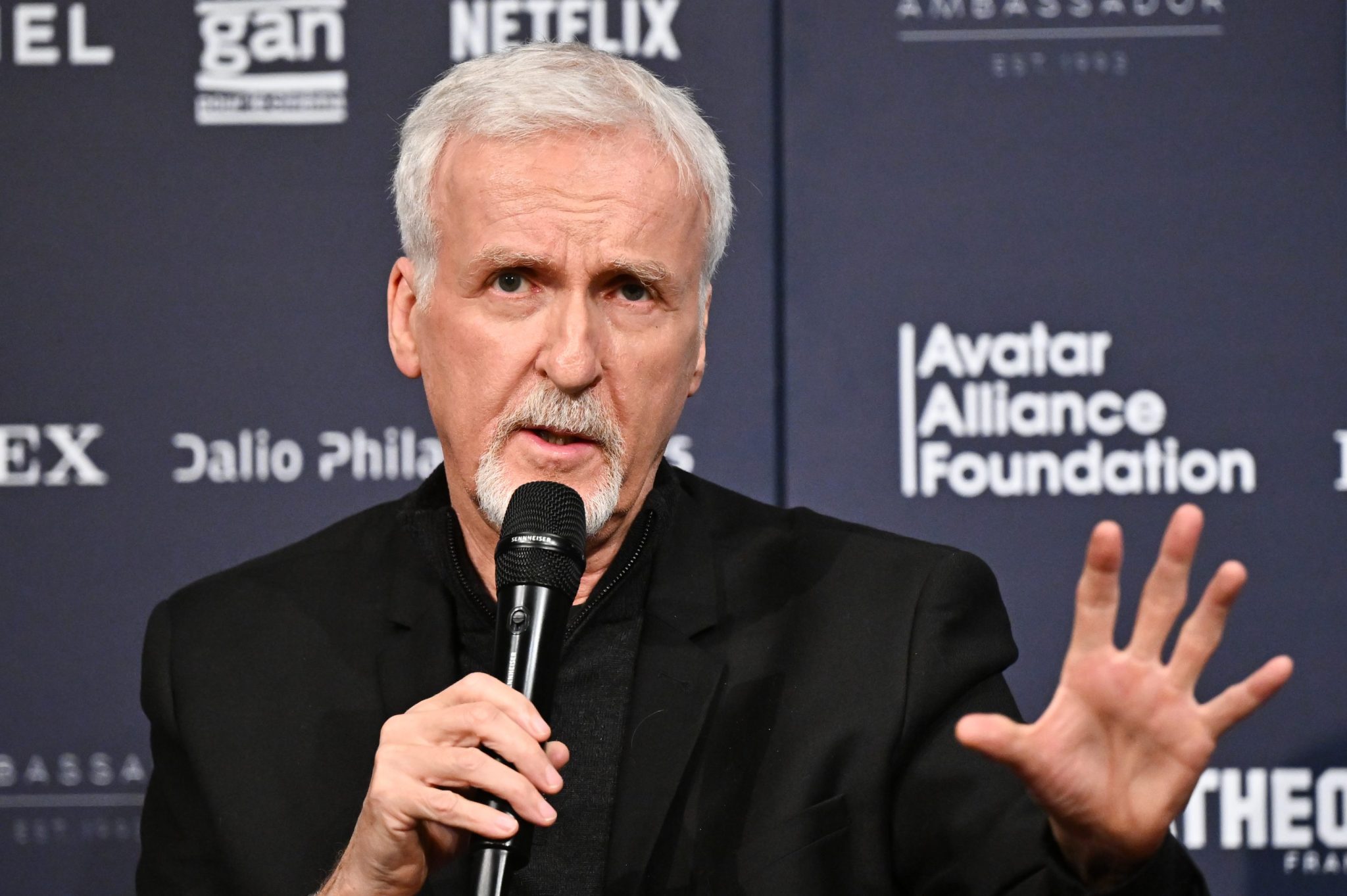
The world has been forever changed by Hollywood franchises like Titanic, Avatar, and The Terminator. But none of them would exist without one filmmaker: James Cameron.
The legendary director is the creative force behind several of the highest-grossing films of all time. Collectively, Cameron’s movies have earned nearly $9 billion at the global box office—a success that has slowly but steadily propelled his wealth into 10-digit territory.
Now, the 71-year-old’s net worth is estimated at $1.1 billion, according to Forbes. And with Avatar: Fire and Ash—the third instalment in the franchise—hitting theaters this week, that fortune is expected to grow even further.
This level of success once seemed unimaginable for Cameron. In his late teens, the Canadian native dropped out of Fullerton College, a California community college where he was studying physics. He was torn between two competing passions, science and art, but ultimately walked away from formal education altogether.
Instead, Cameron chose to chart his own path. He taught himself optical printing and special effects, and paid the bills by taking odd jobs as a truck driver and janitor.
“I was completely an autodidact,” he told The New York Times of his film studies. “I just went to USC and studied on my own time. I wasn’t enrolled. I just snuck in, went to the library and studied it all.”
That self-directed education soon paid off. Cameron was able to get his foot in the door in the film industry, and by age 30, he had his first big hit: The Terminator—a film that has since grossed more than $200 million worldwide.
The power of embracing the unknown
Chasing curiosity—and deliberately choosing the unfamiliar—is a mantra Cameron has followed from his teenage years all the way through his decades in Hollywood.
“I’m attracted, in case you haven’t noticed, by things I don’t know how to do,” he told CBS News late last month. “Because you grow and you learn. If I’m still making movies when I got an oxygen tube up my nose and I’m 87 or whatever, should I be that lucky, I want to still be doing things I don’t know how to do.”
That instinct to lean into uncertainty is one Cameron shares with fellow billionaire filmmaker Steven Spielberg, who has long argued that purpose rarely announces itself loudly or all at once.
“You have to every day of your lives be ready to hear what whispers in your ear; it very rarely shouts,” Spielberg said at the Academy of Achievement in 2006. “And if you can listen to the whisper, and if it tickles your heart, and it’s something you think you want to do for the rest of your life, then that is going to be what you do for the rest of your life, and we will benefit from everything you do.”
The rise of billionaires outside of the traditional mold
With his 10-figure net worth, Cameron now joins Spielberg and just three other filmmakers—George Lucas, Peter Jackson, and Tyler Perry—to be part of the exclusive billionaire club.
Traditionally, the word “billionaire” conjures images of tech titans like Elon Musk, Bill Gates, and Mark Zuckerberg. But that profile is rapidly changing as wealth creation expands beyond Silicon Valley and corporate boardrooms.
There are now more than 2,900 billionaires worldwide, controlling a combined $15.8 trillion in wealth, according to UBS Global Wealth Management’s Billionaire Ambitions Report for 2025. And many of them don’t have a founder or CEO at the top of their resume. Tennis legend Roger Federer, soccer star Cristiano Ronaldo, and The Terminator himself, Arnold Schwarzenegger, are among those to also reach billionaire status in 2025.
Federer, for his part, has urged young people to look beyond narrow definitions of success and pursue work that feels meaningful.
“All of you have so much to give,” he told graduates at Dartmouth College last year. “I hope you will find your own unique ways to make a difference, because life really is much bigger than the court.”