U.S. approves $10bn+ arms sales to Taiwan
- Package includes HIMARS, ATACMS, howitzers and drones
- Likely to inflame U.S.–China tensions
- China defence stocks jump on news
- Raises regional security risks
The Trump administration has approved a sweeping package of arms sales to Taiwan valued at more than $10 billion, sharply escalating military support for the island and injecting fresh tension into already strained U.S.–China relations.
The U.S. State Department announced the sales late Wednesday, coinciding with a nationally televised address by President Donald Trump, although the president did not reference China or Taiwan in his remarks. The package comprises eight separate agreements and represents one of the largest single tranches of U.S. military assistance approved for Taiwan.
At the core of the deal are 82 High Mobility Artillery Rocket Systems (HIMARS) and 420 Army Tactical Missile Systems (ATACMS), together valued at more than $4 billion. The systems mirror weaponry supplied by Washington to Ukraine during its conflict with Russia and are designed to enhance Taiwan’s long-range strike and deterrence capabilities. The package also includes around $4 billion worth of self-propelled howitzer systems and associated equipment, along with drones valued at more than $1 billion.
The announcement is likely to provoke a sharp response from Beijing, which considers Taiwan a breakaway province and has consistently opposed U.S. arms sales to the island. Such moves are typically met with diplomatic protests, military signalling and, at times, retaliatory measures targeting U.S. interests or companies.
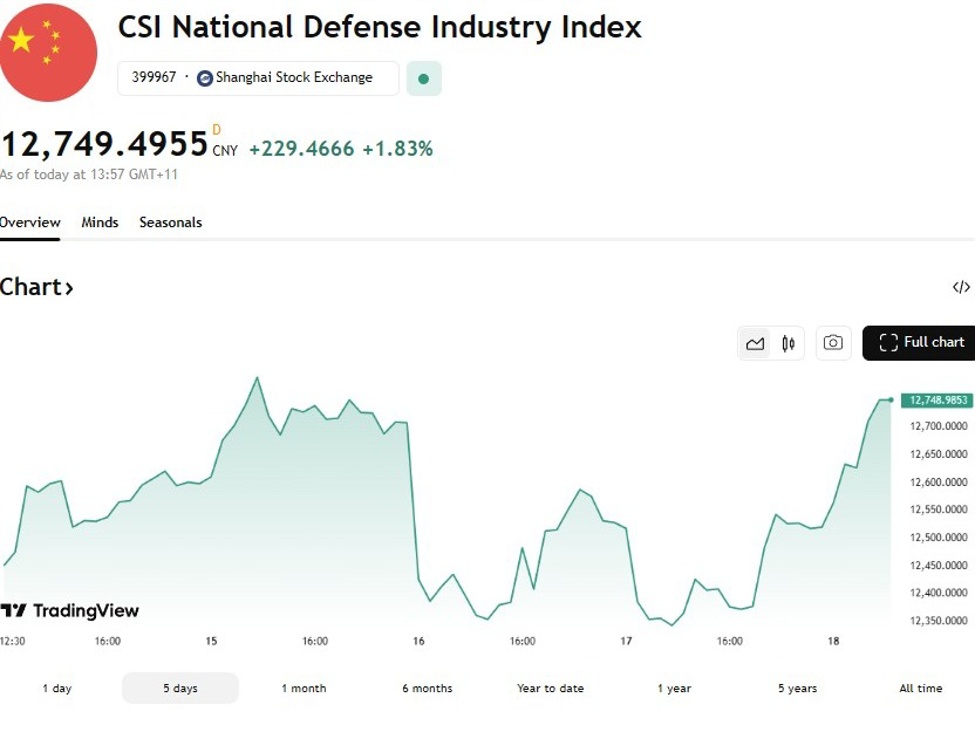
Markets in China appeared to anticipate heightened regional tensions. China’s CSI Defence Index rose more than 2% to a two-month high following news of the approvals, reflecting investor expectations of increased domestic defence spending and procurement in response to rising geopolitical risks.
For Washington, the package reinforces a strategy of bolstering Taiwan’s defensive capabilities without formally altering long-standing policy frameworks. For Taiwan, the systems enhance deterrence but also raise the stakes in cross-strait relations at a time of elevated military activity in the region.
While the arms sales are unlikely to trigger immediate market dislocation beyond the defence sector, they add to a broader backdrop of strategic rivalry that continues to shape regional security, trade flows and investor sentiment across Asia.