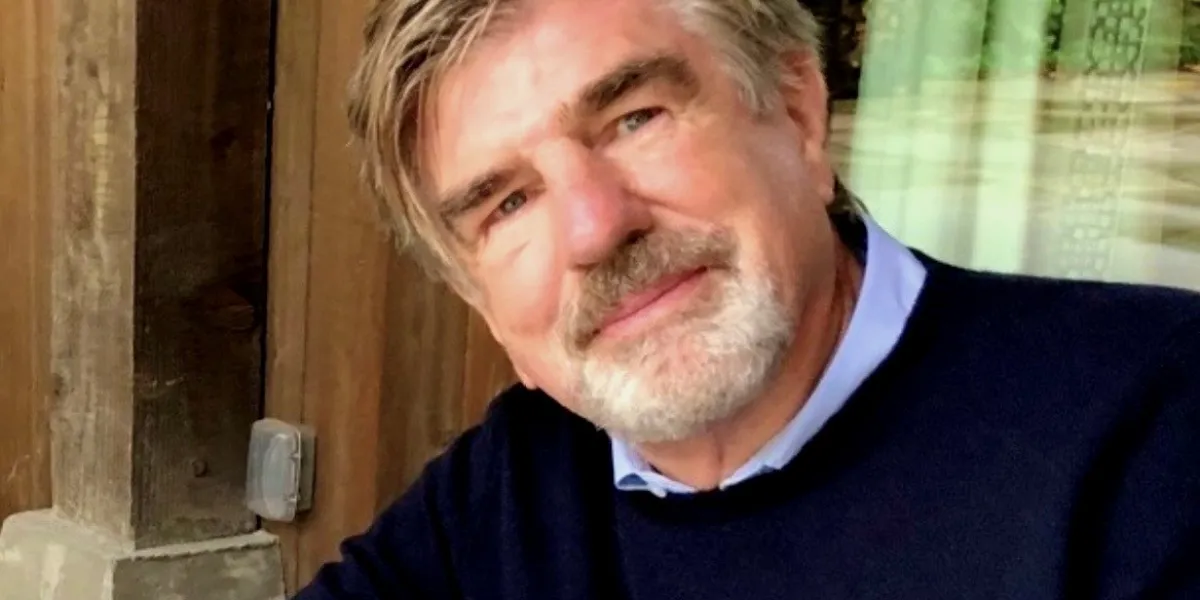
Tom Freston has never been a typical media executive. Freston began with a countercultural spirit that shaped an adventurous career spanning from co-founding MTV to leading Viacom and Paramount Pictures. After spending 26 years at Paramount—now caught up in the $100 billion bidding for Warner Bros Discovery—he remains a defining figure in the evolution of modern entertainment.
The 80-year-old executive, who sounded remarkably youthful in a phone interview with Fortune, harkened back to the days in the 1960s and ’70s when “freedom was in the air.” The vibe was very different then: “It was like, I don’t want to work for ‘the man,’” he told Fortune, referencing a formative summer when he worked as a bellboy in Lake George in the Adirondack foothills of upstate New York. “I had sort of been on the traditional conveyor belt: go to college, get out, get a job. And then I met all these sort of bohemian characters who — their idea was, you didn’t have a career. You kind of improvise your life. You know, the idea was to kind of maximize experience and do interesting things and take some risks.”
Freston added that he was a big fan of both “beat” and libertarian literature, the former made famous by Jack Kerouac and Allen Ginsberg and the latter by Ayn Rand. They both had common themes, he said: “experience and being an individual were important.” As he writes in his new memoir Unplugged, this improvisational journey took him to Afghanistan and India, a business career that was “wild and fulfilling and for a long time profitable.” But it was also “really hard work” and was “really humbling,” adding that “humility is not a thing you see a lot of in the entertainment business.” He didn’t comment directly on the major figures in the current bidding war for Warner Bros., but the example of David Zaslav moving into famed producer Robert Evans’ Hollywood mansion is a prime example of the neo-mogul mindset.
Freston has long been semi-retired, advising media brands such as Oprah Winfrey and Vice while serving as the chairman of the ONE Campaign, the anti-poverty effort in Africa led by U2’s Bono (a friend, Freston said).
As Freston rolled back the years with Fortune and looked out on a much-changed media landscape, he briefly donned his antitrust hat to analyze the bidding war between Netflix and his old company Paramount for Warner Bros. Discovery and how things got to this point. “No matter which way it goes, there’s really nothing in it for the consumer,” Freston said with a sigh.
How Netflix followed in MTV’s footsteps
Freston observed that the media industry is now dominated by “monolith companies … increasingly run by tech people, where data becomes more important than instinct.” He highlighted A24 and Neon as two companies that remind him of the old, almost artisanal MTV, where refreshing the creative instinct became core to success, because Viacom’s once-dominant basic cable lineup appealed to a transient youth culture. “Our challenge was: how do we continue to innovate for these changing demographics that would pass through us, whether it be on [Nickelodeon] or on MTV or Comedy Central or whatever.”
Just 33 years old when he started leading MTV, Freston pointed out that the original audience was Baby Boomers like himself, which was then replaced by Gen Xers with different sensibilities, and so on. Talent can’t be overlooked, Freston argued, because he wanted a creative and “cutting edge” mentality that would stay hooked up to a youth culture that turned over every five years or less. “I didn’t put a salesperson in charge, which would be a traditional way in the television business. I had a creative person in charge.”
In many cases, MTV was someone’s first job, “and they’d learn some things and leave in a few years, and they’d be replaced with another younger person.” He argued that keeping the employee population young made it easier to reinvent the network periodically. When the end came shortly after the millennial generation’s heyday, exemplified by the Total Request Live program, Freston explained that the same forces afoot in Warner-Netflix-Paramount were leaving MTV exposed to the digital wave.
“We were precluded from using our music video library online,” Freston said, explaining that the same licensing deals that had enabled MTV to dominate youth culture for decades proved its undoing when YouTube disrupted how young people liked to watch music videos. “The real players turned out to be the social networks and it was hard to invent one,” he added. “You had to buy one of the ones that were out there, and the only one that ever really got bought was MySpace, and that kind of disintegrated.” The other social-media networks were able to build “unbelievable franchises because they were able to run at losses for years without Wall Street piling on, which would have happened for any of the legacy media companies.”
Reflecting on his own “missed opportunity” to bridge this gap, Freston recounted Viacom’s attempt to buy Facebook when the platform had only $9 million in revenue. He recalled Mark Zuckerberg’s visit to discuss a potential acquisition: “I remember he had a hoodie on and flip flops. It was February in Times Square. And he was younger than anybody on our young staff.” While Viacom was the first to make a bid for Facebook, Freston believes Zuckerberg was never serious about selling, more that he was “curious about, what’s a youth media company today look like.”
The MTV-Netflix cycle
Netflix and other platforms, of course, achieved massive scale by playing the upstart MTV role. “They were able to run at a profit because they were these new growth businesses. Wall Street turned a blind eye to losses for a long time. They got forgiveness on that score.” He added that they began to “vacuum up IP” without necessarily having deals in place. While Netflix went the more traditional licensing route when Hollywood didn’t see it as a threat, Freston noted that MTV was prevented from fighting YouTube’s viral videos with its own digital music presence, almost like a revenge of the record labels that wrote those terms into the licensing deals.
Freston said he doesn’t think any legacy media company distinguished itself in meeting the digital challenge with full force. “Disney did the best job, I think, which was basically tripling down on their content capabilities in trying to make themselves more invincible and more crucial for the streaming services and for the digital onslaught to build up the biggest array of IP.” He agreed that it was ironic in some senses that Netflix seems to be following that playbook with its pursuit of Warner Bros. He said he sees the same old cycle turning: “The forces for this deal seem to be inexorable. Consolidation seems to be the strategy for the moment.”
Today, Freston said he sees his former empire, MTV, as a cautionary tale of what happens when that emphasis on creativity gets severed. He lamented that leadership has “run it into the ground over the last 15 years” by replacing music-obsessed staff with “traditional kind of Hollywood showmaker type people,” replacing hungry, music-obsessed creatives with a shorter-term mindset. His most symbolic grievance is the removal of the words “Music Television” from the logo—a decision that “drove me crazy.”
Freston said he was grateful for his exciting ride at the helm of Viacom for many years, and grateful for some of the genuine friendships that emerged from his time running MTV. He highlighted Bono specifically, with whom he has worked in a chairman role for ONE and (Red), fighting poverty and AIDS in Africa. He said he knew a bit about Africa and poverty issues from his time working and living in Asia and also traveling in Africa, but he also mentioned good relationships with certain people he clicked with: John Mellencamp, David Bowie (a “fascinating character”) and Jon Bon Jovi.
In his laid-back style, Freston added that he wasn’t sure when he sat down to write that there’d by “any kind of reasonable narrative to my life, which at one point seemed to be all these disparate parts.” He came away thinking that his career had been in pursuit of a couple common objectives: trying to “live and exist off the mainstream, more on the edge of the road,” where things are more interesting and independent.
The “beat-poet” executive said he still believes in the MTV brand, and it could come back with some creativity, maybe by positioning MTV as a human curator to counter “algorithm-type music consumption.” But he knows he isn’t the man to lead it. “It’s really a young person’s business,” Freston said, suggesting the reins should be handed to a 25-year-old who can operate with the same risk-taking humility he learned decades ago on the roads of Asia.

Editor’s note: The author worked for Netflix from June 2024 through July 2025.