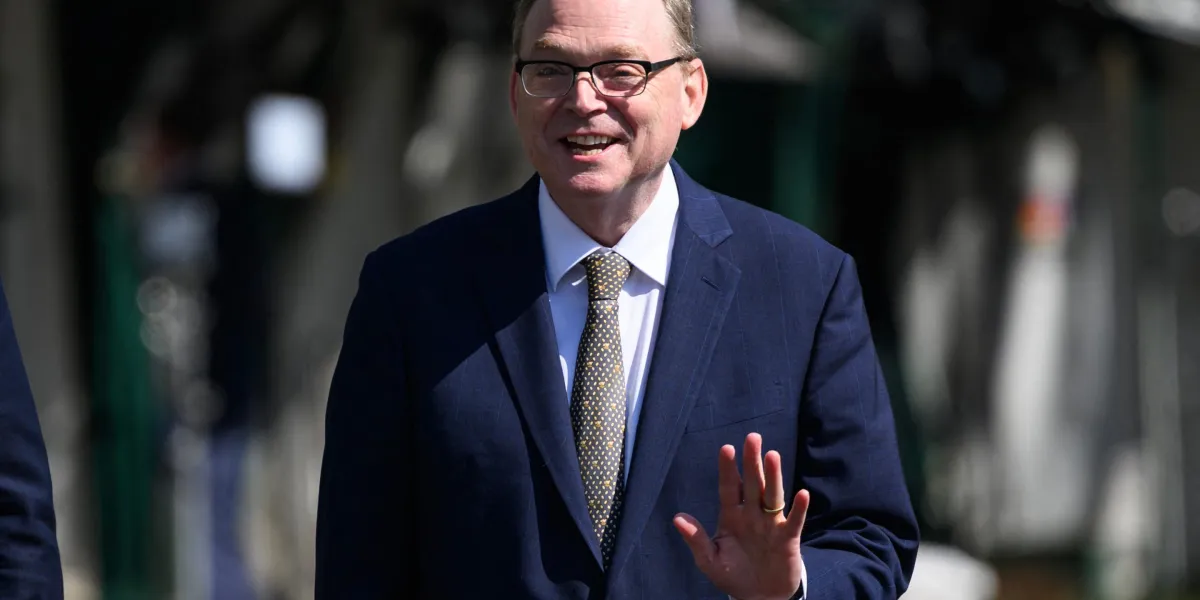
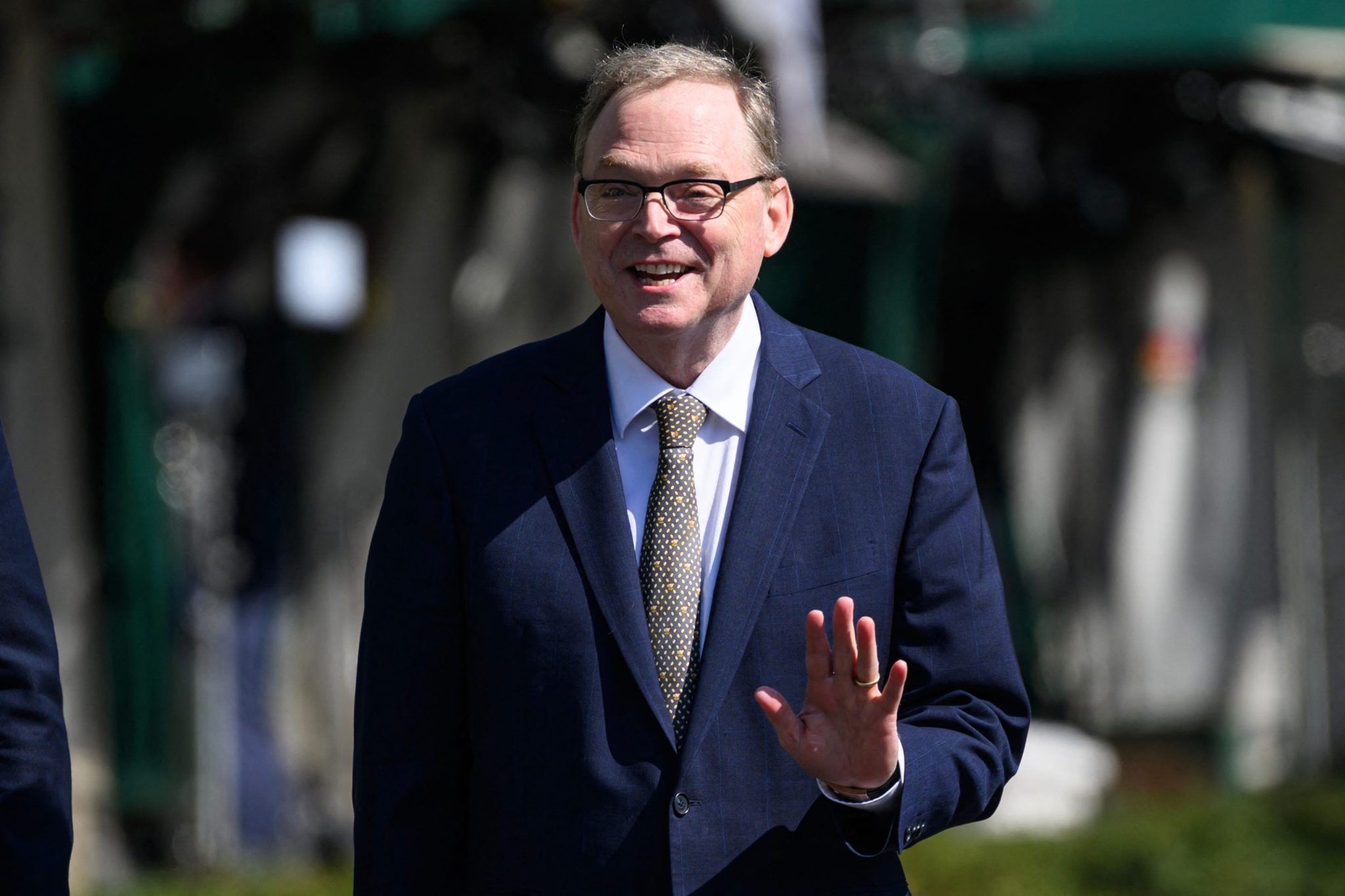
National Economic Council Director Kevin Hassett offered more of a practical reason than a legal argument on the future of President Donald Trump’s global tariffs.
Lower courts have ruled that the so-called reciprocal tariffs invoked under the International Emergency Economic Powers Act are illegal, though the Supreme Court will have a final say.
In an interview on CBS News’ Face the Nation on Sunday, Hassett predicted that the justices will rule in the White House’s favor.
“And I also think that if they didn’t find with us, that it’s going to be pretty unlikely that they’re going to call for widespread refunds, because it would be an administrative problem to get those refunds out to there,” he added, explaining that whoever made the actual tariff payment would be in line to get a refund.
That’s as Trump has vowed that foreign countries would pay the tariffs, though importers in the U.S. have been footing the bill with many companies passing along at least a portion of the costs to consumers.
Hassett said the eventual payer of a tariff “depends on elasticities of supply and demand,” while noting Chinese companies have slashed their prices to offset tariff costs.
“But the people who pay the tariff, if there is a refund, the people who actually paid for the good, the importer, in most cases, they’re the ones who would be the first line of defense for refunding the tariff,” he said. “But I really, really don’t think that’s going to happen, it’d be very complicated. And then that person would be responsible for allocating the tariff refund to the appropriate folks.”
Hassett added, “Yes, it is a mess, and that’s why I think the Supreme Court wouldn’t do it.”
Trade experts have pointed out that the federal government already issues millions of refunds every year for income taxes, suggesting tariff refunds wouldn’t be so daunting.
Through late September, about $90 billion of the $174 billion in tariff revenue generated up to then came from the IEEPA duties.
Meanwhile, companies are already positioning themselves to get their money back in the event the Supreme Court strikes down the tariffs.
Late last month, Costco filed a lawsuit in the U.S. Court of International Trade, joining dozens of other companies suing over the IEEPA duties.
The warehouse club chain said it needed to go to court due to the uncertainty that refunds will be guaranteed if the Supreme Court rules the tariffs are illegal.
Wall Street expects that to happen as justices largely seemed skeptical of the Trump administration when they heard arguments for the case.
But other tariffs invoked under separate laws would be unaffected by a Supreme Court decision, and fresh tariffs could be imposed to replace the IEEPA levies.
In a recent interview with the Wall Street Journal, Trump warned that if the Supreme Court strikes down his global tariffs, his alternatives are not as “nimble, not as quick.”
“I can do other things, but it’s not as fast. It’s not as good for national security,” he added.