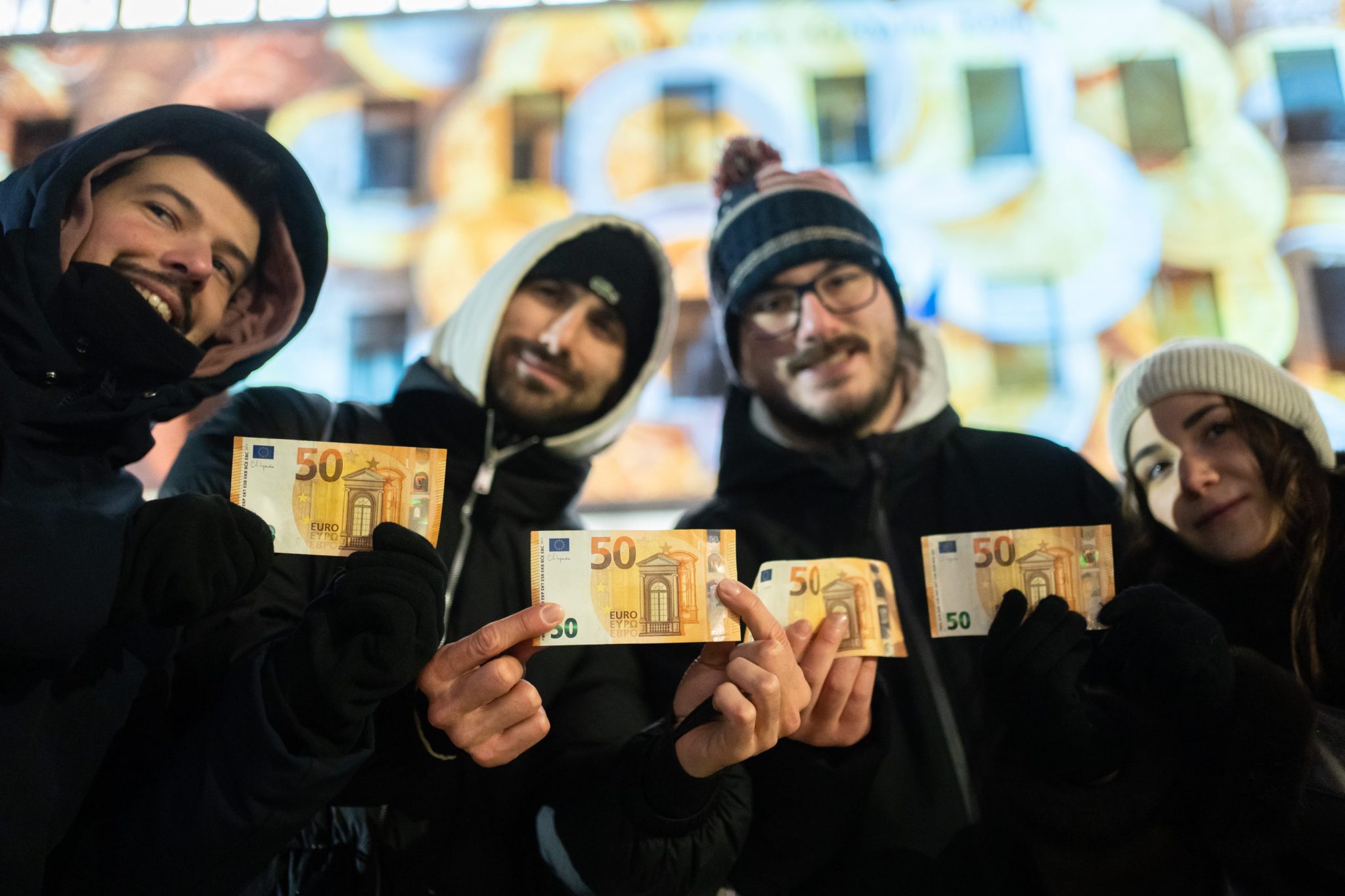
Bulgarians began withdrawing euros for the first time on Thursday after the former communist nation joined the euro currency union as its 21st member.
Cash machines in the capital, Sofia, dispensed brand new euro banknotes, replacing the lev, which will still be in use for cash payments in January. However, people will receive only euros in change.
The country of nearly 6.7 million people was one of the poorest when it first became a member of the European Union in 2007. Joining the European single-currency system means deeper EU integration after its 1989 transition from a Soviet-style economy to democracy and free markets.
However, the historic milestone arrives amid political instability, with the conservative-led government forced to resign earlier this month following nationwide anti-corruption protests, and skepticism among ordinary people, fueled by fears of price rises.
The government had to beat down inflation to 2.7% earlier this year to comply with EU rules and win approval from EU leaders. But its resignation left the country without a regular budget for next year, hampering reforms and the use of the 27-member bloc’s support funds, fueling protests.
Nationalist and pro-Russian groups in Bulgaria have also exploited fears that the switch to the euro will allegedly lead to more poverty and loss of national identity.
Countries that join the EU commit to the euro, but actually joining can take years and some members are in no hurry. Croatia was the last to join in 2023.