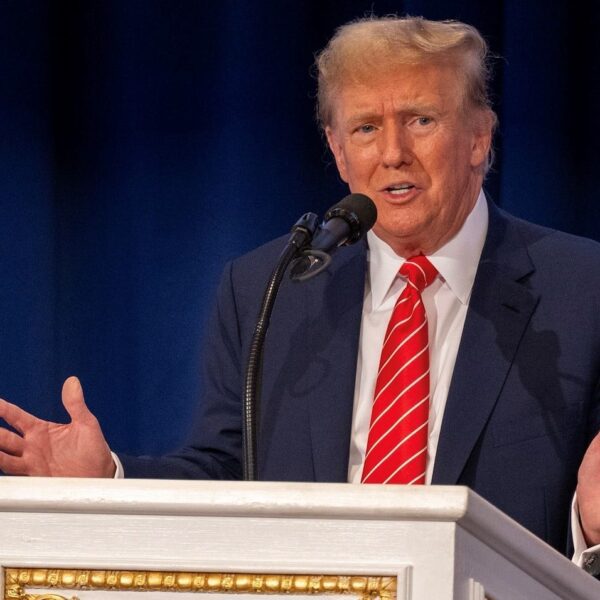
This is not great news for Meta, nor really any of us, considering that it will only reinforce Mark Zuckerberg’s desire to further align himself with the Trump Administration.
Today, the EU Commission has announced that WhatsApp now qualifies for its “Very Large Online Platforms” (VLOP) designation, which means that Meta will have to provide more in-depth performance data and moderation insights for WhatsApp, along with Facebook and Instagram.
The EU Commission introduced the VLOP designation back in 2022, as part of its ever-evolving Digital Services Act (DSA) legislation, which is designed to hold large online providers to a higher standard of accountability in how they deal with user data, ad transparency, and more. To qualify, a platform needs to have more than 45 million monthly active users, which WhatsApp already exceeds in Europe, though it’s thus far been able to avoid being included in this category because it’s a private messaging app, and not a social platform.
But now, the EU says that evolving use of the platform has changed its designation.
As per the EU Commission:
“WhatsApp Channels, the feature of WhatsApp that allows recipients to disseminate information, updates and announcements to a broad audience of WhatsApp users, falls under the definition of an online platform service and is therefore already subject to the general DSA obligations that online platforms in the EU must respect. WhatsApp’s private messaging service enabling users to send text messages, voice notes, photos, videos, documents, and make voice and video calls to other users remains explicitly excluded from the application of the DSA.”
So it’s the use of WhatsApp Channels specifically that’s led to this revision, which will mean that Meta now has to provide regular updates on how many EU users WhatsApp has, how many information requests its received, moderation info, rule violations, and more.
“Following the designation, Meta, the provider of WhatsApp, has four months, i.e. by mid-May 2026, to ensure WhatsApp complies with the additional DSA obligations for VLOPs. These obligations include duly assessing and mitigating any systemic risks, such as violations of fundamental human rights and freedom of expression, electoral manipulation, the dissemination of illegal content and privacy concerns, stemming from its services.”
It’s a blow for Meta, which will now need to take on additional reporting workload, and ensure that it meets the requirements of the DSA in another app. And if it fails, it’s another vector for penalty.
And with the EU already doling out over $1 billion in fines to the company every year, you can bet that Zuck and Co. are weighing their options, and considering how they can frame this as a violation of free trade, in order to win the backing of the Trump team.
This is a key reason why Zuckerberg has been so keen to align himself with the Trump team, because he knows that Trump will go into bat for him in foreign trade battles, which could save the company huge amounts.
The Trump Administration has repeatedly signaled its opposition to EU fines of American tech companies, and has even dangled the threat of increased tariffs in response to such fines. But thus far, it hasn’t taken that next step, and gotten directly involved in refuting EU penalties and launching reciprocal measures.
But it’s coming.
Last month, Elon Musk’s X was hit with a $US140 million EU fine for violations of the DSA relating to its changes to verification and the restriction of data access. Musk responded by comparing the EU Commission to the Nazi regime, and called for the U.S. to leave NATO in response.
Which would be an extreme retaliation, but Musk did get support from both Vice President J.D. Vance and Secretary of State Marco Rubio, with the latter labeling the X penalty “an attack on all American tech platforms and the American people by foreign governments.”
It feels like this is going to lead to a bigger dispute, especially as the EU continues to launch new investigations, and explore big penalties for U.S. businesses.
Will the Trump team be able to alter the EU Commission’s approach through responsive trade restrictions, or will the EU continue to win out with its ever-evolving penalties?
To be clear, I do think that many of the EU Commission’s regulations fail to achieve their intended goal, and it does appear that at least some have been designed to extract more money from U.S. businesses.
As such, I can see why Meta feels that this is the best time to push for a change, with Trump’s “America First” ethos more likely to force action.
But in order to do so, Trump will also expect preferential treatment in return, which could have broader impacts.