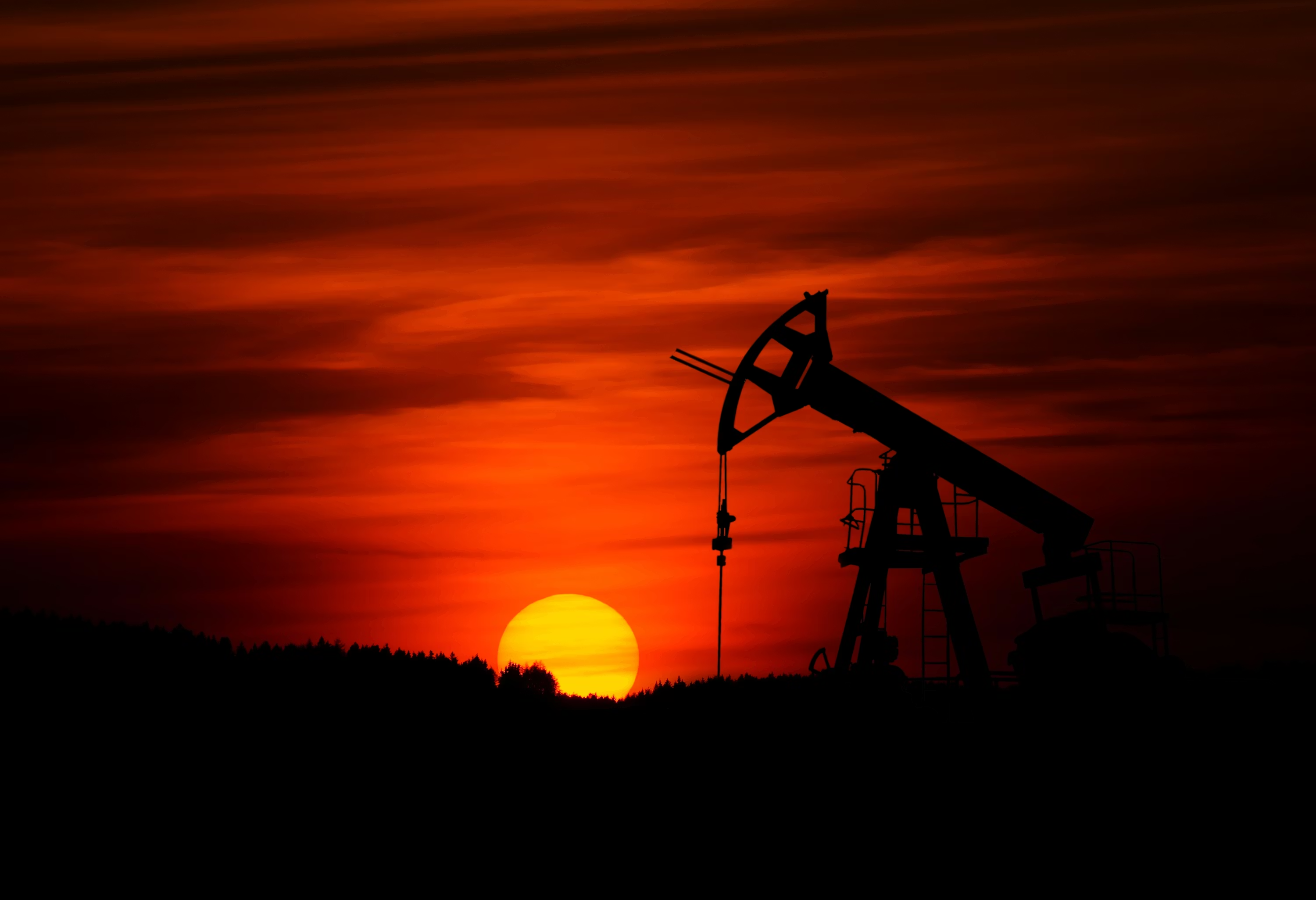

A White House official’s deleted social media post briefly pushed oil prices lower — only for them to snap back hard after US intelligence detected signs that Iran was moving to mine the Strait of Hormuz, the narrow waterway that carries roughly one-fifth of the world’s daily oil supply.
A Deleted Post And A Market Whipsaw
US Energy Secretary Chris Wright posted on social media that the US Navy had escorted an oil tanker safely through the Strait, a claim that briefly calmed markets and sent crude prices lower.
White House Press Secretary Karoline Leavitt then confirmed the post was false. Wright deleted it. Oil shot back up.
The episode rattled an already jittery market and drew a sharp rebuke from Iran’s Foreign Minister Abbas Araghchi, who accused Washington of deliberately spreading false information to manipulate oil prices.
“It won’t protect them from the inflationary tsunami they’ve imposed on Americans,” Araghchi said.
The intelligence that triggered the price surge came from CBS White House Correspondent Jennifer Jacobs, who reported that US intelligence assets had picked up signs of Iranian mine deployment activity in the Strait.
Brent crude climbed above $90 a barrel after dipping to an intraday low of around $82. West Texas Intermediate, the US benchmark, rose above $80 after touching $77 earlier in the session.
Both were still down significantly on the day, but the speed of the recovery underscored how sensitive traders are to any supply threat at this chokepoint.
Trump Warns Of Unprecedented Military Response Vs. Iran
US President Donald Trump escalated the standoff in a Truth Social post, ordering Iran to remove any mines placed in the Strait without delay.
“If, on the other hand, they remove what may have been placed, it will be a giant step in the right direction,” Trump wrote. He warned that failure to comply would bring military consequences at a level, in his words, “never seen before.”
The warning came a day after Trump had already drawn a hard line on the waterway, pledging a response “twenty times harder” if Iran moved to disrupt shipping there.

Image: Investing News Network
Iran’s foreign minister pushed back, claiming markets were not fully accounting for the scale of the potential supply shock.
“Markets are facing the biggest shortfall in history — bigger than the Arab Oil Embargo, Iran’s Islamic Revolution, and the Kuwait invasion combined,” Araghchi wrote.
Data from Bloomberg showed Hormuz traffic had effectively ground to a halt, with only Iran-linked vessels still passing through. Tehran has ruled out any negotiations with Washington, even as Trump said talks remained a possibility.
Bitcoin Slips Below $70,000 On Geopolitical Jitters
The turmoil in oil markets spilled into crypto. Bitcoin dropped below $70,000 after news of the mine deployment threat broke, pulling back from earlier gains that had kept BTC trading above that psychological level.
At the time of reporting, the coin was hovering around $69,200 — still up modestly on the day but well off its early March high of $73,000.
Featured image from Unsplash, chart from TradingView
Editorial Process for bitcoinist is centered on delivering thoroughly researched, accurate, and unbiased content. We uphold strict sourcing standards, and each page undergoes diligent review by our team of top technology experts and seasoned editors. This process ensures the integrity, relevance, and value of our content for our readers.