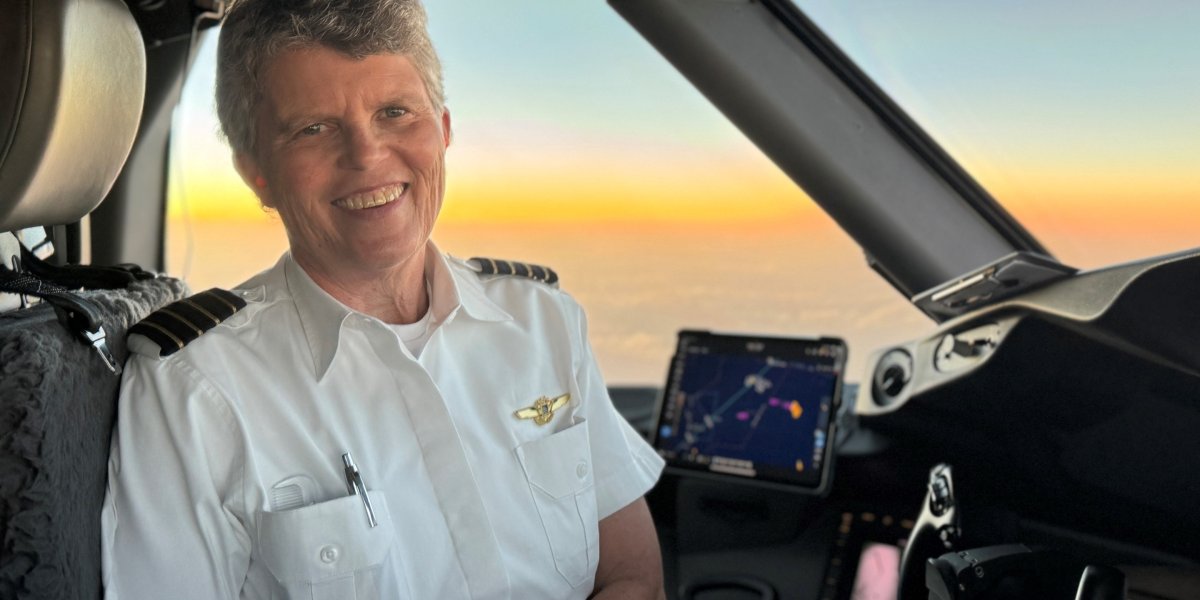
United Airlines is about to make aviation history. As the carrier celebrates its 100th anniversary, veteran Boeing 787 captain Chresten Wilson is set to become the most senior pilot among United’s 18,000 aviators—and the first woman ever to hold that title.
Her rise is the culmination of a 42‑year career spent defying odds in a cockpit still dominated by men (women make up just 6% of pilots), and her story lands just as airlines face a massive pilot shortage and surging demand for new recruits.
“I’ve done something that no woman has accomplished,” the 64-year-old told Fortune, after just returning from a trip to Australia. “It just goes to show that it can be done and [I’m] trying to inspire more women to get into the field.”
Beyond the prestige and globe-trotting lifestyle, being a pilot comes with six-figure pay, is AI-proof, and—perhaps surprisingly—requires no college degree.
Airline pilots are in high demand—and salaries can stretch over $400,000
Aviation is one of the best-compensated fields in the country. Airline pilots, copilots, and flight engineers earn a median base salary of $226,000, according to the U.S. Bureau of Labor Statistics—roughly 358% higher than the national median for all occupations.
Seniority and aircraft type push the ceiling even higher: captains flying wide-body international aircraft can earn over $400,000 annually, according to Business Insider. “It is pretty lucrative,” Wilson said.
The timing is also favorable for aspiring pilots. Boeing projects demand for some 660,000 new pilots globally over the next two decades, driven by growing air travel demand and a wave of retirements.
It’s also a profession that artificial intelligence is unlikely to replace anytime soon—making it an appealing option for young workers searching for stable, well-paid careers.
While the job requires extensive training, it doesn’t necessarily require a four-year degree. Many pilots begin with flight lessons and work toward a student pilot certificate, then a private pilot license, gradually building flight hours and additional certifications. Many airlines and aviation schools operate dedicated training academies designed to funnel graduates into airline cockpits.
Wilson’s journey to the top United pilot began in elementary school
For Wilson, it’s the culmination of a dream that started at age 9.
“I was grinning ear to ear. I’d never been on an airplane,” Wilson told Fortune, recalling the day her father took her on a flight to shoot aerial photographs. When he asked what she was so happy about, her answer was immediate: “This is what I’m going to do when I grow up.”
She never let go of it. A few years later, after moving to Denver with her mom and sister, she drove past United’s training center: “Nobody ever told me that there were no women airline pilots… I just kept that in my head that that’s what I was going to do.”
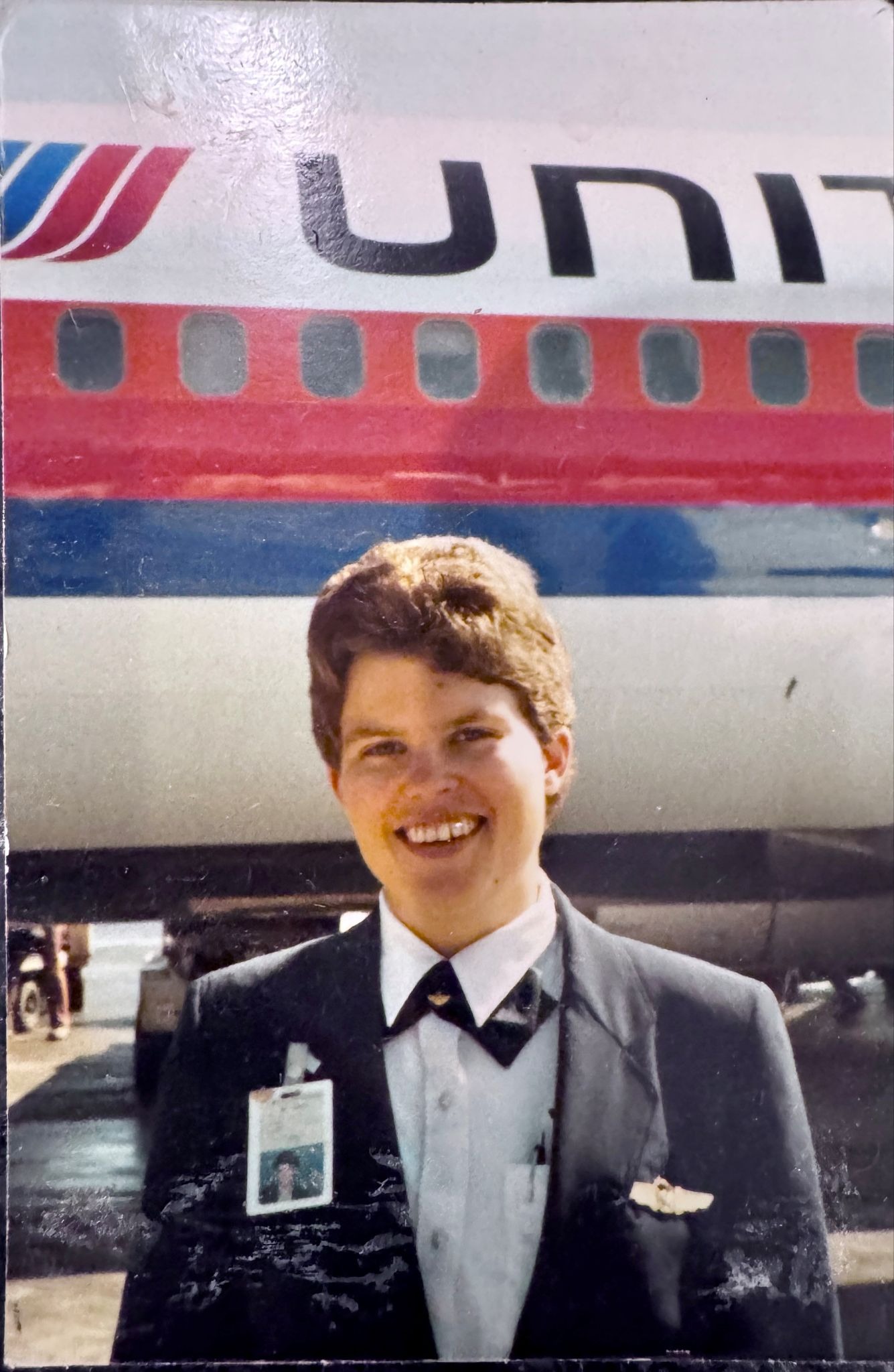
A young Chresten Wilson // Courtesy of United Airlines
She enrolled in college in Denver, where she began formal flight training while still in school. After earning her certifications, she became a flight instructor, and landed a break when one of her students happened to work at United’s training center. The student brought her an application, but Wilson wasn’t optimistic much would come of it.
“I didn’t think there was a snowball’s chance in hell that I would get hired, because pilots were a dime a dozen back then, but I guess I met their standard and was hired at the age of 22.”
She worked her way up from flight engineer—a now-defunct navigator role—to copilot on the Boeing 737, and eventually to captain. She’s held that rank for 31 years. Today she flies the 787 out of San Francisco, logging about 12 days a month in the air, mostly on long-haul international routes to destinations like Australia and New Zealand. Following the retirements of two other pilots later this spring, she’ll become No. 1 in seniority.
Despite being a lucrative career, becoming a pilot requires persistence—and sacrifice
The path to the cockpit demands consistency above almost everything else, Wilson said.
“Once you start your training, it’s something you need to be dedicated to and consistent with. It’s not something you want to start and stop,” she said, adding that aspiring pilots should not be deterred by skeptics. “I don’t see why anybody can’t do it.”
The job comes with real trade-offs. Pilots must undergo constant retraining and regular proficiency checks, and the travel schedule can be demanding—especially early in a career when seniority is low.
“You are gone from home quite a bit. When you’re not very senior, you tend to miss your kids’ birthdays and T‑ball games,” Wilson said. “…If you want to be home every Christmas, it may not happen.”
“It’s not a career for everybody,” she added. “If it’s something you really want to do, seniority is everything, so stick with it. Don’t be afraid to start applying to the airlines early… Just be relentless if it’s what you want to do.”
But for those willing to commit, she said, it’s worth it.
“I always say [to my crew], ‘keep me off of CNN and don’t make me the one they’re talking about at the next training event,’” Wilson said. “‘Let’s have a safe operation; the only attention we want to draw to ourselves is the safe operation and a smooth landing.’”