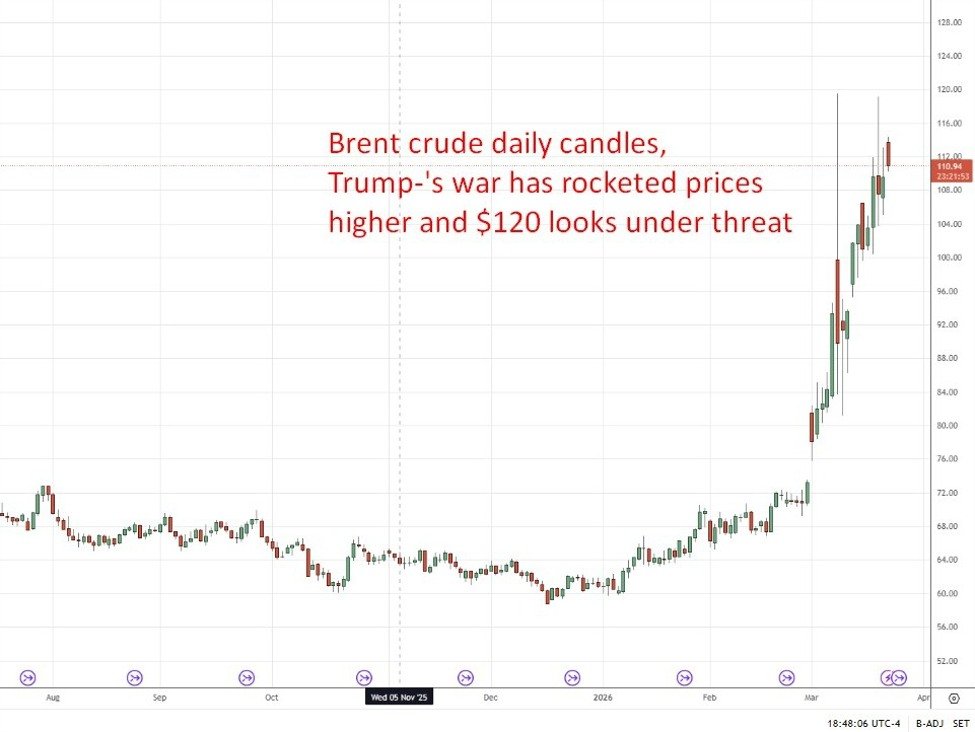
Goldman Sachs raises oil forecasts as extended Hormuz disruption and structural supply risks lift long-term price expectations.
Summary:
- Goldman Sachs lifts oil price forecasts on prolonged Hormuz disruption
- Bank now assumes flows operate at ~5% capacity for six weeks
- Recovery expected to take an additional month thereafter
- Structural risks seen driving higher long-term oil prices
- Concentration of supply and spare capacity flagged as key concern
- Strategic stockpiling likely to increase globally
- Brent 2026 forecast raised to $85 (from $77)
- WTI 2026 forecast lifted to $79 (from $72)
Goldman Sachs has raised its oil price forecasts for 2026, citing an extended disruption to flows through the Strait of Hormuz and growing structural concerns around global supply concentration.
In a revised outlook, the bank now assumes that oil shipments through the critical Middle Eastern chokepoint will operate at just 5% of normal capacity for a prolonged six-week period. This represents a more severe and sustained disruption than previously expected. Goldman further anticipates that restoring flows will take an additional month, pointing to a gradual rather than immediate recovery in supply.
Analysts say this revised scenario reflects a reassessment of geopolitical risks in the region, with the ongoing conflict raising the probability of extended supply outages. The Strait of Hormuz is a vital artery for global energy markets, and even partial closures can have an outsized impact on prices due to its central role in transporting crude exports.
Beyond the near-term disruption, Goldman Sachs also highlighted longer-term structural shifts in the oil market. The bank noted that the high concentration of global production and spare capacity, largely centred in a small number of countries, is likely to drive a more sustained risk premium in oil prices. Analysts say this dynamic is expected to encourage increased strategic stockpiling by governments and market participants, reinforcing upward pressure on longer-dated crude prices.
Reflecting these changes, Goldman Sachs has lifted its average price forecast for Brent crude in 2026 to $85 per barrel, up from $77 previously. The bank also raised its West Texas Intermediate (WTI) forecast to $79 per barrel, compared with an earlier estimate of $72.
The revisions underscore how geopolitical tensions are not only shaping short-term price volatility but are also beginning to influence longer-term expectations for supply security and pricing dynamics. Analysts say that even if flows eventually normalise, the market may retain a higher structural risk premium given the vulnerabilities exposed by recent disruptions.
Trump is bogged down in the Middle East, unable to end the war nor free up oil flows