As the world’s top technology executives converged on India’s AI Impact Summit this week, Google CEO Sundar Pichai pushed back on growing concerns around whether the tech industry’s massive AI spending spree can ever pay off.
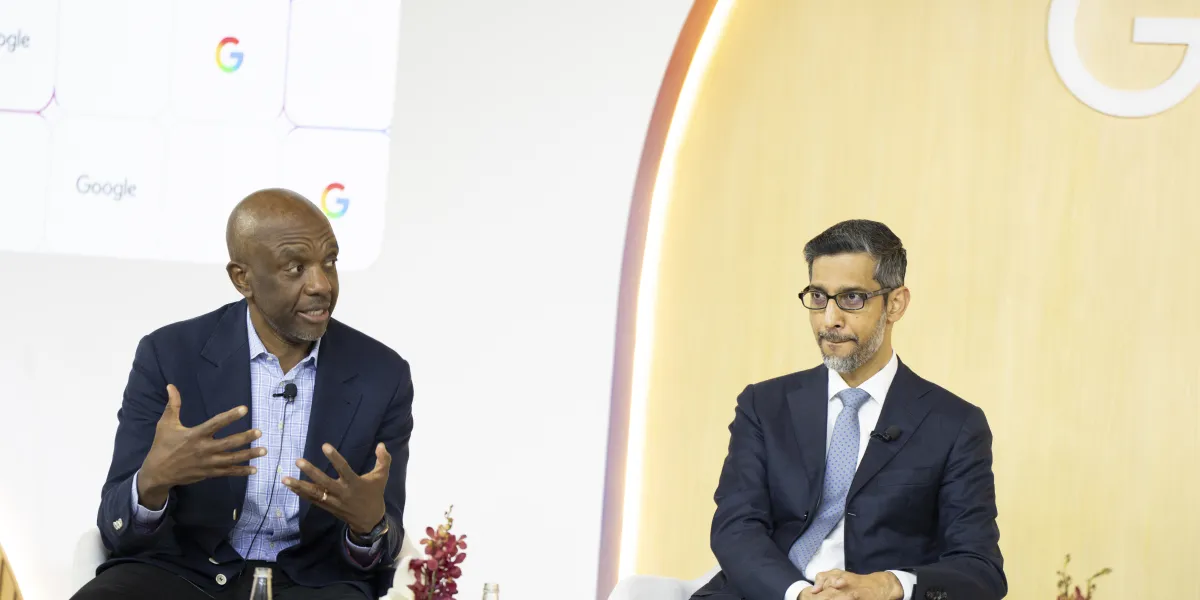
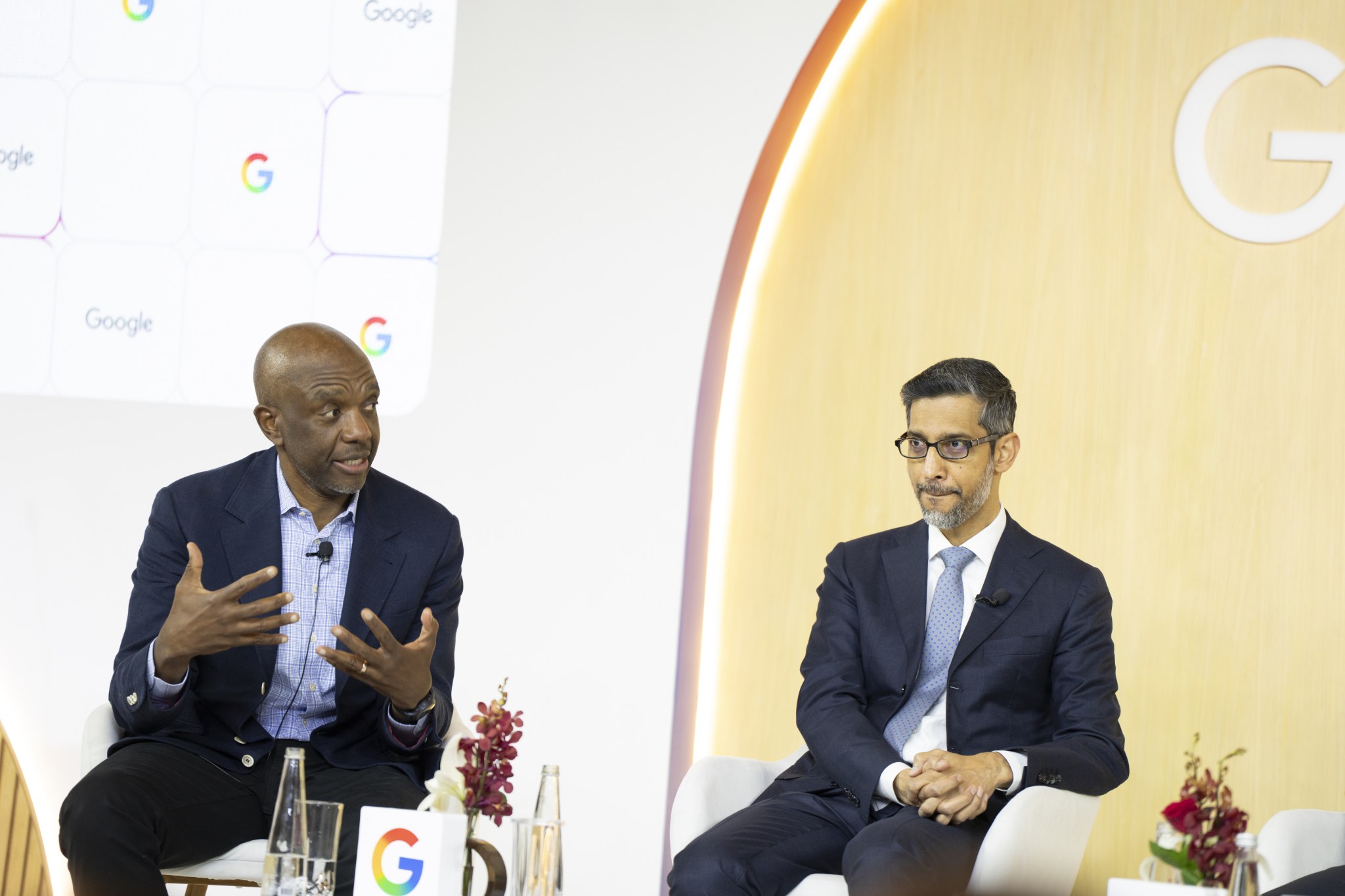
“These are such leverage investments and drive so much growth and value,” Pichai said in a briefing at the summit on Wednesday, adding that the current AI buildout is moving “10 times faster” than prior industrial revolutions. “I believe this is a transformational moment like that,” he said.
Pichai pointed to surging Google Cloud demand as evidence that returns are already materializing. “The investment makes sense given the economy we are seeing and the opportunities we see,” he said. The comments come weeks after Alphabet revealed it plans to spend between $175 billion and $185 billion in capital expenditure in 2026.
Pichai also announced a fresh round of investments in India at the Summit. In terms of infrastructure, the company unveiled a new America-India Connect Initiative—fiber-optic routes linking the U.S., India, and locations across the Southern Hemisphere—that builds on a previous $15 billion AI infrastructure commitment. For research, Google launched a $30 million AI for Science Impact Challenge to fund researchers globally using AI to drive scientific breakthroughs. The company also announced a new partnership between Google DeepMind and the Indian government to extend access to frontier models for science and education.
Pichai said that India was not just a market to be served but a co-builder of what comes next. “India is going to be a full-stack player in AI,” he said, adding he expected “every sector, every workflow, to be transformed” by the tech.
The five-day India AI Impact Summit, which kicked off Monday, featured OpenAI’s Sam Altman, Anthropic’s Dario Amodei, and Meta’s Alexandr Wang alongside political leaders, including French President Emmanuel Macron. More than 20 heads of state and representatives from over 60 countries were expected to attend.
The gathering has also become an opportunity for AI companies to emphasize their presence in India. Anthropic announced this week that India has become the second-largest market for its Claude platform, while Altman wrote in the Times of India that the country now accounts for 100 million weekly active ChatGPT users, making it OpenAI’s second-largest user base after the U.S. Underpinning it all is a Modi government push for a “global AI commons”—a shared repository of AI tools focused on education, health and agriculture—a move that reflects a broader anxiety that frontier AI development remains too concentrated in the hands of a few American companies.