- Israel may invite U.S. to relocate Middle East bases after war
- Trump touts destruction in Iran, Ackman looks forward to a whopping victory dividend
- Australia to cut taxes on petrol and diesel use as part of National ‘Fuel Security’ plan
- Reserve Bank of India FX intervention move after hours on Friday. INR chaos day ahead?
- PBOC sets USD/ CNY reference rate for today at 6.9223 (expected was 6.9205)
- Japan signals readiness for FX intervention. Yen weakened past 160, has since had a bounce
- Bank of Japan Governor Ueda says will closely watch FX moves (USD/JPY drops)
- After Tehran had weekend blackouts (strike hits) Trump ups the ante: wants Iran’s oil
- Trump says negotiations with Iran going extremely well, might get a deal soon, or not
- BoJ leans toward further hikes but flags oil-driven stagflation risks
- Trump says US could take the oil in Iran (via Financial Times)
- Bond managers warn markets underestimate growth risks from Iran war
- Villeroy says ECB ready to act, but too early to discuss timing of any rate hike
- USD is higher at the start of the new week
- Israel intercepts Yemen drones as Houthis expand role in war
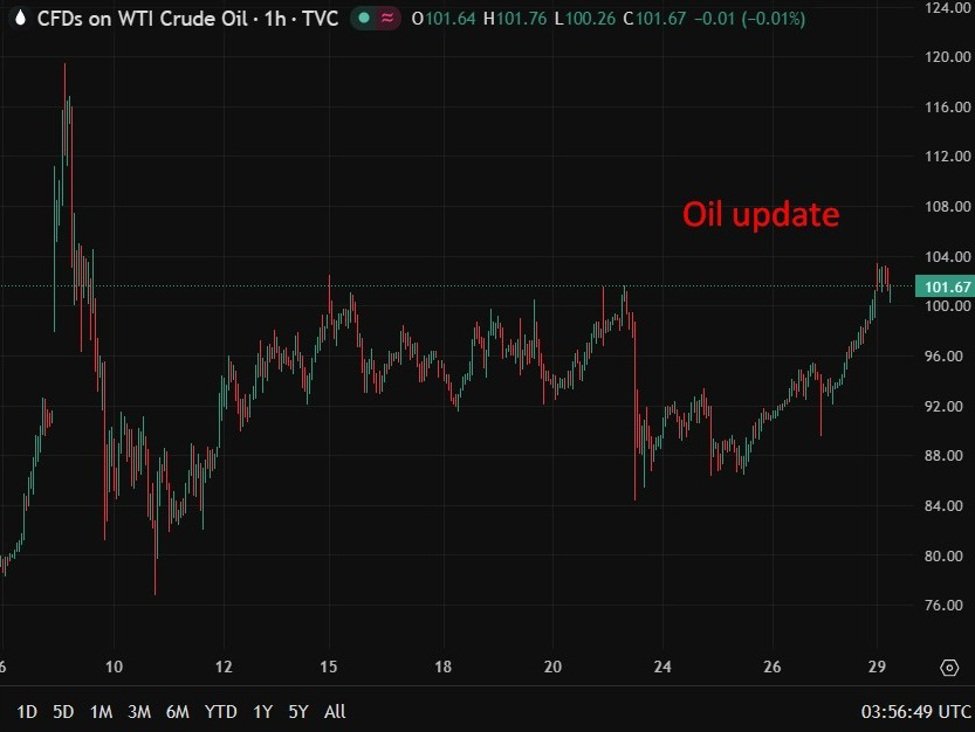
- Oil trade has begun for the week – prices higher
- U.S. allows Russian oil shipment to Cuba amid global energy disruptions
- Morgan Stanley warns Australia faces diesel supply shock and growth risks
- Where the warmakers are at: US-Iran talks uncertain, military buildup and mistrust deepen
- Newsquawk Week In Focus: US NFP, ISMs and Retail Sales, EZ CPI, RBA Mins, and BoJ Tankan
- Pakistan says it will host US-Iran talks in coming days as more US Marines head to region
- Monday open indicative forex prices, 30 March 2026
- US sends more signals that troop deployments coming. Rubio hints at endgame
- Prediction markets are no longer just getting faster than traditional coverage
- Trump jokes about Hormuz as war drags on, markets slide and NATO doubts resurface
In brief:
- Middle East tensions remain elevated with Houthi missile/drone attacks on Israel and Israeli strikes causing temporary blackouts in Tehran
- U.S. continues military build-up, including Special Forces, as planning for potential ground operations progresses
- Pakistan to host U.S.-Iran talks, while Trump signals mixed messaging: progress in negotiations but escalation options remain
- Oil opened higher but pared gains, reflecting ongoing uncertainty around Hormuz flows
- BoJ maintains tightening bias, while Japan ramps up FX intervention rhetoric, helping push USD/JPY lower
- RBI FX caps provide modest INR support via forced positioning adjustment
- Australia cuts fuel taxes despite growing supply shortage risks, raising policy questions
Geopolitical developments continue to dominate the macro backdrop to start the week, with the Middle East conflict showing further signs of regional expansion.
Over the weekend, Iranian-backed Houthis launched missile and drone attacks toward Israel, marking a widening of the conflict footprint. At the same time, Israeli strikes reportedly caused temporary power outages across Tehran and surrounding areas, highlighting the ongoing intensity of the campaign.
On the U.S. side, the military build-up in the region continued. Several hundred Special Operations Forces, including Army Rangers and Navy SEALs, have been deployed alongside thousands of Marines and 82nd Airborne troops. According to U.S. officials, this positioning is aimed at providing President Trump with additional optionality, including the potential for ground operations.
Diplomatically, Pakistan said it will host U.S.-Iran talks in the coming days. However, messaging from Washington remains mixed. President Trump said negotiations are progressing through both direct and indirect channels and could yield a deal soon, while also cautioning that no agreement is guaranteed. He added that Iran has allowed 20 oil tankers to transit the Strait of Hormuz, suggesting some limited easing in flows. At the same time, Trump reiterated that the U.S. could seize Iranian oil infrastructure, including Kharg Island, underscoring that escalation risks remain firmly in play.
Oil prices opened higher but have since edged lower, reflecting this push-pull between de-escalation hopes and ongoing risks.
In Asia, the Bank of Japan Summary of Opinions reinforced a gradual tightening bias, with policymakers open to further rate hikes if conditions allow. However, caution remains due to Middle East uncertainty and rising oil prices, with some members flagging stagflation risks.
Japan also stepped up FX rhetoric. Vice Finance Minister Atsushi Mimura warned that “decisive” action could be taken against speculative currency moves, marking a clear escalation in intervention signalling. This was reinforced by Governor Kazuo Ueda, who emphasised the growing importance of FX in shaping inflation. While not explicit intervention, the tone shift from Ueda helped push USD/JPY lower from near 160.50 to below 160, trading around 159.75 at the time of writing.
Elsewhere, the Indian rupee firmed slightly after the Reserve Bank of India imposed new FX position caps after Friday’s close. The move forces banks to reduce short INR positions, providing near-term currency support and signalling a more active defensive stance from policymakers.
In Australia, the government announced a cut to fuel taxes in response to rising prices. However, the policy raises questions given the growing risk of diesel shortages. While lower taxes may reduce prices and boost consumption, they do little to address supply constraints and may, at the margin, exacerbate the imbalance between demand and available fuel.