
Predictions market platform Polymarket removed a market on its site that allowed users to bet on the condition of U.S. pilots following attacks on U.S. fighter jets.
Iran forces shot down two U.S. military planes on Friday in two separate attacks, including a U.S. F-15E Strike Eagle. One American service member was rescued on Friday, while another remained missing for part of the weekend. It was the first time U.S. aircraft were downed during the ongoing war in the Gulf.
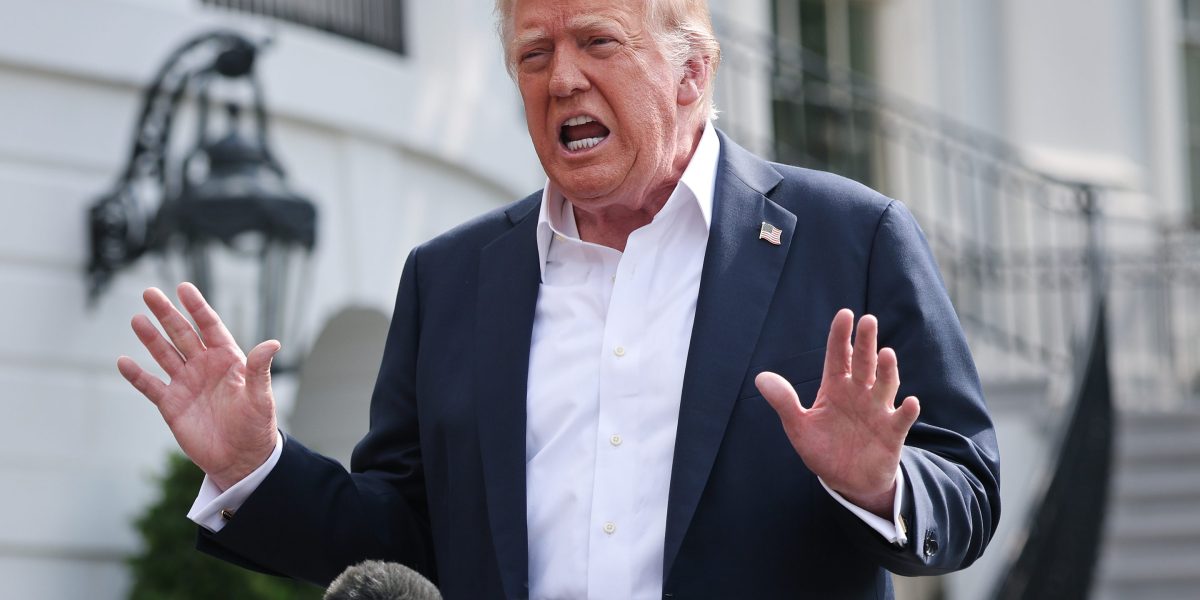
The market on the platform, which has since been deleted, allowed users to wager on what day the pilots would be rescued. President Donald Trump confirmed on social media on Sunday that the service member who went missing had been saved.
However, the existence of the market drew outrage from some lawmakers, such as Democratic Rep. Seth Moulton, a Marine Corps combat veteran representing Massachusetts, who called betting on outcomes of the Iran war a “dystopian death market.”
There is an ongoing search and rescue operation for a missing American service member whose plane was shot down over Iran. Their safety is unknown,” Moulton wrote in an X post. “They could be your neighbor, a friend, a family member. And people are betting on whether or not they’ll be saved. This is DISGUSTING.”
Polymarket responded, saying, “We took this market down immediately as it does not meet our integrity standards. It should not have been posted, and we are investigating how this slipped through our internal safeguards.”
Polymarket users can make wagers on any topics, from the price of oil, to how many times Elon Musk will post on X over the course of a week, to when Grand Theft Auto VI will be released. The platform’s guidelines prohibit trades made on illegal tips, nonpublic information, or on anything that would impact the income of a real-life event. Polymarket says on the site it reserves the right to review markets and take disciplinary action on traders, including banning wallet addresses.
Moulton appeared to take issue with Polymarket’s apology, noting in another social media post that there were more than 200 markets on the platform related to the war’s outcomes.
“Your integrity standards are severely lacking, @Polymarket,” he said in another post. “Users are still able to place bets on the lives of our troops.”
Polymarket did not respond to Fortune’s request for comment.
Ethical concerns around prediction markets
Prediction markets have drawn broader scrutiny over the course of the conflict in Iran. Kalshi said it would offer refunds to traders who placed bets on when Ayatollah Ali Khamenei would be ousted from leadership. He was killed on Feb. 28 in the U.S.-Israeli strikes on Iran. Kalshi CEO Tarek Mansour said the site does not allow markets directly tied to deaths.
Ethical concerns surrounding these markets extend beyond bets on an individual’s or a group’s well-being. CNN reported last month that one Polymarket trader made nearly $1 million since 2024 from dozens of bets correctly predicting the U.S. and Israel would take military action against Iran. The user won 93% of their five-figure wagers, even on military operations that were not public information, raising concerns of insider trading.
Connecticut, Arizona, and Illinois have sued platforms like Kalshi and Polymarket to regulate them, accusing the sites of engaging in illegal online gambling that violates state law.
How Polymarket is addressing controversial bets
Founded in 2020, Polymarket is among a cadre of prediction markets, serving as a popular tool to crowdsource real-time data and public opinion. Global prediction market trading volumes quadrupled from 2024 to 2025, according to data from Next.io, surging to nearly $64 billion.
The nature of some wagers placed on these markets has raised concerns about how users handle the sensitivity of geopolitics and climate disasters. In January 2025 amid the raging wildfires in California, Polymarket users placed dozens of bets on how many acres the blaze would spread. Bates College environmental studies professor Tyler Austin Harper called the “gamblificatation” of all events, including those in which people’s lives are at stake, “Capital-E Evil.”
Unlike counterparts like Kalshi, Polymarket is not based in the U.S., where regulations are understood to prohibit bets on financial contracts related to war. In the week ending March 1, Polymarket traders placed more than $425 millions on geopolitical bets, according to Dune Analytics, nearly triple the amount from the week before. The U.S. and Israel’s first attack on Iran was on Feb. 28.
Polymarket CEO Shayne Coplan recently suggested the platform has a complicated relationship with war bets, which he said can provide up-to-date, helpful information to individuals impacted by geopolitical conflicts. He said at the MIT Sloan Sports Analytics Conference 2026 last month the platform’s association with war contracts brought “more money, more problems.”
“There’s still a lot of resistance to innovation that kind of also seems jarring to begin with,” Coplan said. “That’s what makes it innovative and disruptive.”
“When I get hit up by people in the Middle East who are saying, ‘Hey, we’re looking at Polymarket to decide whether we sleep near the bomb shelter; we look at it every day’ and I’m like, ‘Oh, it’s really that popular over there?’” he said. “That’s very powerful. That’s an undeniable value proposition that did not exist before.”