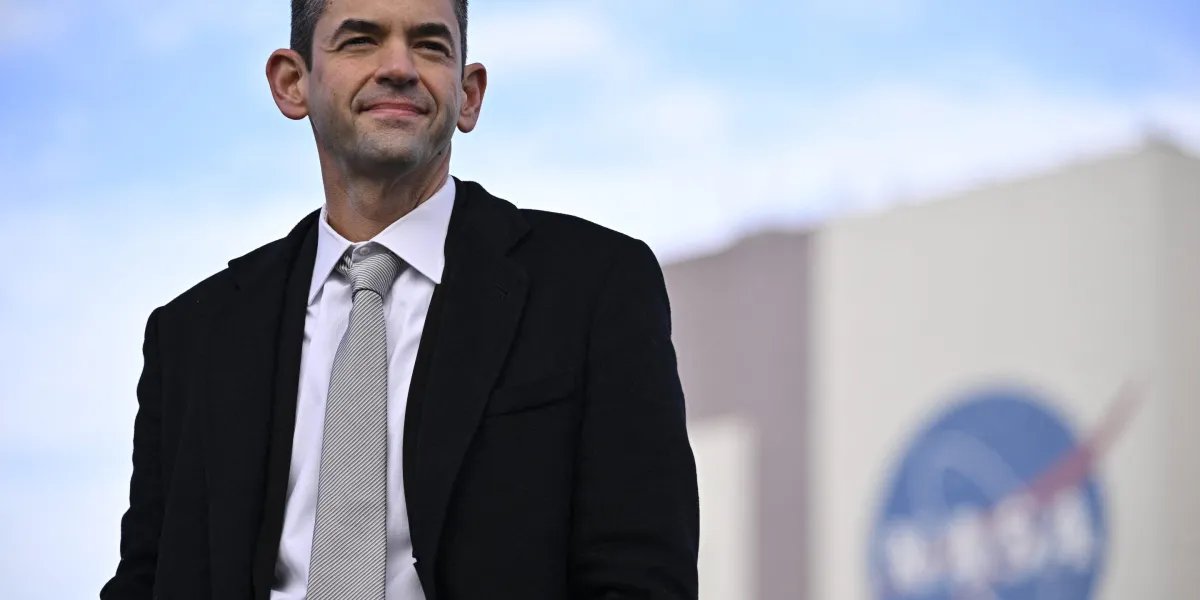
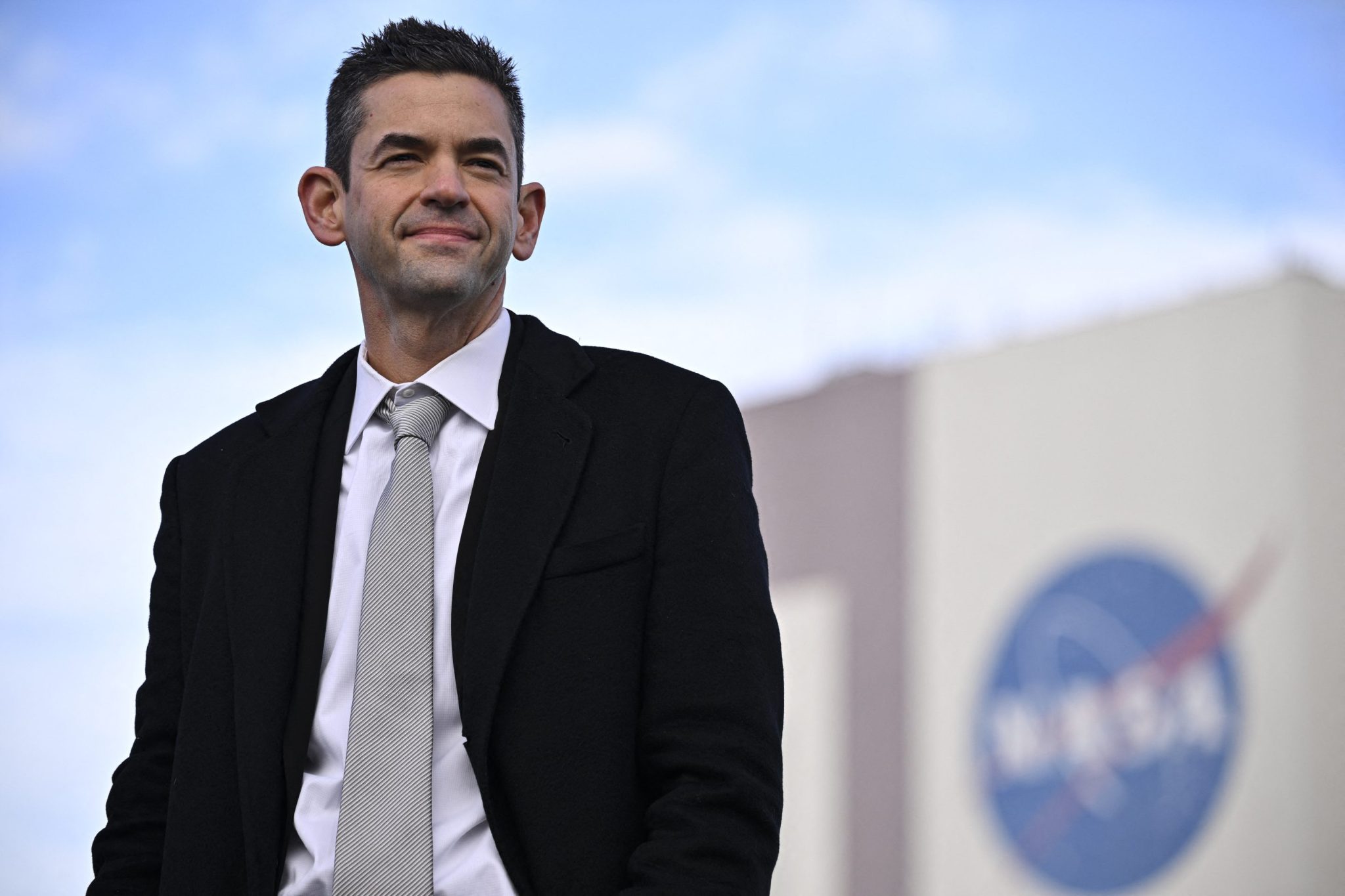
The billionaire leader of NASA, who has gone to space twice, has a message for critics of billionaire space travel: You’re “outright wrong.”
As the crew of Artemis II embarked on the first lunar mission in more than 50 years, NASA administrator Jared Isaacman, the billionaire payments processing company mogul confirmed to lead the agency late last year, praised his fellow billionaires for pouring their own resources into the space race.
“I’m grateful for folks like Elon Musk, and Jeff Bezos, and Sir Richard Branson that have put their resources on the line for a capability for the good of all humankind right now,” he told Politico.
While interviewer Dasha Burns pointed out that high profile figures such as UN Secretary General António Guterres had previously criticized billionaire space flight, Isaacman shot back at other critics: “I think they’re just outright wrong, and ill-informed and going for headlines. It’s such a bad take,” he said. Guterres in 2021 said billionaires were fueling societal mistrust by “joyriding to space while millions go hungry on Earth.”
In defending billionaire space travel, Isaacman, whose net worth is $1.5 billion, according to Forbes, said society shouldn’t “pause” the space race just because there are problems here on Earth. He said he could imagine a critic of cell phone towers in the ‘80s saying the same thing about this technology which ultimately connected the world and improved it. For example, he said connecting the world with cell phones has helped shine a light on bad actors who commit genocide and in turn has saved millions of lives.
“If we concentrate all of our resources on the problems and hardships of the day, there is no progress. You don’t hit pause on progress,” he said.
Isaacman’s comments come as the Artemis II crew on Monday successfully traveled farther than any astronauts before them when their Orion spaceship slingshotted around the moon propelled by the celestial body’s gravitational force. The astronauts are scheduled to return to Earth late Friday when their ship lands in the Pacific Ocean off of the coast of San Diego, Calif.
Isaacman’s space flights
While he hasn’t been to the moon, Isaacman, the founder of Shift4 Payments and Draken International, which supplies tactical fighter aircraft to the U.S. military and its allies, has been to space twice.
In 2021 Isaacman helped bankroll and then lead Inspiration4, the first all-civilian mission to reach orbit in SpaceX’s Dragon spaceship, flying higher than the suborbital space flights of Bezos’ Blue Origin and Branson’s Virgin Galactic that same year. In 2024 he became the first civilian to conduct a space walk during SpaceX’s five-day Polaris mission, which he also reportedly helped fund, venturing outside the ship approximately 400 miles above the Earth for around 10 minutes to test SpaceX’s EVA space suit.
The commercial space race has heated up in recent years as Blue Origin, SpaceX, and Virgin Galactic all seek to seek to dominate an emerging global space industry McKinsey predicts could grow to $1.8 trillion by 2035. Meanwhile these companies’ billionaire founders, including Bezos and Branson, have already signed up to witness space themselves.
Bezos briefly crossed the internationally recognized boundary of space, or Kármán line, at 62 miles above the Earth during a 10-minute suborbital Blue Origin mission in 2021. Branson took his own Virgin Galactic spacecraft up to roughly 53 miles above the Earth that same year. Blue Origin has argued that Virgin Galactic’s space flights haven’t actually made it to space because they have stayed below the Kármán line. Elon Musk, whose SpaceX has carried more humans to orbit than any other private company, has never been to space.
Isaacman, for his part, said companies like Blue Origin are making significant technological progress that benefits all humanity, including planetary defense innovations that could ensure “we don’t go the way of the dinosaurs.” Billionaires’ work on reaching space and making life better on for humanity aren’t mutually exclusive, he argued.
“We should be grateful for their contributions, and do the other things to make life better here on Earth,” he said.