Meta announced updates to its Meta Pixel and Conversions API that are designed to simplify the data gathering process. The changes are intended to feed more information from websites back into Meta’s ad system, powering improved targeting and more relevant matching for ad campaigns.
Meta’s Pixel is a code element that website managers can add to their site code in order to track visitor actions on their site, which is then communicated back to Meta for ad targeting. This is a key element for retargeting in particular, but it can also be complex, especially for those unfamiliar with coding.
Meta’s looking to address this with — big surprise — artificial intelligence, using a new AI-powered pixel set-up that will make it easier to maintain pixel coding and ensure the most relevant information is flowing through from websites back to Meta’s ad system.
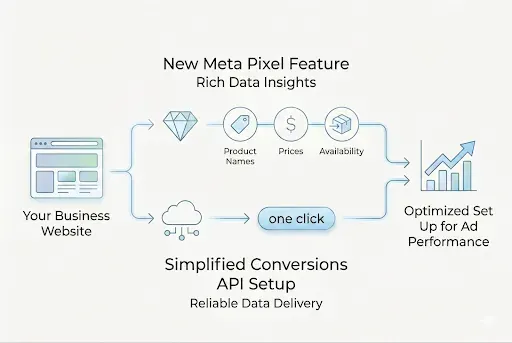
As explained by Meta: “We’re introducing a new Meta Pixel feature that allows businesses to use AI to automatically include additional page and product information — such as product names, availability, and business details — with the events you share with Meta. This is information many advertisers already share with Meta to run product-based ads, and we’re simply helping automate what used to be a manual, technical process.”
Meta said this update will ensure that smaller businesses are able to maximize the performance benefits of expanded pixel data, without the need for constant technical work to keep their pixel tracking updated. That could ensure a more level playing field with more well-resourced big businesses, who can then dedicate team members to maximizing this aspect.
In the end, this should mean more opportunities for SMBs to compete in Meta ad auctions and drive more response to their Meta campaigns.
Meta is also said it was simplifying the Conversions API set-up process, creating a one-click option “that requires no technical expertise, no costs, no ongoing maintenance, and will allow businesses to get set up in minutes.”
Meta’s Conversions API sends data from a business’s servers to Meta’s data banks, which provides even more information to help power Meta ad campaigns.
Pairing the Meta Pixel with the Conversions API can drive significant ad performance improvements. According to Meta, businesses that utilized both data streams saw an average 17.8% lower cost per result compared to those without Conversions API.
Meta said the updated Conversions API process will apply to all users of this element, making it a “less resource-heavy and technically demanding” aspect in improving Meta ads setups.
Ideally, these updates should help to simplify the more technical aspects of Meta ads targeting and help more businesses drive improved promotions responses.