- Progress seen but core issues divide US and Iran
- India and South Korea target $50bn trade as both seek deeper economic ties
- Carney says Canada must reduce US reliance as tariffs reshape trade outlook
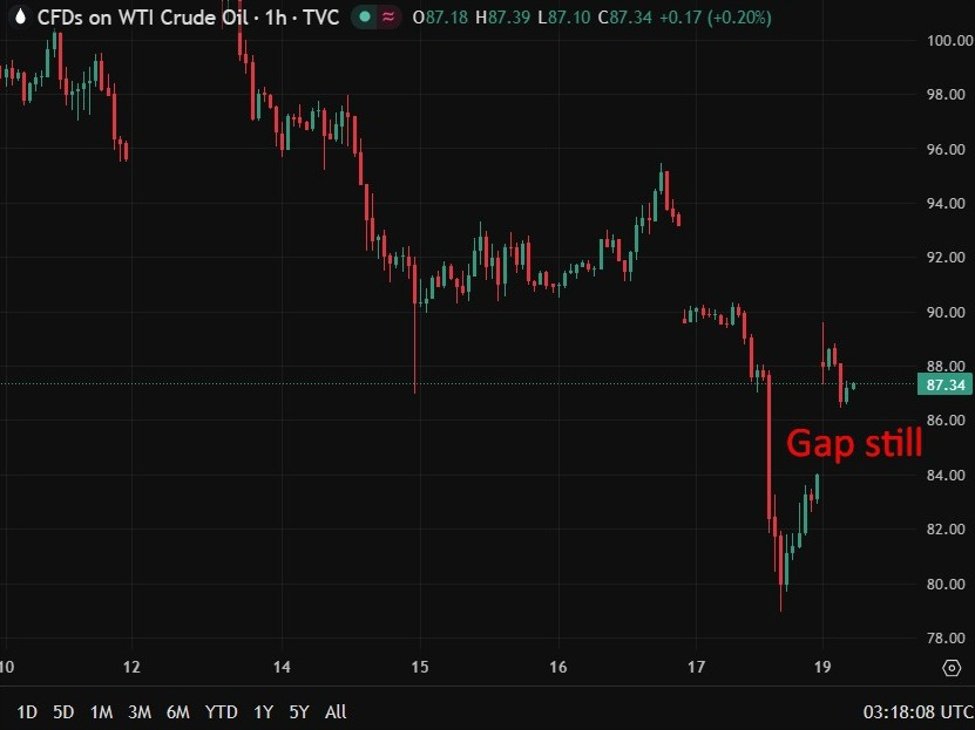
- Some, not all, of the Monday morning gaps are filling. Oil, no. Equites, NO. FX, some.
- PBOC sets USD/ CNY reference rate for today at 6.8648 (vs. estimate at 6.8291)
- PBOC leaves loan prime rates unchanged, as expected.
- US keeps Iran pressure high, UN envoy Waltz says strikes remain option ahead of talks
- UAE seeks US financial backstop as war strains oil flows and dollar liquidity
- Recap – US seizes Iranian ship, talks stall as Hormuz tensions drive oil price up
- Iran, UAE clash over Hormuz as oil flows disrupted and costs rise globally
- Trump’s Fed pick blocked as Tillis cites Powell investigation
- New Zealand data: March exports and imports both jump from February
- US futures, Globex, open for the new week’s trade. Risk off, as expected.
- Iran says U.S. violated ceasefire by firing at one of Iran’s commercial ships.
- Oil and equity index futures open at the top of the hour. Early FX is indicating risk off
- Trump reveals classified Iran war information, again. US Marines’ location tweeted out.
- Monday open FX (unlike the closed Strait of Hormuz). Indicative rates 20 April 2026.
Weekend:
Oil prices surged at the open following Iran’s re-imposition of a de facto closure of the Strait of Hormuz, reversing a brief reopening seen late last week. The move comes amid renewed escalation in the US–Iran conflict, though prices have since come off their highs as markets weigh the prospect of continued negotiations.
The USD gapped higher at the open but some of the gaps have closed.
Over the weekend, tensions intensified after the US Navy fired upon and seized an Iranian-flagged cargo vessel in the Gulf of Oman, marking the first such action under the current blockade. US Central Command said the vessel failed to comply with warnings for several hours, prompting action to disable and board the ship. Iran condemned the move as “armed piracy” and warned of imminent retaliation, with state media also reporting drone attacks on US military assets.
The ceasefire, set to run through Tuesday, now appears increasingly fragile. Iranian officials signalled limited confidence in upcoming talks, with some reports suggesting Tehran may not participate, while US negotiators are still expected to arrive in Islamabad. That said, Pakistani sources indicate that gaps between the two sides have narrowed, reinforcing market expectations that both parties ultimately want a deal.
On the ground, conditions in the Strait remain unstable rather than fully closed. Kpler data showed more than 20 vessels transited the waterway on Saturday, the highest since early March, but reports of vessels being turned back and attacked continue to deter flows. The situation is best characterised as controlled disruption rather than outright shutdown, keeping supply risks elevated.
In FX, emerging-market currencies weakened as the US dollar and oil prices rose in response to the renewed tensions.
Elsewhere, the People’s Bank of China left its loan prime rates unchanged for an 11th straight month, with the one-year at 3.0% and five-year at 3.5%, in line with expectations. In the Gulf, the UAE signalled it may shift toward yuan-denominated oil trade if dollar liquidity tightens, following reports it has sought a financial backstop from the US.
Despite the geopolitical backdrop, Asian equities showed resilience. Japan’s Nikkei moved back toward recent highs, while Taiwan equities hit a record, with AI-driven optimism outweighing concerns around the Middle East.
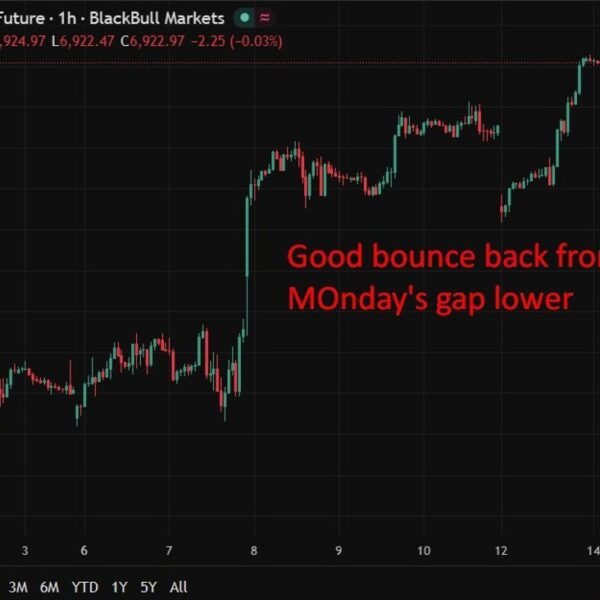
US equities still show gaps down: