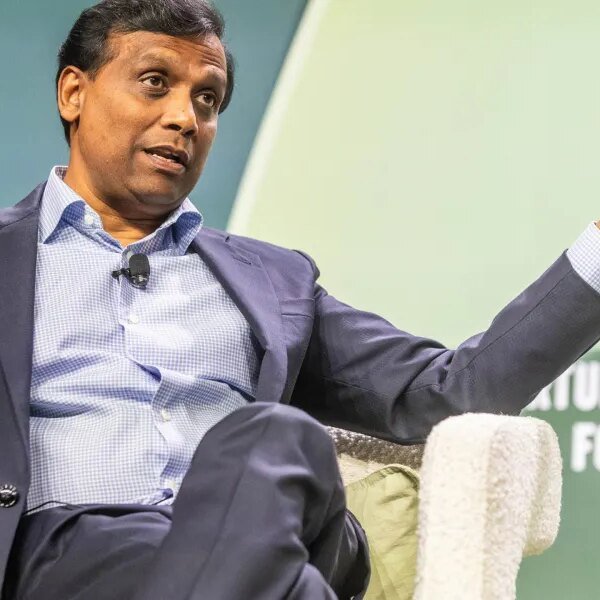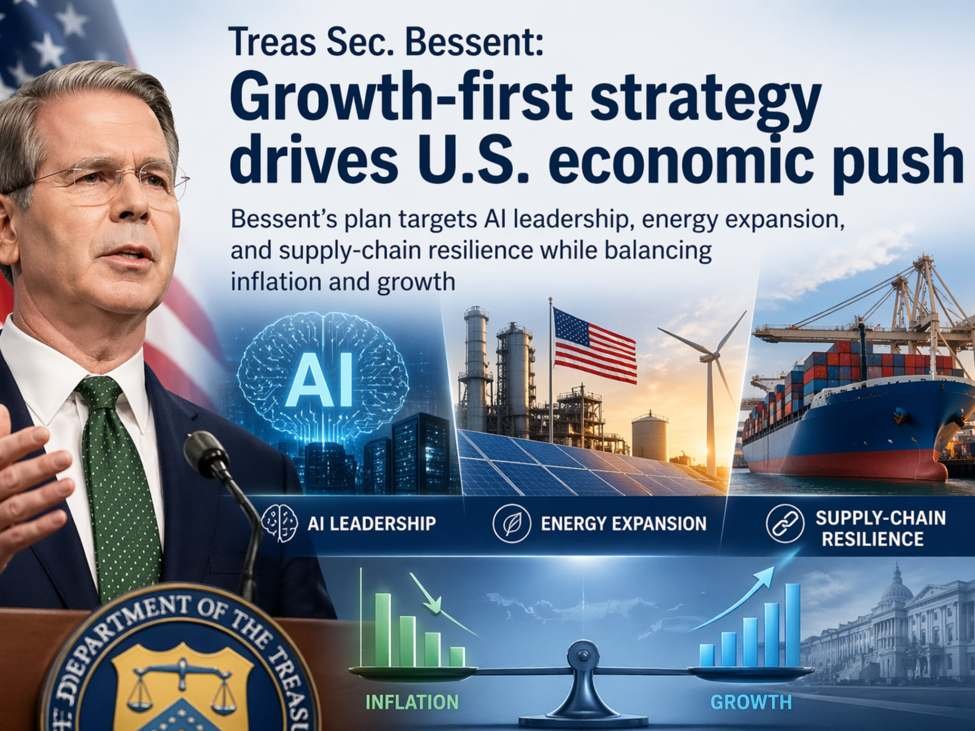
Scott Bessent in a WSJ interview speaks about the key economy and policy goals as he maneuvers through the Iranian war and other global economic hurdles.:
- Goal: Restore strong U.S. growth following war disruptions while keeping expansion intact
- Balance inflation vs. growth: Bring inflation down without choking economic expansion
- Lift real wages: Focus on improving income for the bottom 50% of earners
- Reassert U.S. dominance in key sectors: Chips, AI, and energy seen as critical to future prosperity
- China strategy = “de-risk, not decouple” (maintain trade but reduce dependency)
- Targeted independence: Critical minerals, medicines, and semiconductors prioritized for domestic resilience
- Use leverage in trade tensions: Tariffs, tech controls, and policy tools used to pressure China strategically
- AI is existential priority: Winning in AI is essential or it’s “game over” economically
- AI policy approach: Encourage innovation while applying targeted regulation (chips, safety oversight)
- Productivity upside from AI: Seen as a major driver of efficiency and economic growth
- Energy strategy: Higher prices → more production → self-correcting mechanism to lower costs
- Rebuild domestic manufacturing: Reduce reliance on foreign supply chains and increase economic resilience
- Tax policy focus: Benefits aimed at lower-income workers (e.g., overtime tax breaks)
- Close inflation-era wage gap: Restore purchasing power lost during prior inflation surge
- Bank regulation critique: Post-crisis rules favor large banks, creating a system where “too small to succeed”
- Deregulation theme: Reduce burdens to boost investment and competitiveness
- Core objective: Combine taxes, energy, trade, and deregulation into sustained, broad-based economic growth
Bottom line:
At its core, the strategy is a pro-growth, supply-side push aimed at strengthening U.S. economic dominance by boosting productivity, rebuilding key industries, and improving outcomes for lower-income workers. It balances inflation control with continued expansion, leans on energy and deregulation to drive investment, and uses targeted trade and industrial policies to reduce dependence on China without fully breaking ties. Artificial intelligence sits at the center as the key future growth engine, with the broader goal of aligning tax, trade, and regulatory policy into a cohesive framework that delivers sustained, broad-based economic growth.