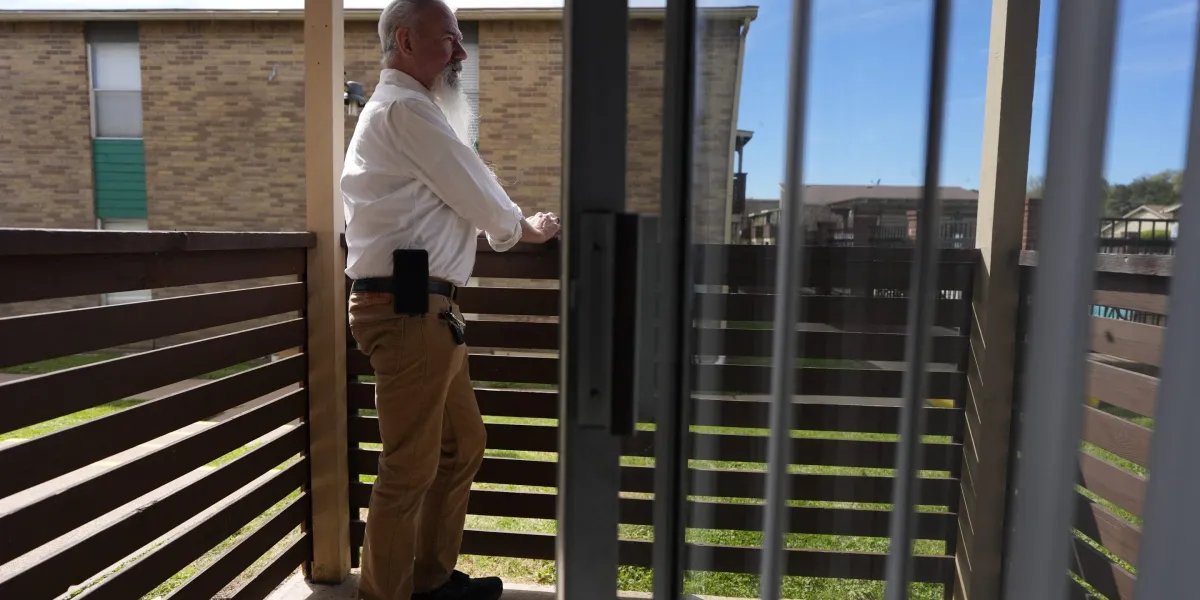
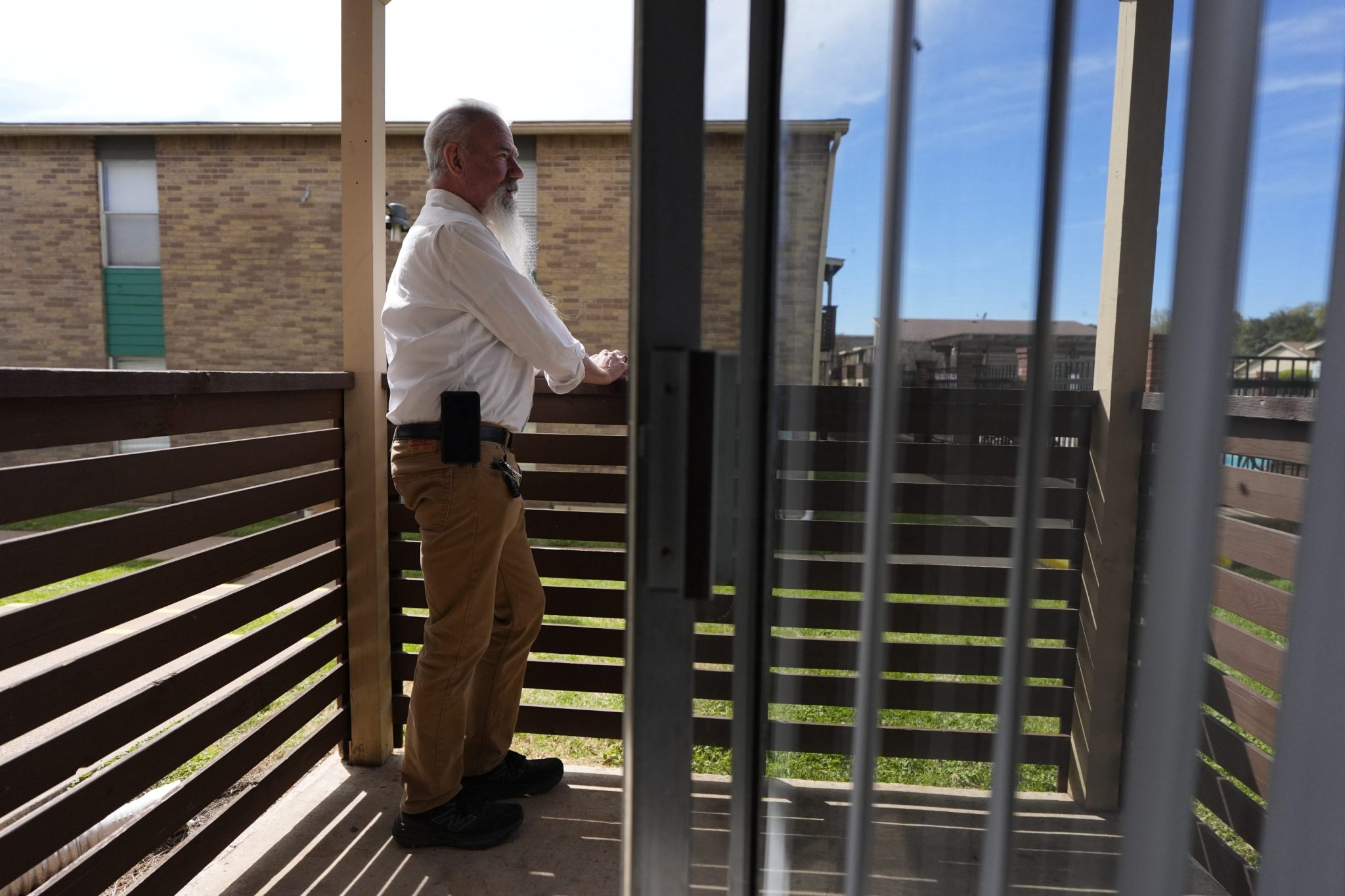
Just months into the pandemic, Matthew Haines, like landlords across the country, learned he was barred from evicting tenants who didn’t pay their rent under a federal eviction moratoriumthat lasted almost a year — costing him and his investors over $1 million.
Now, the 57-year-old Texan is hoping to get some relief.
Haines is among more than 1,500 property owners who filed a federal lawsuit arguing the moratorium enacted by the Centers for Disease Control and Prevention violated the Fifth Amendment by unlawfully denying them compensation. Plaintiffs range from those who lost thousands of dollars to one who lost over $14.5 million.
After initially losing in the Court of Federal Claims in 2022, the plaintiffs won on appeal and are now in settlement discussions with the Justice Department. Landlords are hoping to recoup as much as $1.5 billion — a fraction of what the industry lost.
“It’s important for us to stand up when a group like the CDC unilaterally, functionally, decides that they have a right to oversee our business,” said Haines, who owns three rental communities with 240 units in Arlington and Irving, Texas.
“What I hope that we will accomplish and, to some extent, we already have, is vindication for ourselves,” he said. “But what’s more important to me is that hopefully my investors will recover some of that money that they should have had coming in over the last six years.”
The federal eviction moratorium lasted from September 2020 through July 2021, and was among the pandemic’s most divisive policies. It ended after the Supreme Court ruled the CDC lacked authority to impose the ban without congressional authorization.
The Justice Department, responding to Associated Press questions about the landlords’ case, said it does not comment on ongoing litigation.
Landlords say moratorium was bad for business
Moratoriums were also imposed in 43 states and scores of cities, which lasted longer than the federal ban because states and cities have broader regulatory powers than federal agencies like the CDC.
Landlords say the bans devastated their businesses. Unable to collect rent, many were forced to take on debt, lay off staff, delay repairs and, in some cases, sell their property. They say the impact lingers, with longer delays for evictions, tighter screening for riskier tenants and growing numbers of owners getting out of the rental business altogether.
Tenant advocates counter that eviction bans were a lifesaver. They credit them with keeping millions of tenants housed during the pandemic and slowing the spread of the coronavirus. They also argue landlords were already paid — in the form of tens of billions of dollars in rental assistance.
From the moment the pandemic hit, Haines said he knew he was in trouble: Many tenants lost their jobs, so he didn’t require new leases and tried to be flexible with those who couldn’t pay.
But when the moratorium took hold, it was the biggest threat he’d faced in 30 years in real estate.
“It was terrifying,” Haines said. “We knew almost immediately that we were going to a massive deficit in cash flow that we probably weren’t going to be able to cover.”
A survey by the National Rental Home Council, a trade association, published weeks after the federal moratorium ended, found that half of small landlords had tenants who missed rent and a third sold or planned to sell properties. The moratorium and backlog of eviction cases cost owners $57 billion, according to the lawsuit, with more than 10 million delinquent renters in just the ban’s first four months.
“Public health measures like this, they may be well intentioned,” said Creighton Magid, a lawyer for the plaintiffs. “But when the government imposes this type of moratorium, the financial burden should be borne by the government, not individual property owners.”
Liz Leone, who has 52 apartments in Las Vegas and is part of the lawsuit, said the moratorium almost forced her out of business. She lost over $250,000, she said, and borrowed $60,000 from the federal Small Business Administration “just to keep my nose above water.” She’s still paying it off.
“I was definitely questioning whether I would survive,” said Leone, who’s been in the business for 35 years. “You delay all the expenses you can, but we still had to pay our property taxes. We still have to pay our utilities. … So that’s what you did: I borrowed.”
Moratorium prevented homelessness
Housing advocates maintain the policy kept families housed, noting a significant spike in evictions after the moratorium ended.
Eviction bans “were a powerful intervention to keep people in their homes,” said Kathryn Leifheit, assistant professor at the UCLA Fielding School of Public Health and lead author of a study published in April in the medical journal JAMA Network Open that found homelessness rose 11% in a typical state in 2022, and would have increased 20% without state eviction moratoriums.
That was the case for Dulcee Barnes. The 28-year-old and her two roommates lost their restaurant jobs in Miami during the pandemic. Two months behind on rent, they would have been evicted if not for the moratorium.
“It gave us breathing room. It took away the fear of having to possibly pack up within 24 hours and live in somebody’s car or couch surfing,” she said.
Landlords already got paid
Eric Dunn, director of litigation at the National Housing Law Project, a tenants’ rights nonprofit, disputed that landlords suffered significant losses, saying they were able to collect rent and sell their properties during the moratorium.
They also benefited from $46.5 billion in federal emergency rental assistance, which the Eviction Lab at Princeton University found in April was largely targeted to areas where landlords filed the most evictions before the pandemic.
Landlords said rental assistance never fully compensated them for their losses, contending programs were often mired in red tape and poorly run. States were slow to spend the money, struggled to set up programs and, in the case of Arkansas and Nebraska, didn’t accept all federal funding.
Landlords also complained some tenants took advantage of the moratorium to live rent free. “They were doing things like buying cars,” Leone said. “They didn’t have to pay rent, and here I was driving a car that was 18 years old.”
Lingering effects of moratorium
Despite the moratorium ending five years ago, landlords say fallout from the policy remains. They are taking fewer risks and being more cautious about renting to tenants with checkered rental histories.
Rick Jones, vice chairman of Management Services Corporation, which owns 4,000 apartment units in Virginia and is party to the lawsuit, said that’s partly due to increasing fraud. Applicants fake employment records and payroll checks, he said, adding: “There are companies that just advertise really creating a whole new identity for you.”
“Most property owners and managers realize that it’s more important to keep that unit vacant than to put a bad resident in. That’s probably what the eviction moratorium reinforced,” said Jones, whose company lost more than $230,000 in unpaid rent during the pandemic.
“When you have somebody that’s bad and you can’t get them out, you’re helpless.”
Haines said he’s increased tenant screenings and turns away some low-income applicants he might have accepted before the pandemic. That’s partly because evicting a tenant takes months longer than before the pandemic, he said.
“It’s done more harm,” he said, to low-income people “that we might have considered leasing an apartment to that now we simply can’t take the risk.”