US Secretary of State Rubio declared Operation Epic Fury concluded and the Strait of Hormuz ceasefire intact, even as the UAE reported a second day of Iranian missile and drone strikes.
Summary:
- US Secretary of State Marco Rubio declared Operation Epic Fury concluded and characterised ongoing tanker escort operations in the Strait of Hormuz as defensive, according to Reuters
- The UAE’s defence ministry reported a second consecutive day of missile and drone attacks attributed to Iran, which Iran denied, per the Reuters roundup
- US Defence Secretary Pete Hegseth said a transit path through the strait had been secured with hundreds of commercial ships queuing to pass through, according to Reuters
- General Dan Caine, chairman of the US Joint Chiefs of Staff, said Iranian attacks on US forces had not crossed the threshold for resuming major combat operations, per Reuters
- The IMF head said even an immediate end to the conflict would take three to four months to resolve its economic consequences, according to the Reuters report
- Pakistani mediation efforts continued, with Iranian Foreign Minister Abbas Araqchi travelling to Beijing for talks with his Chinese counterpart, per Reuters
In a Reuters roundup of the latest developments in the Middle East conflict, US Secretary of State Marco Rubio declared the American military campaign against Iran formally concluded on Tuesday, even as the fragile ceasefire underpinning that announcement faced immediate pressure from fresh reports of Iranian strikes on a key US ally in the Gulf.
Rubio told reporters at the White House that Operation Epic Fury was over and that ongoing efforts to escort commercial tankers through the Strait of Hormuz were purely defensive in nature. “There’s no shooting unless we’re shot at first,” he said, adding that the United States had achieved its objectives and was not seeking further escalation. US Defence Secretary Pete Hegseth separately confirmed that a navigable path through the waterway had been secured, with hundreds of vessels lining up to transit, and said the four-week-old truce with Iran remained in place.
Those assurances were complicated almost immediately by the UAE, which said its air defences were contending with a second day of missile and drone attacks from Iranian forces. Abu Dhabi’s foreign ministry described the strikes as a serious escalation and a direct threat to the country’s security, reserving its right to respond. Iran’s military command denied carrying out any attacks, while its foreign ministry said its forces had acted solely to repel American aggression.
The Strait of Hormuz, through which roughly one-fifth of the world’s oil and gas supply normally flows, has been effectively shut since the conflict began on 28 February. Iran sealed the waterway by threatening mines, drones, missiles and fast-attack vessels, while the US responded with port blockades and escorted commercial transits. Britain’s Maritime Trade Operations agency reported that a cargo vessel was struck by a projectile in the strait while Rubio was speaking, underscoring the gap between the diplomatic narrative and conditions on the water.
Iran’s Revolutionary Guards issued fresh warnings to commercial vessels to adhere strictly to corridors it had designated, following the publication of a new map showing an expanded Iranian area of control in the narrow passage.
On the diplomatic front, Pakistani mediation efforts continued, with Iranian Foreign Minister Abbas Araqchi heading to Beijing for talks with China’s foreign minister. Trump is also scheduled to visit China later this month. However, a central sticking point remains unresolved: Iran has yet to hand over more than 900 pounds of highly enriched uranium, one of Washington’s core demands from the outset of its military campaign.
The IMF warned on Tuesday that even an immediate cessation of hostilities would leave the global economy managing the fallout for a further three to four months. With US midterm elections approaching and rising fuel costs already weighing on American voters, the pressure on the Trump administration to consolidate any ceasefire gains is intensifying.
—
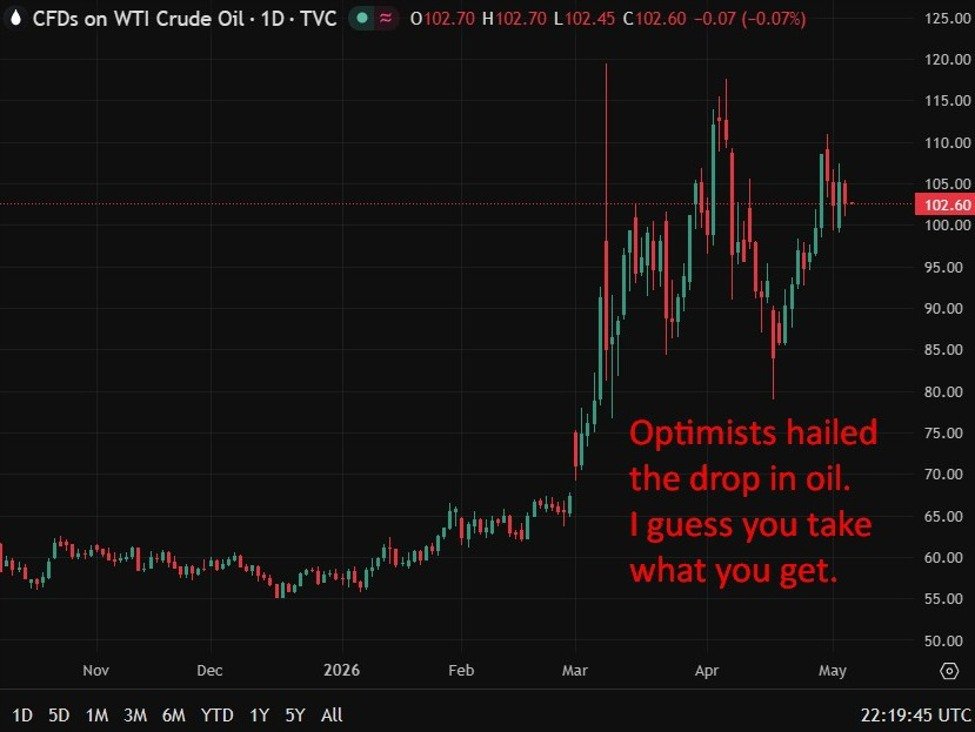
The combination of a declared US military objective and simultaneous reports of fresh Iranian strikes on the UAE encapsulates the central uncertainty weighing on energy markets: a ceasefire in name that remains deeply unstable in practice.
With the Strait of Hormuz still effectively constrained and hundreds of commercial vessels queuing to transit, any further escalation involving the UAE could rapidly reverse the modest reopening progress and send crude benchmarks sharply higher. Iran’s expanded area of control map and Revolutionary Guards warnings to vessels add a layer of navigational risk premium that tanker operators and insurers will price in regardless of the diplomatic mood music. Pakistan’s mediation and the prospect of Trump’s China visit offer the only near-term diplomatic off-ramps, but markets are unlikely to price in a durable resolution until uranium and ceasefire terms are formally settled.