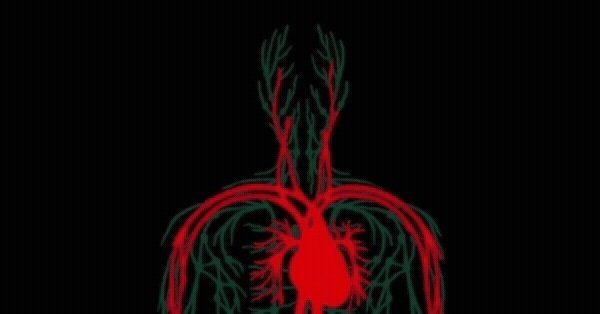
We’ve long known about two systems in the human body that circulate fluids. A physician in Italy observed the first one, the lymphatic system, which removes excess fluid from tissues, in 1622. Six years later, an English doctor described the second, the cardiovascular system, which pumps blood through our arteries, veins and capillaries. (It was a great decade for science.)
Now, scientists think they may have come across a third. In 2021, after examining the skin of people with tattoos, researchers saw in their biopsies that ink particles had traveled deeper into the body than they expected, through the skin into an interstitial space beneath it — and from that space into the fascia, the connective material below.
The discovery — a hidden pathway between two layers of tissue not known to connect in this way — was a surprise. It has far-reaching implications for our understanding of the human body and for our health. Because that interstitial space doesn’t just exist between the skin and the fascia, researchers discovered. There are spaces like it throughout the body, forming pathways between organs and allowing fluids, cells and molecules to move between them before re-entering the lymphatic and cardiovascular systems.
Scientists call this large interconnected network the interstitium. It’s the subject of an incredible story in The New York Times Magazine by Avraham Z. Cooper, an associate professor of medicine at Ohio State University.
The idea of a third circulatory system will not come as a surprise to anyone who practices traditional Chinese medicine. “This knowledge is actually quite ancient,” one professor told Cooper. “It’s something that other systems of medicine have been offering for a long time, but they didn’t have microscopes.” Mention the interstitium to an acupuncturist and you might get an eye roll, like, “No kidding.” (Ask me how I know.)
Acupuncture works, of course. The studies are clear. People seek it out for treatment of all sorts of ills, from chronic pain and migraines to anxiety and insomnia. The discovery of the interstitium, Cooper writes, may help us better understand how it works.
Traditional Chinese medicine holds that acupuncture is a way to balance the flow of energy — known as chi — through one of the body’s 12 main meridians. Acupuncturists insert thin needles into specific points along those meridians to enhance the flow of chi.
Those specific acupuncture points are within the same areas of connective tissue where fluid flows through the interstitium, researchers found. And when they injected dye into acupuncture points on the forearms of volunteers, it slowly migrated up the arm along a meridian.
“This pathway doesn’t go in the veins, it doesn’t go superficially,” one researcher said. Instead, he told Cooper, it flows through the interstitium between the muscles: “When I saw that, I said: ‘We’re onto something. This truly has to do with acupuncture.’”
The future is past
There will need to be a lot more research before we fully grasp the implications of an interconnected interstitium. But things that are good for you (healthy cells, for instance) move through it. So do bad ones (like metastatic cells). Cooper says there are already promising possibilities in that: in how the interstitium might inform the treatment of diabetes, gut health and cancer, among others.
It may also help us understand other biological systems.
Tiny freshwater invertebrates have a kind of interstitium, for instance. Plants appear to have one, too, that moves water and nutrients outside of cell membranes. Indeed, he writes, “fluid moving through interstitial spaces might have represented the first circulatory systems to develop in the earliest forms of complex multicellular plant and animal life, hundreds of millions of years ago.”
I knew it. We’re all plants! Please read the whole story here.
THE LATEST NEWS
War in the Middle East
Around the World
Put down the phone: This summer, Well is running a four-week “Touch Grass” Challenge. Sign up here.
Your pick: The most clicked link in The Morning yesterday was advice from moms.
Metropolitan Diary: “Can you hold my bird?”
TODAY’S NUMBER
11
— That is the percentage of Americans in their 50s who qualify as “frail” in tests that measure weakness, slowness, exhaustion, inactivity and unintentional weight loss. Here’s how to make sure it doesn’t happen to you.
SPORTS
N.B.A.: The New York Knicks are back in the Eastern Conference finals for a second straight year after walloping the Philadelphia 76ers. The decision to choose Mike Brown as coach looks pretty good right now.
N.F.L.: Trump bemoaned the state of the N.F.L.’s media deal in an interview, suggesting the cost of watching games could spell doom for the league.
Track and field: If you read anything today, make it this intensely personal story from Tina Sturdevant about American track legend Allyson Felix and pre-eclampsia — a life-threatening condition for pregnant and postpartum women.
I love this recipe for three-cup chicken because it’s dead simple to make — there’s no high-heat, fast-hands stir-frying. (It’s more like chair yoga than a spin class.) Also because the top-rated comment on it has a sentence with one of my favorite verbs: “I brought it to a Lunar New Year party and some Taiwanese guests tried it and then bogarted the whole pot because they said it was authentic and delicious.”
FEAR FACTOR
Here’s Wesley Morris on “Blue Film,” a film about a camboy who accepts $50,000 to spend the night with an anonymous older client who turns out to be his middle-school English teacher. It’s great: “There’s no plot to twist. It’s merely two men increasingly astonished by what they’re saying to each other about themselves, surprised by what they’re hearing, doing and feeling.”
Read “A Rumor of War,” Philip Caputo’s 1977 memoir about his service as a Marine infantry officer in the jungles of Vietnam. Caputo died last week at 84. His book should live forever.
Get health advice from medical professionals. That will set you apart from the half of U.S. adults under 50 who take wellness guidance from online influencers instead. True story.
Replace your raggedy, broken-zippered suitcase with one of the ones Wirecutter’s been recommending for over a decade. (I’ve got one. So does my wife. So does my editor.)