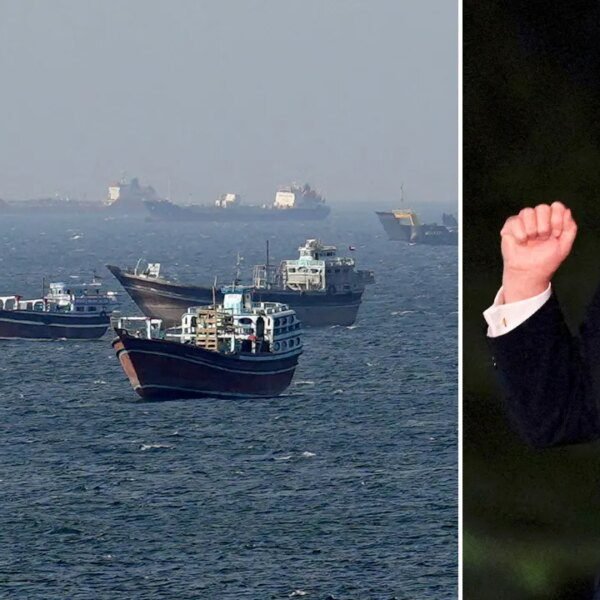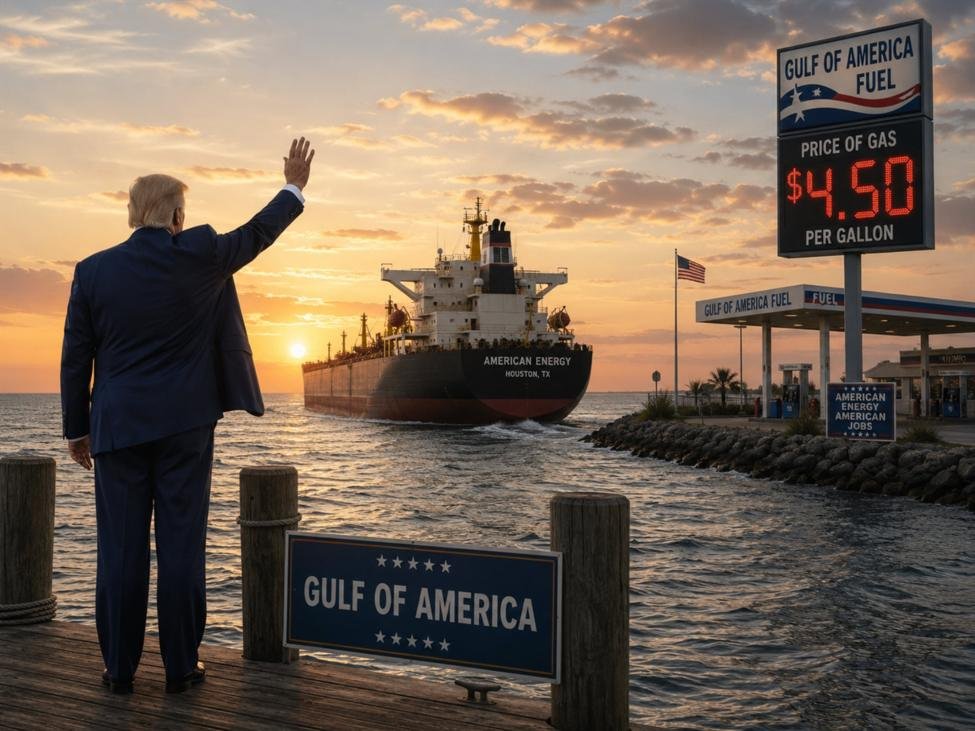
Trump is highlighting that ships are coming to Texas and Louisiana to load American oil — a positive development for US exporters and energy producers. Higher exports can support domestic drilling activity, investment, jobs, and overall energy-sector profits. For oil-producing states and companies tied to the energy industry, the increase in global demand for US crude is clearly viewed as a win.
However, for many consumers, the issue is whether that success is translating into lower costs at home. The national average price for gasoline, according to AAA, has climbed to $4.504 per gallon, up sharply from $3.137 a year ago. At the same time, inflation pressures remain elevated across the broader economy. US CPI inflation is running at 3.8% year-over-year and has not been below the Fed’s 2% target since 2021, underscoring how persistent price pressures have become.
Food prices have also moved noticeably higher, adding to the burden on households already dealing with elevated fuel costs. Service-sector inflation remains stubbornly strong as well, something Chicago Fed President Goolsbee emphasized again in comments this morning. Sticky service inflation is particularly important because it tends to be slower to reverse and can keep overall inflation elevated for longer periods.
In another sign of inflation pressure, Trump announced that tariffs on imported beef would be eased as beef prices reached record levels. The move appears aimed at increasing supply and helping stabilize prices for consumers, even as it contrasts with the administration’s broader tariff-focused trade stance (see price of ground beef chart below).
The broader concern for consumers is that while strong energy exports may benefit producers and improve trade flows, the “America First” message is harder to reconcile when Americans continue to face higher prices at the gas pump, at grocery stores, and across everyday services. Many consumers are still looking for meaningful relief from inflation rather than stronger export headlines.
So why isn’t domestic oil used to lower the cost at the pump?
Oil is a global commodity, not a domestic one
The core issue is that oil is priced on a global market. When US companies extract oil, they don’t automatically sell it cheaply to Americans — they sell it to whoever pays the most, which could be refiners in Europe, Asia, or elsewhere. So even if the US produces record amounts of oil, domestic gas prices still largely track global crude prices.
The refinery bottleneck
Crude oil doesn’t go straight into your gas tank. It has to be refined, and the US refining system has limited capacity. Many US refineries are also configured to process heavy crude (like what comes from the Gulf of Mexico or imports from Canada/Venezuela), not the light crude that’s increasingly produced from shale fields in Texas and North Dakota. This mismatch means some US oil still gets exported while certain imported crude gets refined domestically.
Export policy
The US lifted its ban on crude oil exports in 2015. Before that, domestic production more directly benefited American consumers. Now, US producers can (and do) sell abroad, which ties domestic prices more tightly to global benchmarks.
OPEC+ still sets the floor
Even if the US pumps more oil, OPEC+ (Saudi Arabia, Russia, etc.) can simply cut their production to keep global prices elevated. They’ve done this repeatedly. US shale producers are essentially price-takers in a market OPEC+ still heavily influences.
Private companies, not the government
US oil is mostly extracted by private companies whose legal obligation is to maximize profit for shareholders — not to keep American gas prices low. The government doesn’t control where that oil goes or what price it’s sold at (with some exceptions like the Strategic Petroleum Reserve).
What could actually lower gas prices?
- Re-imposing export restrictions on crude (politically very difficult and would anger allies and industry)
- Releasing the Strategic Petroleum Reserve (a short-term measure, already used in recent years)
- Expanding refinery capacity (takes years and faces environmental opposition)
- Resolving geopolitical crises like the current Strait of Hormuz situation, which would bring more global supply online
- Long-term: reducing demand through EVs and efficiency, which is the only thing that truly breaks the cycle
The hard truth is that as long as oil is traded globally and extracted by profit-driven companies, “we have a lot of oil” doesn’t automatically translate to cheap gas at the pump. The market doesn’t work that way -despite Trumps assertion that we have all the oil we need and we benefit from that. I guess we do have all the oil we need as I don’t wait at the gas pump, but it comes at a price. Tariffs, war, the global price of oil and profiteering don’t necessarily help the consumer.
Trump Entourage heading to the gas station