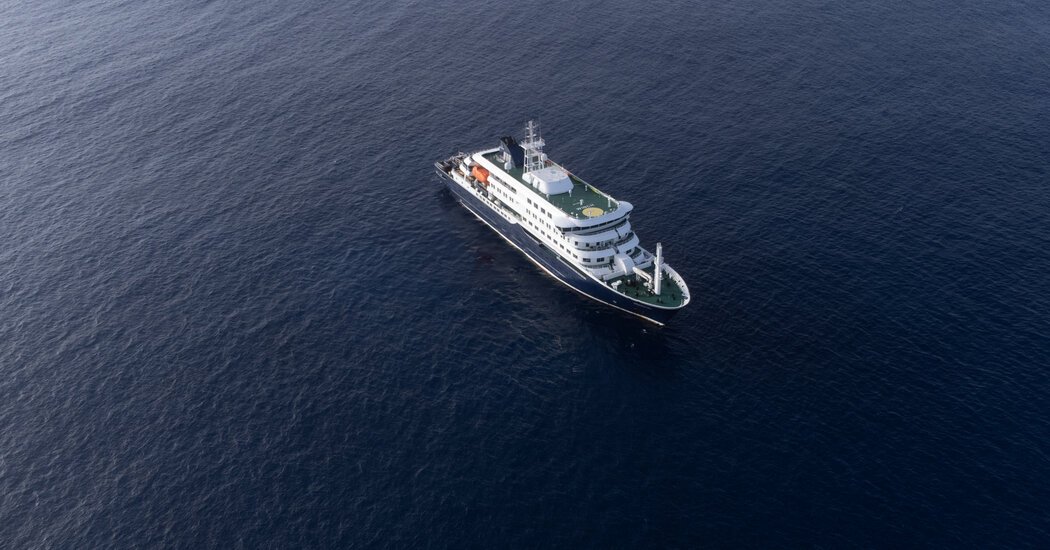
The grim-faced captain had bad news for the people gathered in the lounge of the MV Hondius. One of their fellow passengers had died.
“Tragic as it is, it was due to natural causes, we believe,” the captain, Jan Dobrogowski, told them on April 12. He added that the ship’s doctor had said the man was “not infectious, so the ship is safe.”
Less than two weeks earlier, the captain had convened the same group for a celebratory toast, as the Hondius left Argentina to sail the south Atlantic for bird watching and wildlife spotting on some of the world’s most remote islands.
Now, passengers consoled the dead man’s widow, Mirjam Schilperoord‑Huisman, 69, of the Netherlands. She and her husband, Leo Schilperoord, also 69, had crossed South America in pursuit of rare birds. Some asked if she would prefer that the trip be cut short.
“Everyone is here for a purpose,” she responded, according to Ruhi Cenet, a Turkish documentary filmmaker who was on the ship. She urged her fellow bird watchers to push on because her husband “would have wanted me to do the same.”
Within weeks, two more passengers, including Ms. Schilperoord‑Huisman, would be dead. The cause, health officials say, was almost certainly the Andes species of the hantavirus, a family of viruses carried by rodents that can spread between humans.
Over the following weeks, a world still traumatized by the coronavirus pandemic watched anxiously as the passengers and crew of the Hondius, hailing from at least 23 countries, lived the nautical nightmare of a potential outbreak in close quarters, far out at sea.