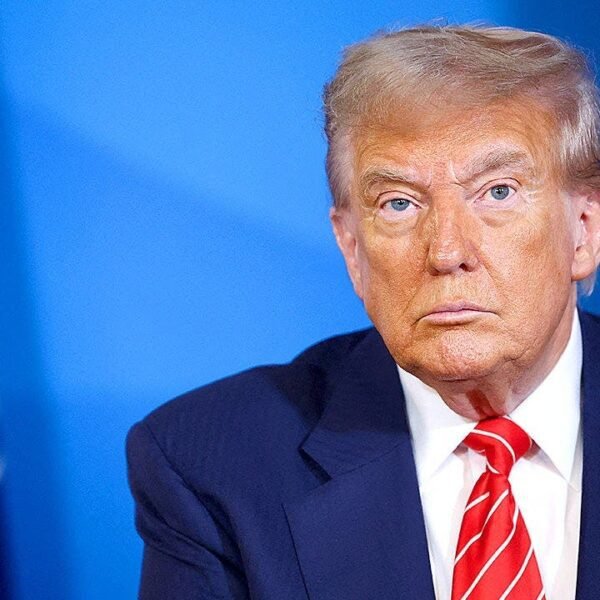
President Trump’s approval rating is drooping. His party is poised to lose seats in the House and is worried about the Senate. And yet Republican primary voters remain so loyal that they have no tolerance for Trump dissenters.
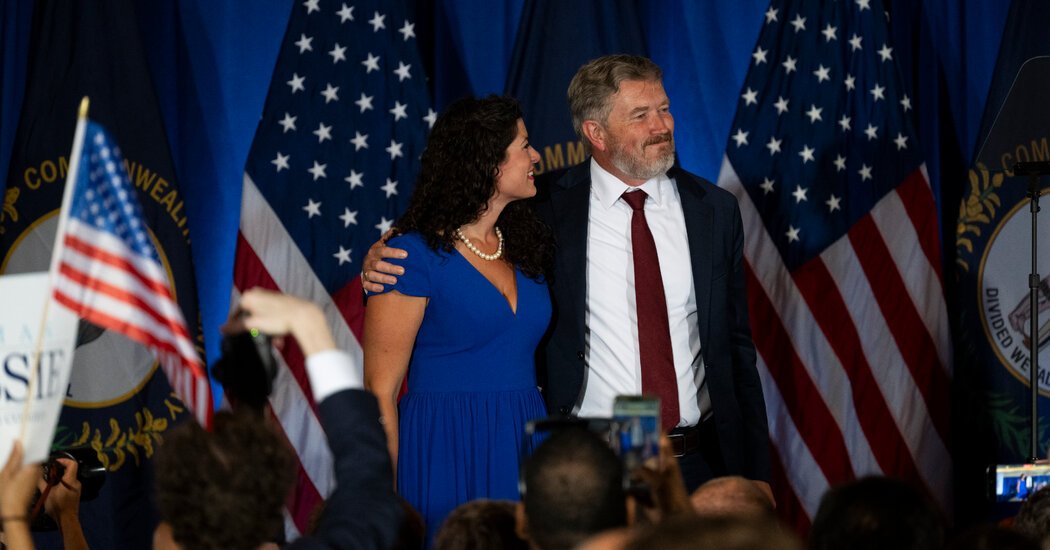
Republicans backed by the president won or were in first place in primaries on Tuesday in Georgia, Alabama and Kentucky, where Representative Thomas Massie, the House’s most prominent G.O.P. critic of Mr. Trump, was sent on his way out of Congress.
Hours earlier, the president’s endorsement of Ken Paxton in Texas was viewed as a hammer blow to Senator John Cornyn’s hopes of retaining his seat ahead of a runoff election next week.
In all, it was the latest evidence that even though Mr. Trump is in his second term, is nearly 80 years old and has led his party into political danger ahead of the midterms, Republicans are still firmly in his thrall.
Here are eight takeaways from the primary contests across six states on Tuesday:
Massie learned there’s no place in the G.O.P. for a Trump skeptic.
By now, the lesson for Republican politicians in primaries is clear: Oppose Mr. Trump at your own risk.
In Kentucky, Mr. Massie met the same fate on Tuesday as Senator Bill Cassidy of Louisiana did on Saturday night and several Indiana state senators did this month after resisting Mr. Trump’s redistricting push. All lost their primary races after Mr. Trump endorsed Republican rivals and urged voters to toss out the incumbents.
Mr. Massie did not go down without a fight. Unlike Mr. Cassidy and Mr. Cornyn, who sought to ingratiate themselves with Mr. Trump after crossing him, Mr. Massie made no apologies for opposing the president on the war with Iran or the Epstein files. He ran a robust and defiant campaign promoting his record in a race that wound up being the most expensive House primary in recent history.
It did not work.
Mr. Cornyn did not get Mr. Trump’s endorsement on Tuesday afternoon, and Mr. Massie lost his primary on Tuesday night.
Ed Gallrein, the retired Navy SEAL who defeated Mr. Massie, has vowed to do whatever Mr. Trump asks of him when he arrives in Congress next year.
Georgia Republicans are still searching for their Ossoff challenger.
In the one marquee Republican primary on Tuesday in which Mr. Trump did not endorse a candidate, Representative Mike Collins placed first in Georgia’s contest for Senate. But because he fell short of 50 percent of the vote, he faces a runoff next month against Derek Dooley, a former college football coach, for the right to take on Senator Jon Ossoff, a first-term Democrat.
Mr. Collins finished well ahead of Mr. Dooley, whose chief attributes include an endorsement from Gov. Brian Kemp and the same surname as his father, a longtime football coach and administrator at the University of Georgia. Representative Buddy Carter finished in third place.
Whoever emerges from the Republican runoff will face a well-funded Mr. Ossoff, who had $32.5 million in his campaign account at the end of April, according the latest Federal Election Commission reports.
Trump engineered the outcome he wanted in Kentucky’s Senate race.
One race that Mr. Trump did not leave for primary voters to decide was Kentucky’s contest for Senate. He endorsed Representative Andy Barr weeks ago and coaxed Nate Morris, a businessman backed by Elon Musk, out of the race with a promise of being appointed an ambassador.
Mr. Barr easily turned back his lone remaining serious opponent, Daniel Cameron, a former state attorney general. Mr. Cameron is a longtime ally and protégé of Senator Mitch McConnell, which did not make him very likely to win Mr. Trump’s backing.
Mr. Barr is a heavy favorite in the general election. Democrats nominated Charles Booker, a former state legislator who lost the 2022 election to Senator Rand Paul.
Georgia Democrats chose their nominee in a big governor’s race.
Keisha Lance Bottoms, a former Atlanta mayor and Biden administration official, took well over 50 percent of the vote in a crowded Democratic primary for Georgia governor. She will get a head start on Republicans, who were forced into a runoff, in what is expected to be another hard-fought race for the state’s top office.
Ms. Bottoms will face one of two Republicans: Lt. Gov. Burt Jones, who has Mr. Trump’s endorsement, or Rick Jackson, a wealthy health care executive who has spent tens of millions of dollars of his own money on the race. Their runoff is June 16.
The last two Georgia elections for governor have been expensive barnburners, with Mr. Kemp winning competitive contests against Stacey Abrams, who became a national political celebrity during her unsuccessful campaigns. Mr. Kemp is now term-limited.
Ms. Bottoms has a lower profile, but given Mr. Trump’s unpopularity, Democrats have a chance of winning the Georgia governor’s office for the first time since Roy Barnes was turned out of office in 2002.
Democrats got a working-class standard-bearer in Pennsylvania.
In a year when Democrats are trying to appeal to the working class, they nominated a House candidate who reflects the voters they hope to win over.
Bob Brooks, a retired firefighter and union leader, won a crowded primary in the Lehigh Valley in a district Mr. Trump narrowly carried in 2024. If Mr. Brooks beats Representative Ryan Mackenzie, a first-term Republican, in the general election, he would become a rare House Democrat who did not go to college.
Mr. Brooks won with an unusual coalition. He campaigned in recent weeks with Gov. Josh Shapiro and Pete Buttigieg, the former transportation secretary, and had an endorsement from Senator Bernie Sanders of Vermont.
In Alabama, one Trump ally made way for another.
Representative Barry Moore, who had Mr. Trump’s endorsement for the seat being vacated by Senator Tommy Tuberville, placed first in a crowded primary on Tuesday, advancing to a runoff next month.
Mr. Tuberville gave up his seat to run for governor and easily won that Republican primary. He will face former Senator Doug Jones in the general election.
Mr. Moore will face either Steve Marshall, the state attorney general, or Jared Hudson, a retired Navy SEAL, in the primary runoff for Senate. The winner is all but certain to win the general election in deep-red Alabama.
It’s the end of the road for Brad Raffensperger.
When Mr. Trump was trying to overturn his loss in the 2020 presidential election, one of his demands was for Brad Raffensperger, the Georgia secretary of state, to “find” him 11,000 votes to flip the state’s result in his favor.
Mr. Raffensperger declined and earned the president’s lasting enmity. Mr. Trump tried and failed to oust him in a 2022 primary contest, but Mr. Raffensperger’s attempt at a promotion to governor this year fell flat.
He placed a distant third in an eight-way field, missing a runoff for the top two finishers, Mr. Jones and Mr. Jackson.
Georgia Democrats failed to educate voters about a court race.
There were more votes cast in Georgia in the Democratic primary for governor than in the Republican one. And yet two State Supreme Court candidates backed by Democrats — including former President Barack Obama and former Vice President Kamala Harris — failed to oust incumbents appointed by Republican governors.
The difference suggests that Georgia Democrats did not have a turnout problem as much as they did a voter education problem. The State Supreme Court races are officially nonpartisan, but unlike in Wisconsin and other states where justices and judicial candidates have become identified with a party, the partisan votes did not translate in Georgia.
The result: Georgia’s Supreme Court will remain firmly controlled by conservatives. Eight of the nine justices were appointed by Republican governors.