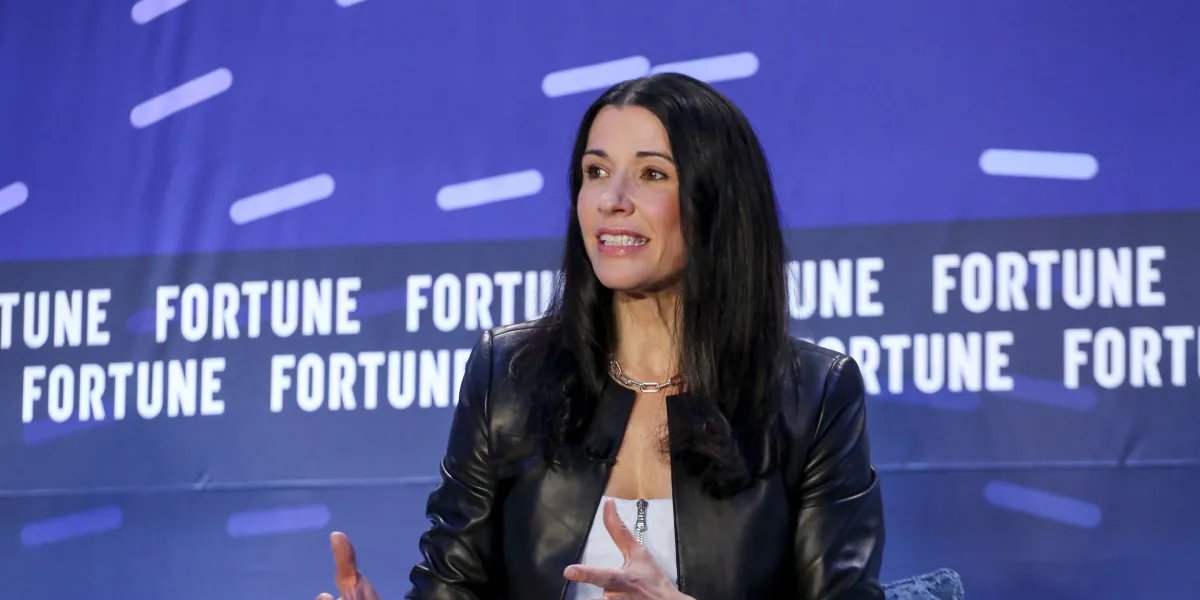
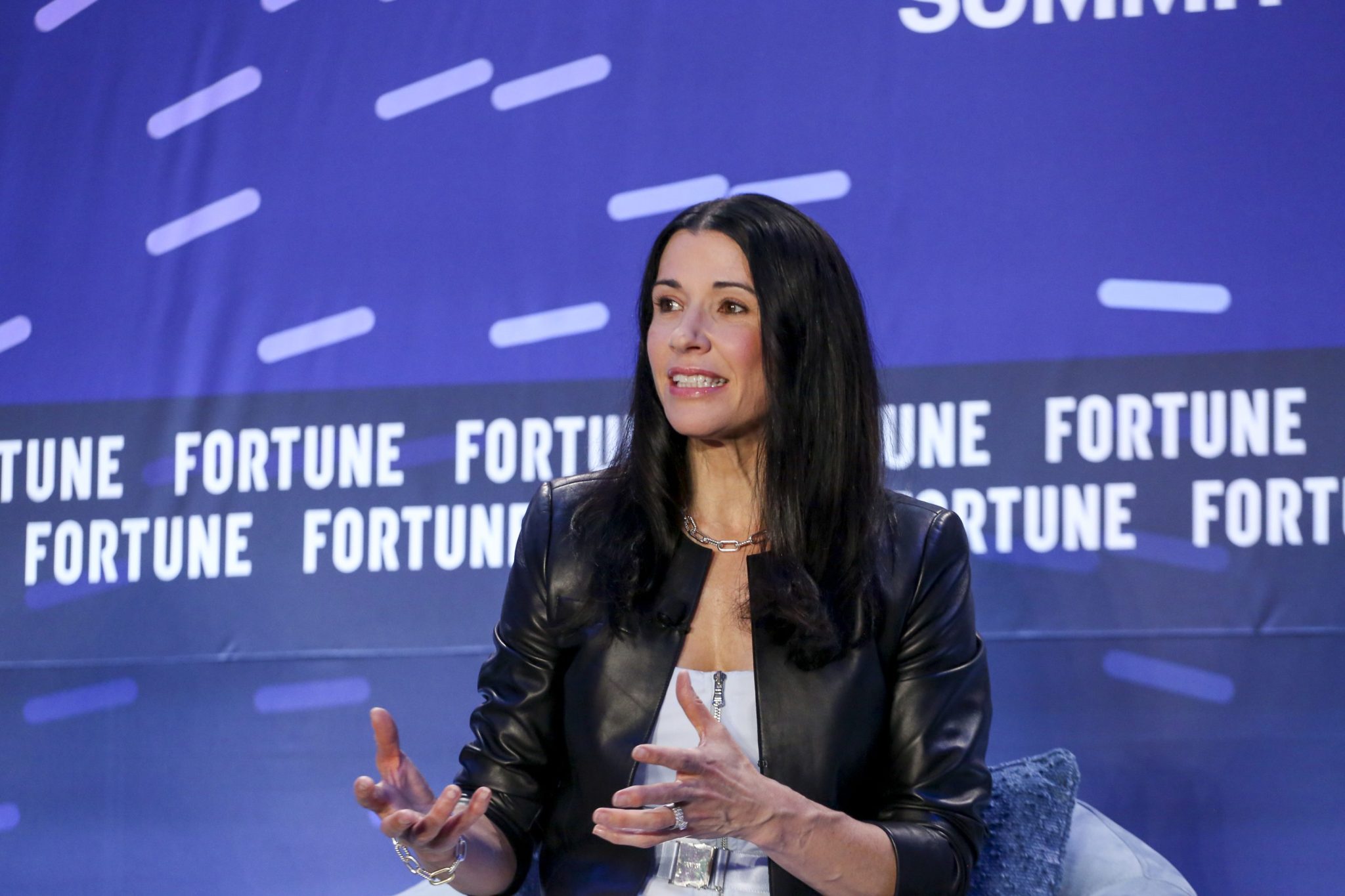
But at Fortune‘s Workplace Innovation Summit in Atlanta on Tuesday, a pay transparency CEO and a viral content creator who have spent years working on the issue both said that the problem isn’t companies not sharing pay, it’s that they can’t explain it.
“If companies were merely consistent with the things they say they care about in their pay philosophy, and what they actually pay in the execution of offers, merit, promotions, transfers, the pay gap would basically be eradicated,” Maria Colacurcio, CEO of pay equity software company Syndio, told the audience.
The disconnect, she said, isn’t intentional, but it still has consequences. HR and compensation teams spend months building thoughtful strategies. But then “that strategy hits the wild wild west,” when recruiters are trying to land candidates and managers are making last-minute retention plays. Merit increases also often go to whoever is loudest, not necessarily whoever performed best.
“All of that thoughtful strategy goes out the window, because all these daily decisions are just completely ungoverned, and so the output of that is where we end up [being] inconsistent,” Colacurcio said. Those inconsistencies show up as pay decisions that drift from stated values, and employees that can’t get a straight answer about why they earn what they earn.
Hannah Williams, the founder of Salary Transparent Street, has built a viral media platform asking strangers on the street what their salaries are, whether they think they earn enough, and why they make what they make.
But with all of her experience talking to everyday people, most people can’t answer that last question.
“Are people able to articulate why they make the salaries that they make? Absolutely not,” she said at the Fortune Workplace Innovation Summit. “When I ask them, do you know why you make what you make, they’re like, ‘what?’”
Is the gender pay gap getting worse in 2026?
The conversation, moderated by Fortune Senior Features Editor Indrani Sen, landed at a moment when pay is actually moving in the wrong direction.
Women’s earnings barely rose in 2024, while male earnings increased 3.7%, according to the most recent U.S. Census Bureau report. Women working full-time, on average, earned 80.9% of what men earned that year, down from 82.7% in 2023. It’s the second consecutive year the gap has grown, despite the spread of pay transparency laws to states including New York, California, and Colorado.
Meanwhile, six in 10 women say men have more opportunities when it comes to earning competitive wages, according to a 2026 survey from The Associated Press-NORC Center for Public Affairs Research.
In Europe, an even bigger change is coming. The EU Pay Transparency Directive takes effect on June 7, giving employees in member states the right to request the median salary of colleagues of the opposite gender doing comparable work. Colacurcio said the directive will “crack this nut wide open” for global employers who haven’t yet built the infrastructure to defend their own pay decisions.
To be sure, “it’s not unlawful to pay people differently if you’re looking legally, and for a company it’s not bad comp practice to pay people differently,” Colacurcio said. “You just have to have a philosophy and a strategy as to what you value.”
But when workers can’t get answers to their questions about pay, Williams said, it can breed the kind of resentment that transparency was supposed to solve.
“If you find out Greg makes 100k more, and there’s anger, that’s a clear demonstration that people don’t understand why they’re paid what they’re paid,” she said. “It’s really important in the hiring process to clearly communicate how pay is determined and explain why people are paid what they’re paid so that that disgruntlement doesn’t happen.”
Colacurcio, as CEO of a pay transparency company, reports three numbers annually: pay equity (whether people doing similar work are paid similarly regardless of gender or race), the pay gap (which reflects representation and movement up the ladder), and the CEO pay ratio.
“It’s really important to stay committed to pay transparency, even when the numbers don’t look great,” she said. “Some years it’s painful, and some years it’s not painful.”
AI complications and the taboo of talking salaries
AI has also made pay equity and transparency more challenging, the panelists said.
Companies are racing to put a premium on AI skills, but most can’t yet define what an AI skill is or how to verify it. Without governance, Colacurcio warned, employers will have “a really hard time differentiating between what’s real and what’s not real.” That only creates the next set of unexplainable pay decisions.
Williams, who quit her data analyst job in 2022 after discovering she was underpaid and doubled her salary on the next offer, also said an older generation’s reluctance to talk about money and salaries publicly is a challenge. “It’s what we’ve been spoon fed for decades,” Williams said. “Don’t talk about your pay, don’t rock the boat, don’t get in trouble.” But she pointed out that under the National Labor Relations Act, it’s a protected right.
“We can learn how our experiences have shaped each other and how we can help each other,” she said. “I think it’s important to come to the table with a lot of empathy, take it slow, [and] provide transparency.”