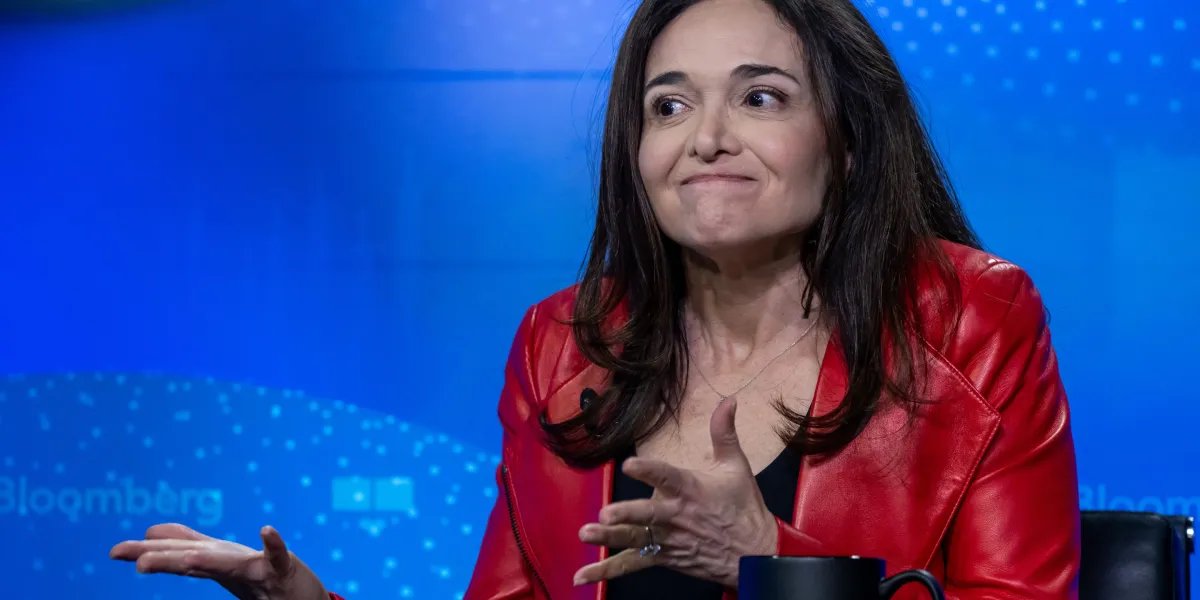
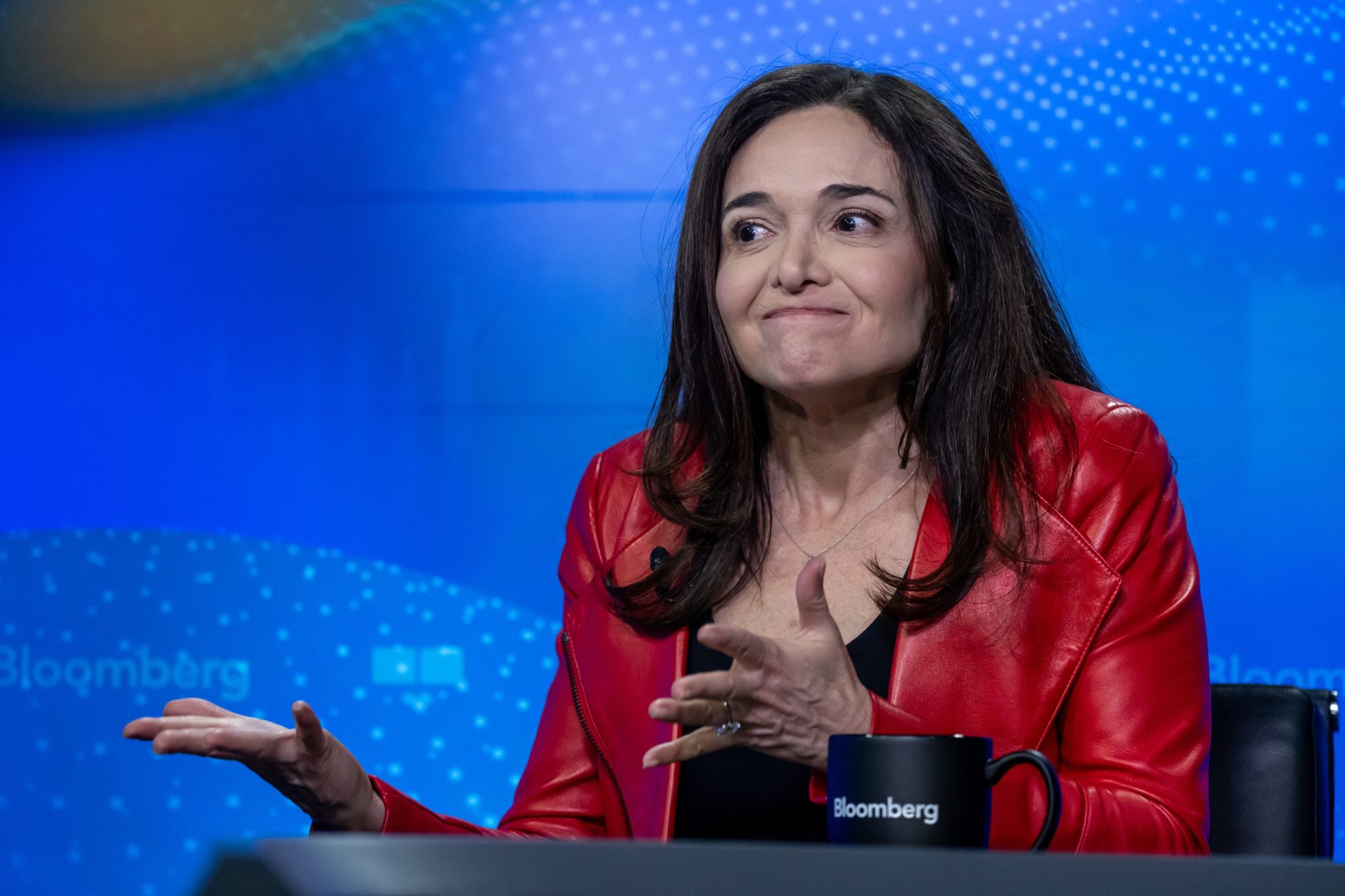
For generations, graduates have been advised to map out their careers: Pick a job, plot the promotions, and know exactly where you want to be in 10 years. But ex-Facebook exec Sheryl Sandberg thinks that advice is dangerously outdated.
“Don’t script your career when the future is uncertain,” the former chief operating officer of Meta just told graduates at Brandeis University. “You don’t need a 10-year plan. If I had one, I would have missed the internet.”
Sandberg, who went on to become one of the most powerful women in Silicon Valley, knows firsthand how tempting it is to cling to a rigid plan when the job market looks shaky—as well as what it’s like to enter the working world at a time of huge technological disruption.
Having graduated from Harvard in 1991, the internet as we know it barely existed—the World Wide Web had just been invented and wasn’t released to the public until two years later.
After leaving school, she worked at the Treasury Department under President Bill Clinton, but when the administration ended, she struggled to find her next job.
“There were days—and I’m not being dramatic—when I thought I would never find one,” she added. “When I finally got an offer, I worried that the company might not even survive.” That company was called Google.
Of course, it’s since become one of the world’s most valuable businesses: Today, Google has a $4.7 trillion market cap. And Sandberg benefited from being there in the early days, growing its sales team from four people to 4,000, before famously becoming Mark Zuckerberg’s right-hand woman. None of it could have been planned. The technology—and the roles it would create—didn’t exist yet.
“I wish someone had told me during those many months of fear, the plan was never the life raft,” she said.
The point to Gen Zers is this: In an AI-disrupted job market where the roles today’s graduates are chasing may look completely different (or disappear altogether) within a few years, trying to script their future isn’t just pointless. It could make them miss the very opportunity that changes their life.
“You don’t need a 10-year plan,” she concluded. “You need two things: a short-term direction, something to work towards right now, and a long-run dream, a sense of the life you want to build.”
“Don’t try to connect those two points,” she continued. “The path is going to surprise you, and the opportunity lies in those surprises.”
Sheryl Sandberg tells Gen Z it’s always the worst year to graduate—and she has proof
Sandberg’s advice lands at a particularly anxious moment for young workers. Gen Z graduates are entering a labor market just as it’s being completely overhauled by AI.
From OpenAI’s Sam Altman to Anthropic’s Dario Amodei, tech leaders keep sounding the alarm entire professions could soon be wiped out by AI. The World Economic Forum warned in January 2025 nearly half of bosses worldwide plan to fire and replace their workers with bots in the next four years. And entry-level workers are apparently first on the firing line.
Sandberg acknowledged that fear.
“I know many of you are rightly worried about what comes next,” she said. “You’ve seen the headlines: This year’s graduates face the toughest job market in decades.”
But she also emphasized to the bright young minds of tomorrow that this is nothing new. And she brought the receipts to prove it.
“Let me read some other headlines: This year’s college class faces a daunting task, finding jobs in the worst economy since the Great Depression—that was 2003,” Sandberg said. “Hopes for an easy job search have fizzled as graduates enter the weakest market in decades—2009.” She read out old headlines about graduates entering the worst job market dating back to 1971.
“Declaring this particular year the worst is a tradition almost as old as graduation itself,” she added. “I’m not telling you the job market is easy, but every generation has figured it out.”
CEOs agree Gen Z should ditch the five-year plan
Sandberg is far from the only powerful voice telling workers to loosen their grip on the five-year plan. Ryan Roslansky, the executive vice president of LinkedIn and Microsoft Office, recently called it “outdated” given how much AI could change the workplace.
“In reality, when you know technology and the labor market and everything is moving beneath you, I think having a five-year plan is a little bit foolish,” Roslansky said on a No One Knows What They’re Doing podcast episode.
Liz Baker, CEO of Greater Good Charities, which has distributed more than $1 billion in impact across 121 countries, puts it even more bluntly: “If I had done a five-year plan five years ago and we stuck to it, we wouldn’t be around. You have to be nimble.” Her organization now plans every six months, sometimes three to keep up with the pace of change.
“Things are just changing too rapidly,” she told Fortune.
But some loose long-term planning, as Sandberg suggested, could be useful.
Likewise, Asana CEO Dan Rogers argues that without some kind of future vision, it’s hard to know where to start. He had a grand 25-year plan: to be a Silicon Valley CEO. He didn’t know how he was going to get there, but every decision he made in the short term had that end goal in mind.
“It’s probably the case that you can’t achieve your goals if you don’t know what your goals are,” he told Fortune, while pointing to Michael Jordan, who reportedly had an NBA poster above his bed at five years old—not a plan, but a vision he never let go of.
His advice to Gen Z? Articulate their calling in life, picture it in their mind and keep it front and center of every career decision thereafter.