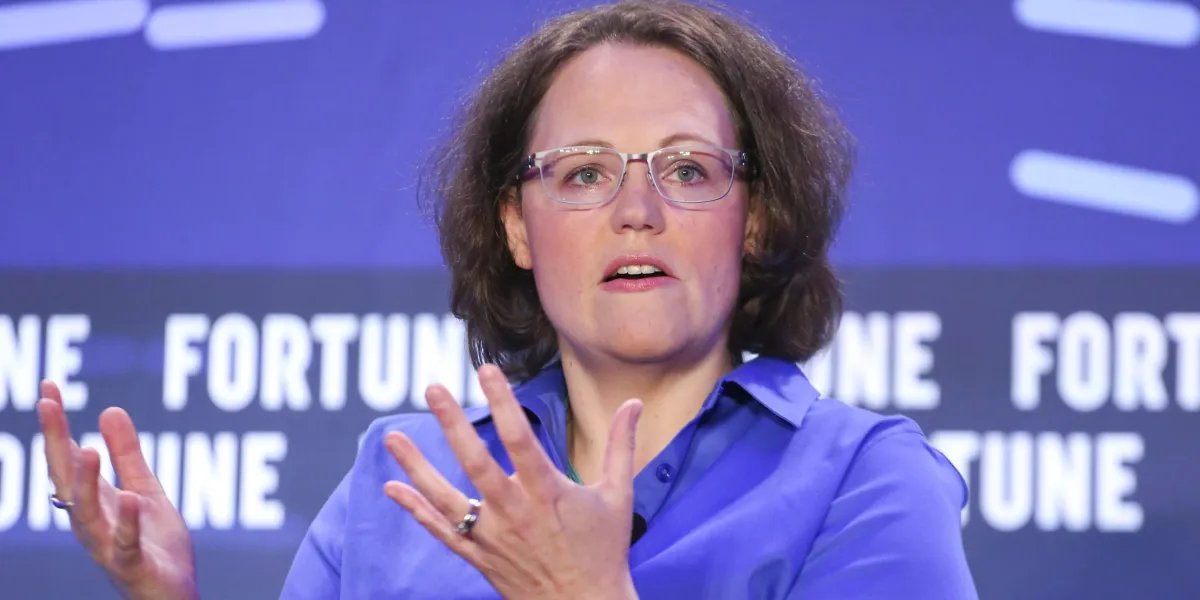
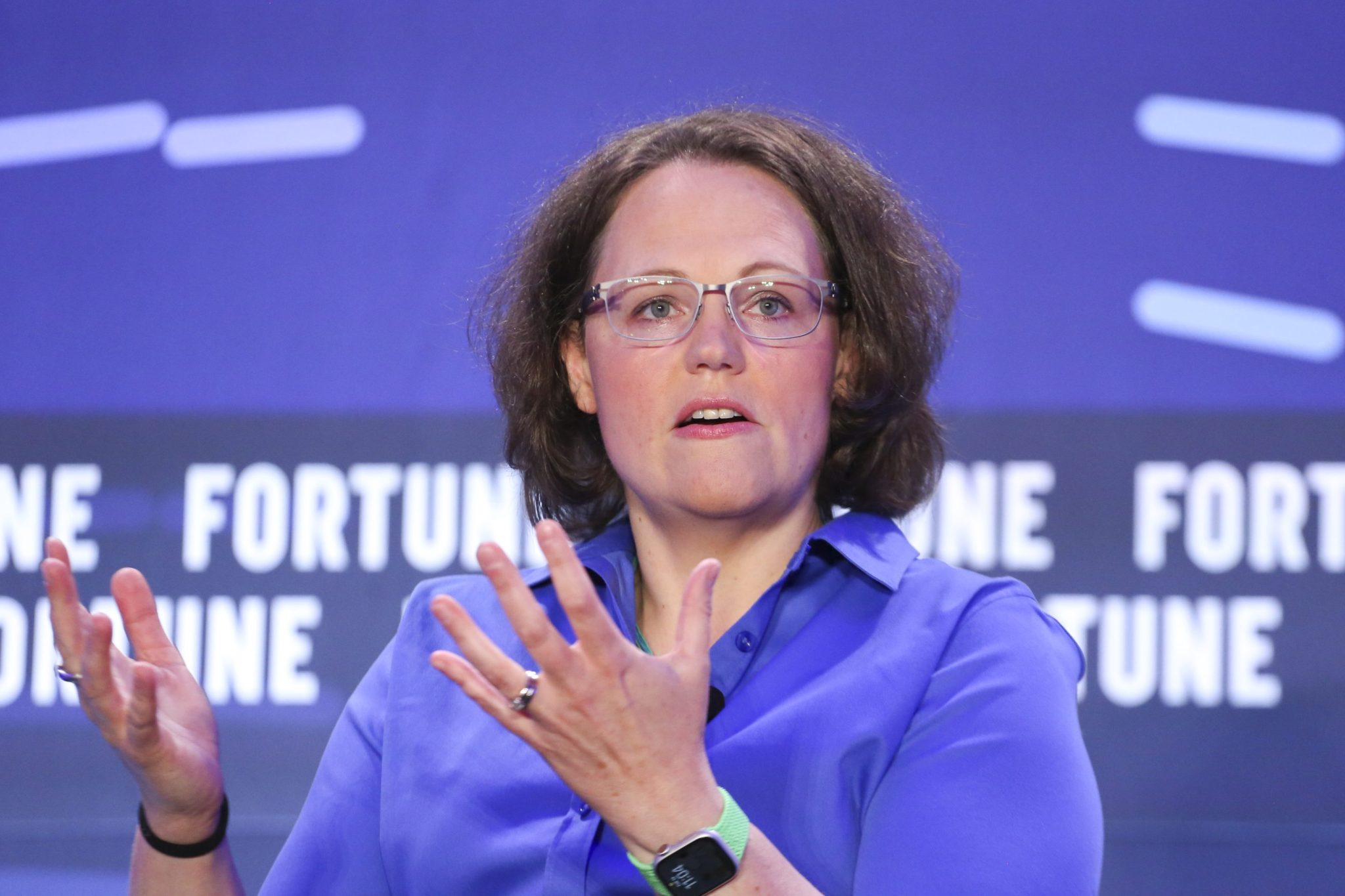
The modern workforce has no shortage of white-collar tensions—from return-to-office mandates to AI anxiety and Slack etiquette wars. But another issue is quietly creeping into the workforce—one rooted not in technology or bureaucracy, but in age. America’s population is aging rapidly, and there aren’t enough young workers to backfill their critical roles; Svenja Gudell, chief economist at Indeed, says the generational imbalance is straining the workforce.
“We’re entering a new phase of a great mismatch,” Gudell recently said onstage at Fortune’s Workplace Innovation Summit. “We’re going to have workers in places we actually don’t want workers, and we’re going to have to reallocate a whole bunch of jobs to other people, and that’s going to cause a little bit of pain.”
The Indeed economist explains that most industrialized countries are going through the shift. Among the Group of Seven countries with advanced economies—including the U.S., Canada, France, and Italy—workers 55 and up will make up more than 25% of the workforce by 2031, about 10% higher than in 2011, according to an analysis from Bain. And as more baby boomers (representing 15% of the U.S. workforce) drift into retirement, younger generations won’t be able to fill in the gap. Plus, the career ambitions of Gen Z and millennial workers differ from those of their predecessors—and it’s creating a supply gap in some industries like skilled trades, manufacturing, and healthcare.
“It’s really important to also recognize that there’s lots of stuff happening right now—it’s not just AI,” Gudell continued. “Demographic change is a huge one that’s knocking on our door right now.”
Becky Schmitt, chief people officer at PepsiCo, agrees with the economist that there’s a glaring gap in the labor force. And she believes AI can help address that problem; the executive explained that as demographics change, the $203 billion multinational food company can streamline some of the “harder jobs” that people are less interested in by automating them. And younger generations’ unwillingness to take on certain roles even extends far beyond the U.S.
“We’re even finding in countries where you still have large populations and a lot of young people [that] they want to be influencers—they don’t actually want to be a salesperson,” Schmitt said onstage during the panel. “So there is this mismatch also in interest, and so we’ve got to be more efficient.”
The growing great mismatch in the global workforce
The U.S. and many industrialized countries are facing the same issue: older populations are growing, while smaller, younger generations are opting to have fewer kids.
Workers 55 and older have been the fastest-growing age group in the labor force for over two decades, accounting for nearly a quarter of the U.S. workforce in 2022, according to U.S. Census Bureau research. And now, some sectors are scrambling to attract young professionals to their fields; employees aged 55 and up made up 80% of the utilities industry in 2022. And in manufacturing and wholesale trade, these older workers accounted for 40% of the headcounts.
And this generational mismatch is like no other; for the first time in modern history, older people aged 65 and up will outnumber 16-year-olds in the workforce, according to a 2024 Lightcast report. OECD research has also found that the working-age population, aged 20 to 64, will decline in many of these developed countries in the coming years. By 2060, the working-age population will fall by 30% in a quarter of OECD nations—from Canada and Colombia to South Korea and Spain.