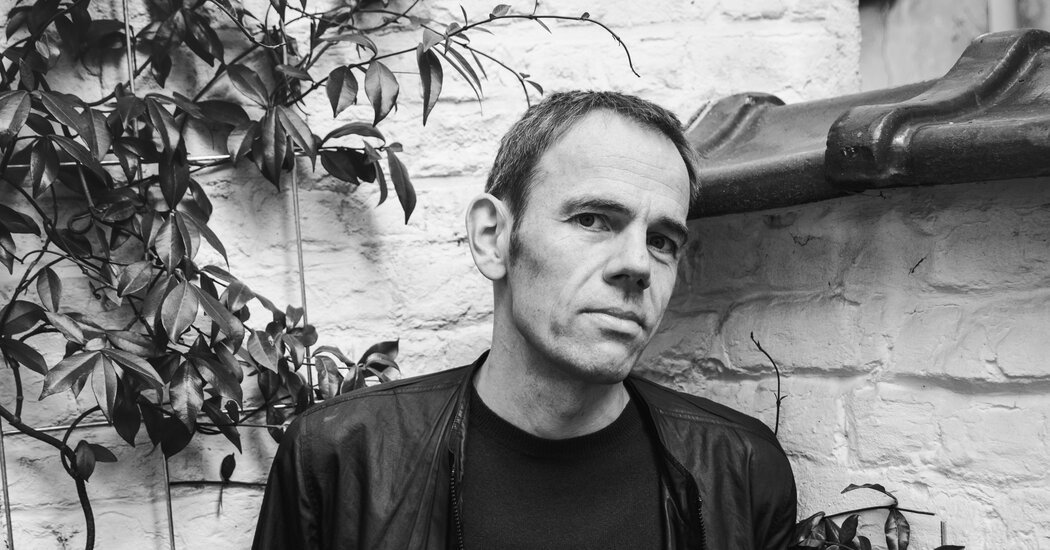
Mr. van Middelaar’s association with Kojève goes far back. In the 1990s, he wrote an influential doctoral thesis, later published as “Politicide,” that accused Kojève of the intellectual murder of politics in postwar French thought. Thanks to him, an entire generation of Frenchmen came to believe that history had an intrinsic direction and purpose. Such a view not only fostered a nasty admiration for totalitarian regimes that invoked a mandate from history, not least Stalin’s Soviet Union. It also, Mr. van Middelaar claimed, contained no clues for actual, day-to-day political action.
The critique clearly had a contemporary slant. Against the triumphalist sensibility of the 1990s, Mr. van Middelaar cautioned Europeans against all-encompassing theories that declared history and politics over. Instead of Hegel, he urged them to look to another philosopher — the Italian Niccolò Machiavelli, who insisted that politics took place on a terrain of radical contingency and that history was a random play of fortune rather than a patterned process. The post-Cold War world would not last, Mr. van Middelaar warned: Europeans were not on a vacation from power forever. One day they would experience their “Machiavellian moment.”
After his star debut, Mr. van Middelaar joined the European Commission as a counselor and spent the high years of the euro crisis in the cockpit of the European Union. He wrote about the history of the union and its leadership, urging greater confidence and celerity. Yet it took Russia’s invasion of Ukraine in 2022 to shake Europeans out of their lingering somnolence and President Trump’s threats to dissolve the Atlantic alliance to fully awaken them from their daydream. “It is only in Europe,” Mr. van Middelaar wrote last year, “that recent turbulence and disruptive events came as a true shock.”
His advice was stern. Instead of a rigid politics of rules, the European Union’s trademark, Europeans need a politics of events. In this way of thinking, history’s unpredictability is the new normal rather than a confusing exception. In a world frayed by chaos and crisis, the call is not for lawyerly wrangling but for swift decision making. Nowhere is this need for urgency clearer than in defense. In the past two years, BIG’s output has featured a familiar list of proposals in the name of security autonomy: common debt issuance, a digital euro, a European economic security council.
Amid this menu of options, one less orthodox proposal stands out: a revamped European Defense Agency. Founded in 2004, the agency has re-emerged as a hub for joint projects aimed at increasing military collaboration. BIG would like to see it graduate to a more ambitious role, coordinating Europe’s rearmament. For this, Mr. van Middelaar finds inspiration in the so-called Eurogroup, in which eurozone ministers choose a first among equals to guide their discussion of budgets. The reimagined body would serve a notable purpose: to prepare Europe for decoupling from the United States’ military-industrial complex.