While the nascent deal being negotiated now is vague, at best, on the nuclear issue, Israeli experts were alarmed that elements key to Israel appear not to have been mentioned at all.
“No matter what will happen, President Trump will declare victory, a total win,” said Jacob Nagel, a former acting national security adviser to Mr. Netanyahu.
“It’s very easy to say what topics” will be up for future negotiations, Mr. Nagel told reporters on Sunday in a video briefing. But, he said, Iran’s ballistic missiles and its support for proxy groups in the region do not even appear as topics in the publicly circulating details.
Mr. Netanyahu’s opponents were still less charitable about the potential deal.
“A catastrophe from Israel’s perspective,” Avigdor Liberman, a former Israeli defense minister and a right-wing politician, wrote in a social media post on Sunday. Once an ally of Mr. Netanyahu, he is now a bitter critic.
Yair Lapid, the centrist leader of Israel’s parliamentary opposition and a former top government minister, said he hoped the reports about the agreement with Iran were not true. “But if they are,” he said in a statement, “this is one of the most shocking failures of Israel’s foreign and security policy.”
Current Israeli government officials have said little, apparently for fear of upsetting Mr. Trump.
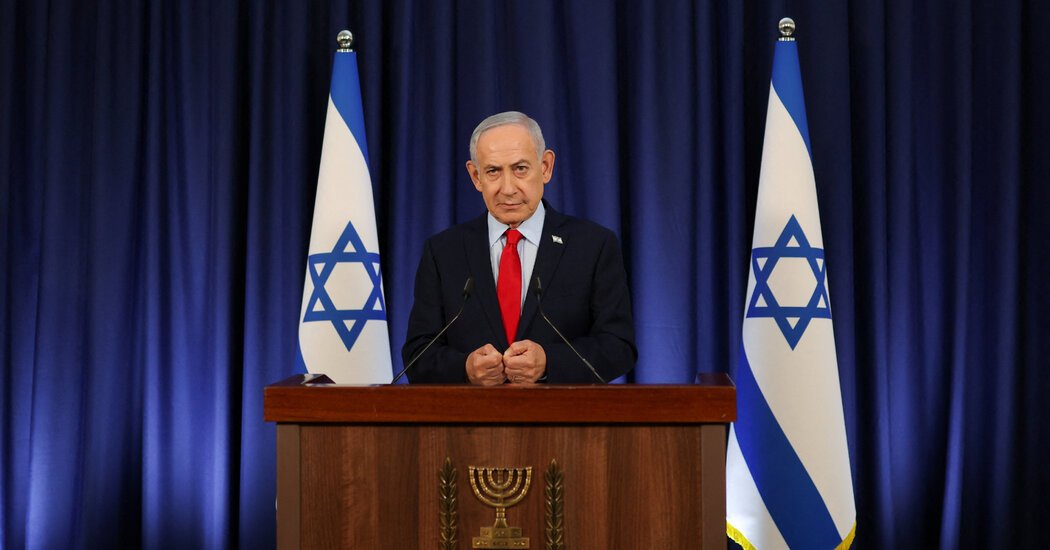
Mr. Netanyahu issued a statement on Friday saying: “As long as I am the prime minister of Israel, Iran will not have nuclear weapons. President Trump and I are in full agreement on this issue.” His statement neglected to mention ballistic missiles or proxy forces.
An Israeli who was briefed on the potential deal with Iran, and who requested anonymity to discuss diplomacy, listed Israel’s main problems with the proposal:
-
There are no clear answers regarding the treatment of Iran’s stockpile of enriched uranium, and not enough curbs on Iran’s nuclear program, with the deal appearing to rely on Iranian good will.
-
The deal lays out no clear mechanism for forcing Iran to halt its support for its proxy forces. But it would mean the suspension of Israel’s campaign against Hezbollah, the militant group it is fighting in Lebanon.
The latest round of fighting in Lebanon erupted after Hezbollah fired at Israel days after the U.S.-Israeli war on Iran began in late February. Iran has insisted that any broader peace agreement extend to the conflict in Lebanon.
Israel has sought to prevent any direct link between a deal with Iran and its military campaign against Hezbollah, noting that the militants are on its doorstep, but its influence appears to have been limited.
With Israeli national elections expected to take place by late October, Mr. Netanyahu is under intense pressure from within his governing coalition and from critics outside the government not to accede to dictates from Mr. Trump. He has been reluctant to oppose Mr. Trump publicly, not least because he has championed their close relationship as one of his main political credentials.
On Sunday, after Israel struck what it said was a Hezbollah command center on the outskirts of Beirut, Mr. Trump urged both sides to exercise restraint and sharply criticized the Israeli attack, saying it “should not have happened.”