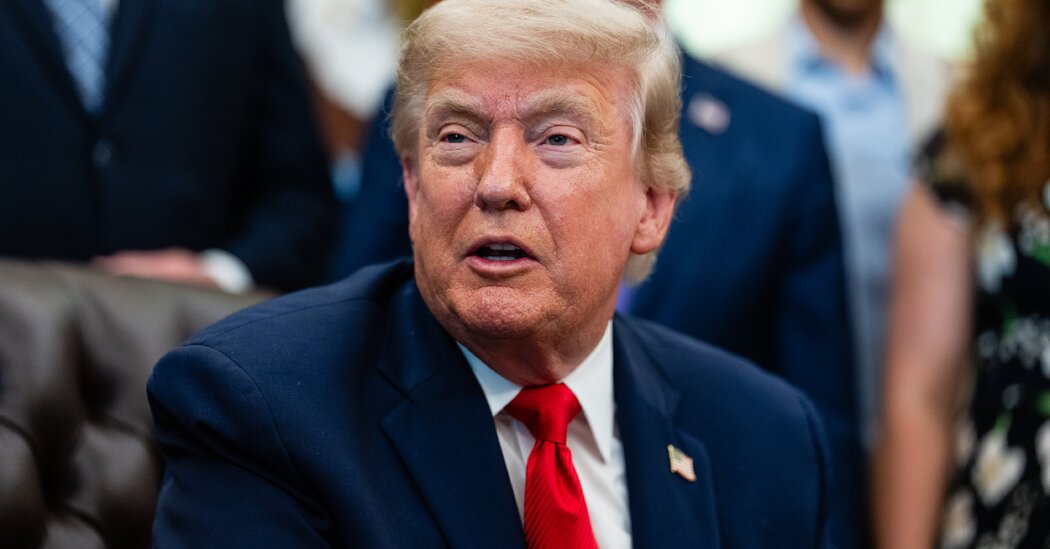
“He was a total gentleman,” Mr. Trump said of Mr. Xi, whom he visited in China last month. “He didn’t send a tanker, along with 20 destroyers on each side of it, to try and break up the blockade,’’ an act that would have put the Chinese and American navies into potential conflict.
But he excoriated Mr. Netanyahu for mounting attacks that nearly derailed the final agreement.
“He’s a very difficult guy,” Mr. Trump said of the Israeli prime minister, “and to be honest with you, he should be very thankful to us for doing this. Because if Iran had a nuclear weapon, Israel wouldn’t be around for two hours.”
Mr. Trump’s assertion that the United States would, if necessary, become a paid police force for the Middle East would be a striking, if very Trumpian, departure. The president would, in effect, be turning American protection of the region — and the U.S. nuclear umbrella — into a mercenary force, there in return for profit. The arrangement would essentially reject the post-World War II American tradition, in which the United States used its power to assure global peace and prosperity.
It is not the first time Mr. Trump has suggested such arrangements in various parts of the world. But pressed on Sunday on whether he had won the agreement of Gulf states to such an arrangement — including American allies like Saudi Arabia and the United Arab Emirates — he did not offer a direct answer, suggesting instead that he had just begun to discuss the issue. It would only happen, he suggested, if Iran remained an adversary.
Mr. Trump described Iran’s current leadership, including the new supreme leader, Ayatollah Mojtaba Khamenei, as pragmatists. It was a vastly different tone from the one he took on the opening day of the war, when he urged the Iranian people to rise up and take over their government once the American and Israeli bombing was complete. He acknowledged that he had said that, but went on to note that the Iranian people did not have access to arms — and would be slaughtered if they tried.