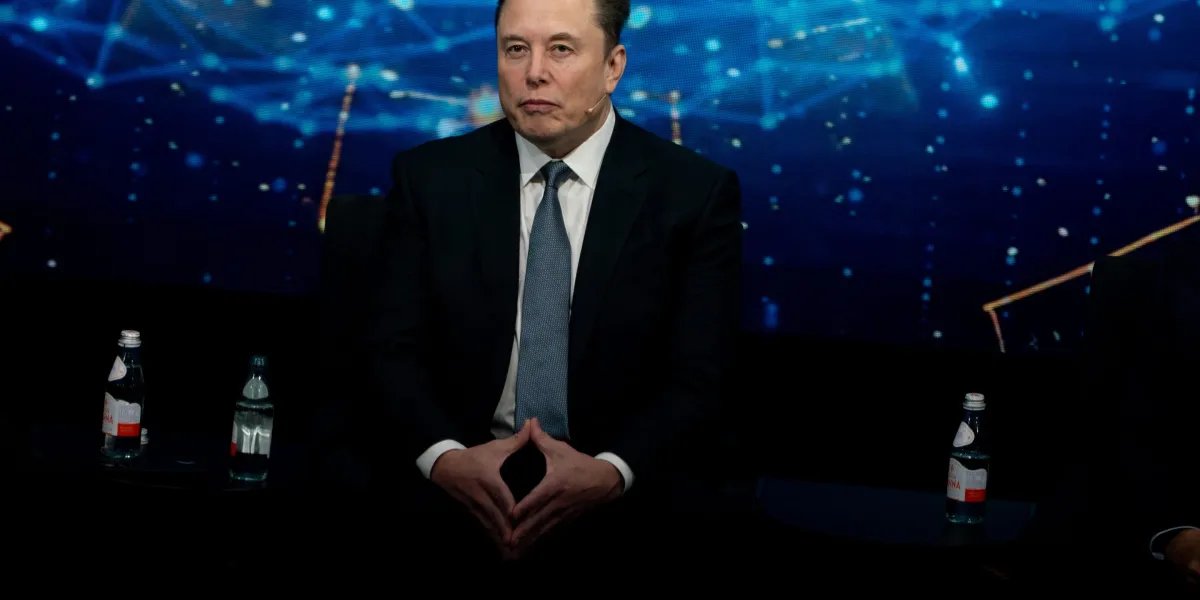
SpaceX’s stunning IPO pop has driven Elon Musk’s net worth to astronomical levels. It’s also given him an extraordinary business tool: a supercurrency for mergers and acquisitions.
Musk demonstrated the power of that currency on Tuesday when SpaceX announced its acquisition of AI coding startup Cursor for $60 billion in stock. Some say the deal may be the largest ever acquisition of a venture-backed startup. While SpaceX and Cursor had announced a deal in April that gave SpaceX a call option to buy the startup after the IPO for $60 billion in stock, Wall Street’s appetite for SpaceX stock has transformed the economics of the deal for Musk.
In theory, the deal has cost Musk almost nothing.
SpaceX is paying for Cursor entirely in stock—and that stock has appreciated by several times the initial price of the deal. SpaceX opened at $135 per share on June 12 and closed Monday at $192.46, giving SpaceX a market cap of $2.51 trillion—up roughly $740 billion from its IPO valuation in less than four trading days. The $60 billion Cursor acquisition represents less than a tenth of that gain.
In fact, SpaceX’s stock appreciated by the entire cost of Cursor in a matter of hours on its first day of trading.
“The IPO gave SpaceX a valuation and a premium currency,” Franco Granda, Senior Analyst at Pitchbook who covers SpaceX told Fortune over email. “Signing a $60 billion all-stock deal four days after listing, with the stock up more than 50% from the offer price, shows the playbook. SpaceX can now buy a company that size without touching cash, debt, or IPO proceeds, and the higher the stock runs, the cheaper the deal feels.”
What’s more, Granda said, SpaceX’s dual-class structure, in which Musk controls nearly all the votes, “removes the last bit of friction,” allowing SpaceX to “move at a speed no normal large-cap acquirer can.”
SpaceX raised $86.2 billion after exercising its greenshoe option to purchase additional shares—the largest IPO ever—giving Musk both a cash war chest and a public stock he can deploy as acquisition currency without touching it. The Cursor deal is the first demonstration of what that looks like in practice.
“I’m just not sure what else he wants to add to the portfolio. Grok is not performing as well as the other tools that are on the market, a lot of firms are partnering across this space, whether it’s Open AI and Microsoft,” Tammy Madsen, professor at Santa Clara University’s Leavey School of Business, told Fortune. “So it’s, it’s hard to say, I wouldn’t expect him to stop though. His focus has always been high risk, high reward.”
A win, win deal
The deal is a nice outcome for Cursor too, of course.
Three months ago, Silicon Valley was preemptively writing the AI coding startup’s obituary. Cursor was thought to be losing ground to rivals like Anthropic’s Claude Code and OpenAI’s Codex. Cursor cofounder and CEO Michael Truell, 25, is now, on paper, one of the youngest billionaires in history.
The San Francisco-based startup, which is backed by Andreessen Horowitz, Thrive Capital, and Accel, and was last formally valued at $29.3 billion in November 2025, builds AI coding tools used by 67% of the Fortune 500, generating 150 million lines of enterprise code a day. It was, by some measures, the fastest-scaling B2B software company ever. The company hit $1 billion in annualized revenue in under 24 months, and $4 billion as of this year, with its enterprise segment tripling in the first quarter alone.
The $60 billion acquisition price is paid in Class A SpaceX shares, priced at the volume-weighted average closing price of SpaceX over the seven trading days immediately before the deal closes. Cursor’s founders and investors won’t know their exact share count until then—but at current prices, $60 billion buys roughly 312 million SpaceX shares. The higher SPCX climbs before closing, the fewer shares Cursor receives; the lower it falls, the more shares Cursor collects, and the more upside it retains.
SpaceX had the option to continue working with Cursor under existing contracts, and pay a combined breakup fee and deferred services fee of $10 billion if it chose not to exercise the acquisition option. But as Musk made AI a greater part of the SpaceX story in marketing the IPO, Cursor provides an important piece of SpaceX’s AI infrastructure puzzle that includes the Grok AI model and the Colossus datacenter. Cursor’s enterprise footprint makes it a high-frequency developer platform feeding real-world coding data back into Grok’s training pipeline. Per the S-1, SpaceX expects that data to directly enhance “model training and inference, including with respect to Grok.”
For Pitchbook’s Granda, there is also a defensive motive for SpaceX. “Cursor is among the fastest-growing assets in enterprise AI,” he explained. “Paying in richly valued stock is a low-friction way to ensure no rival owns it. When your currency is appreciating this fast, locking up a scarce asset with paper is an easy call, almost regardless of whether Composer ever becomes a real frontier contender.”
SpaceX rivals OpenAI and Anthropic are both racing to list their shares as well; both companies have recently filed the paperwork to begin the IPO process. Until they go public however, Musk’s new currency will give him a big advantage in the market—so long as the stock price stays high.