Good morning. Finance teams are being reshaped by AI, but there needs to be much more training on how to use it effectively.
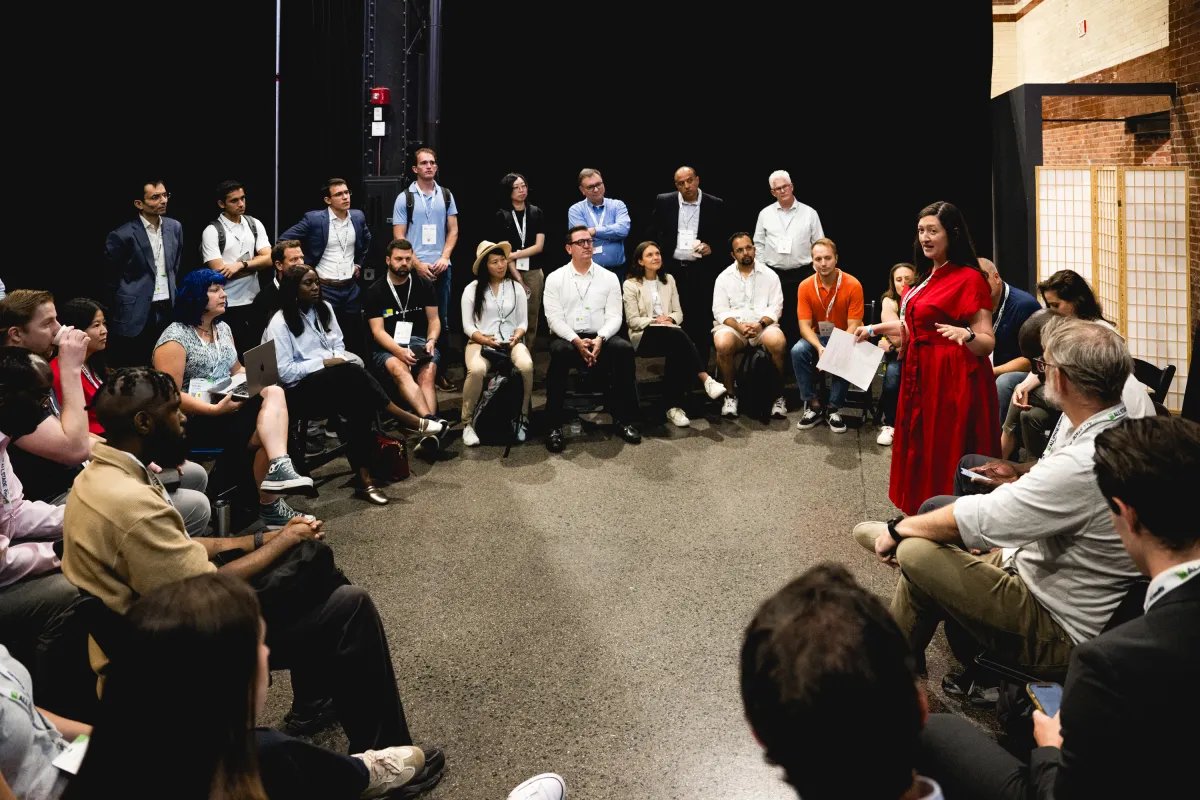
That was a central theme we discussed on Tuesday during Fortune‘s Emerging CFO webinar in partnership with Workday, where Casey Caram, principal and human capital practice leader at Deloitte, and several Fortune 500 CFOs, shared insightful perspectives on the skill sets needed in the AI era.
Caram emphasized a unifying principle: “Humans are the differentiating factor” in a world where AI capabilities will increasingly commoditize. He described a three-layer model of skills needed in finance:
—At the foundation are traditional finance capabilities such as accounting, forecasting, and performance management.
—Above that sits a growing layer of AI and data fluency.
—At the top are what Caram called “essential human skills”—judgment, critical thinking, and the ability to ask the right questions. These are becoming more valuable, not less, as automation expands.
The challenge, he noted, is that companies are underinvesting in that top layer. A recent examination of Deloitte client expenditures on AI initiatives found that most organizations are devoting 93% of their spending to data, technology, and infrastructure—and only 7% to enabling people to use those tools effectively.
Leading finance in the age of AI
A potential gap is emerging between tech investment and human capability, alongside rising expectations for finance chiefs.
Marie Myers, CFO of Hewlett Packard Enterprise, highlighted one key skill: “Curiosity is super important.” To keep up with AI’s rapid pace, people must stay curious and continuously learn, she said.
At HPE, finance is helping lead AI-driven transformation, working closely with IT and business units. In one example, her team used AI to overhaul internal operating reviews, cutting manual work and demonstrating enterprise-wide value. Yet she also stressed a critical—and often overlooked—barrier: human adoption, noting that long-tenured professionals with deeply ingrained expertise can struggle to change how they work.
“When we implement new technologies, we spend a lot of time all obsessed about the tech, and I think we don’t spend enough time thinking about the impact on people themselves,” Myers said. It’s really important to assess what skills people need to make AI successful, she added. “You’re not going to drive successful change if you don’t bring everybody along with you.”
Tim Arndt, CFO of Prologis, described how the CFO role has moved beyond stewardship and reporting toward strategy and enterprise leadership. AI is accelerating that transition by automating routine tasks and freeing up time for higher-value work. “The expectation now is to be a partner at the executive table,” he said, helping shape business strategy rather than simply reporting results.
“We’re very much on a journey of evolving our people, enhancing our processes, and really stepping into the next generation of technology,” Tucker Marshall, CFO of J.M. Smucker Co., said. The company is modernizing finance systems, automating workflows, and investing in talent development—from early-career programs to mid-level hires with data and analytics expertise. Just as important, he said, is building communication skills so finance teams can translate insights into action.
Meanwhile, Noémie Heuland, CFO of Moody’s, highlighted another pressure point: the demand for faster, more actionable insights. As data volumes grow, finance leaders must filter signal from noise. “There’s a risk of KPI overload,” she said, warning against over-quantifying at the expense of strategic clarity. The CFO’s role increasingly includes contextualizing data—connecting financial metrics to broader business objectives and market dynamics. “I think for CFOs it’s an interesting challenge and opportunity,” she said.
Across the discussion, one message stood out: the future of finance is not about becoming data scientists, but about becoming more adaptive, curious, and strategically engaged. Being a strong communicator is also key.
Sheryl Estrada
sheryl.estrada@fortune.com
Leaderboard
Robert Berezansky was appointed CFO of Work World, a specialty retailer of workwear, work boots, and safety gear on the West Coast, effective June 22. Berezansky joins Work World with more than 15 years of financial and operational leadership experience across manufacturing, industrial, and growth-focused organizations. Most recently, he served as CFO of Paramount Extrusions.
Micah Young was appointed CFO of QuidelOrtho Corporation (Nasdaq: QDEL), a global diagnostic solutions provider, effective July 6. Young will succeed Joseph M. Busky, who previously announced his retirement and will serve in an advisory role to support a smooth transition. Young most recently served as EVP and CFO of Masimo Corporation, a global medical technology company. Previously, he held progressively senior finance roles at NuVasive, Inc. and finance and accounting roles at Zimmer Holdings, Inc., after beginning his career at Deloitte & Touche LLP.
Big Deal
Going deeper
“Walmart’s $1.4 billion Vibe.co deal is a direct shot at Amazon’s booming ad business” is a Fortune article by Phil Wahba.
Wahba writes: “Walmart’s biggest acquisition in two years is a signal from CEO John Furner that he is serious about his ambitions to challenge Amazon.com’s massive lead in the advertising space.
“The retailer said this week it will pay $1.4 billion to buy a French advertising-technology firm, Vibe.co. That company enables advertising through televisions connected to the internet and streaming content and, more crucially, focuses on enabling small and medium-size advertisers that might not have access to the large ad-buying agencies, and are thus an underserved market.” Read more here.
Overheard
“The next American century will be shaped by artificial intelligence and other transformative technologies. But ultimately, our success will depend on whether we continue to create an environment where entrepreneurs everywhere have the opportunity to build, innovate, and contribute.”
—Steve Case, a co-founder and CEO of AOL, writes in a Fortune opinion piece. Case is currently the chairman and CEO of Revolution, a D.C.-based investment firm.