J Studios/DigitalVision via Getty Images
Listen below or on the go: WSB on Apple Podcasts and WSB on Spotify

Will tech stocks rebound? (0:20) OpenAI delaying its IPO? (2:10) Bitcoin crashes (3:25) SpaceX’s Starlink mobile plans (4:20)
Transcript
Major U.S. stock indexes closed mixed on Thursday in a volatile session, despite strong fiscal third-quarter earnings from Micron Technology (MU) and an in-line inflation report.
The S&P 500 (SP500) ended near even, the Nasdaq Composite (COMP:IND) fell 0.4%, and the Dow Jones Industrial Average (DJI) edged higher by 0.1%.
Market participants are closely watching whether tech stocks can mount a late-week rebound of any kind.
The sector has weighed heavily on the Nasdaq for much of this week and traders are now assessing if renewed selling pressure will intensify or if possible, bargain hunting will spark fresh buying interest in growth-oriented names.
Investors will also closely monitor comments from Federal Reserve officials, with New York Fed President John Williams and Minneapolis Fed President Neel Kashkari scheduled to speak. Their remarks could provide fresh insights into the central bank’s thinking on interest rates and the economic outlook.
The UN’s International Maritime Organization has halted its operation to escort stranded ships and seafarers through the Strait of Hormuz. The pause follows an attack on a vessel in the Gulf of Oman, raising fresh concerns over whether the preliminary deal to end the Iran war will hold.
Benchmark oil prices fell 2% in Asian trading on Friday, after rising following reports of the attack.
Apple (AAPL) shares suffered their worst drubbing in over a year on Thursday, tumbling more than 6% after the tech giant announced price hikes on MacBooks and iPads to combat soaring component costs.
Apple said that it has “reached a point where we need to begin raising prices on a number of products,” leaving the door open to more increases down the line.
OpenAI (OPENAI) is seriously considering holding off the pursuit of its initial public offering until 2027, due in part to concerns over investor sentiment, according to The New York Times.
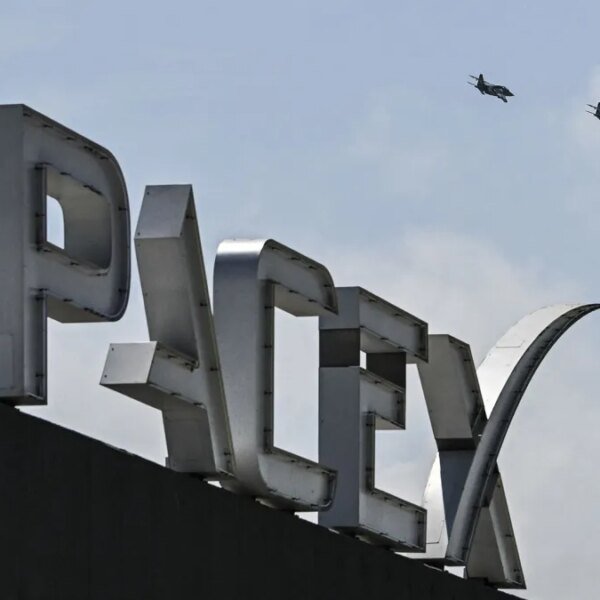
The Microsoft-backed (MSFT) OpenAI confidentially filed a draft IPO earlier this month with the U.S. Securities and Exchange Commission. The ChatGPT maker hired a financial team and was eyeing a public entry as soon as the third or fourth quarter of this year, the report said, citing anonymous sources involved with the process. However, recent events, including a quick pullback on the value of SpaceX (SPCX) shares, combined with concerns on investor sentiment regarding AI companies meeting their lofty goals, prompted a reconsideration.
Last year, OpenAI CFO Sarah Friar said the company needed to tighten up its financial situation before going public. Since then, the company has continued to invest heavily in data center expansions, marketing, and recruiting top-shelf AI engineers.
The pressure is building for OpenAI as its chief rival, Anthropic (ANTHRO), has also confidentially filed an IPO prospectus with the SEC. The company recently completed a $65B funding round, which propelled the company to a valuation of $965B, surpassing OpenAI as the world’s most valuable AI startup.
Bitcoin (BTC-USD) briefly touched ~$58K on Thursday, its lowest level since September 2024, as a mix of hot inflation data, fading rate-cut hopes, and fears around Strategy (MSTR)’s trade sent investors rushing for the exits.
The sell-off came after the U.S. inflation data, with the Personal Consumption Expenditures (PCE) Price Index remaining well above the Federal Reserve’s 2% target.
It triggered massive liquidations across crypto markets. According to CoinGlass, 132.8K traders were liquidated over the last 24 hours, totaling $896.3M, including $424.2M tied to Bitcoin positions alone.
Economist Ted Pillows shared data on X suggesting that selling pressure emerged across U.S., European, and Asian trading sessions.
Bitcoin is now down around ~33% YTD and more than ~54% below its all-time highs.
Elon Musk’s SpaceX (SPCX) has told investors that it plans to launch a new Starlink mobile service for U.S. consumers, the Financial Times reported, citing people familiar with the matter.
SpaceX president and COO Gwynne Shotwell told investors during an IPO roadshow that the group was considering launching a Starlink retail product. The company could build its own terrestrial US mobile network.
The move would require Starlink to sell mobile contracts to individual customers, the report said. It also positions the satellite company as a potential competitor to Verizon (VZ), AT&T (T), and other traditional telecom providers.
TD Cowen analyst Gregory Williams wrote Thursday that T-Mobile (TMUS) would be the “clear choice” for SpaceX if it does not reach a wholesale network deal, or if Musk’s firm would rather own a wireless business outright, citing SpaceX’s existing partnership with T-Mobile through its Starlink business.