We’re about to head into Q2 earnings season and—as the recent market jolt around Apple’s price increase announcement shows—investors are still nervous that this whole AI thing just isn’t going to pan out. “Microsoft and Meta are being treated by investors like they are wearing winter jackets to the beach in the summer,” Wedbush’s Dan Ives pined in a recent email. Ives, a closely followed infamous tech stock bull, previously complained that traders are “treating Microsoft and Meta like they are bear market names that cannot be owned.”
“Why?”
His answer: We are in a six-to-12 month “air pocket” in which the hyperscalers are spending up to $700 billion on AI data center construction “but big tech stalwarts such as Microsoft, Meta, and Amazon/Alphabet to a lesser extent are in the waiting stage to see the growth/monetization boom.”
“To this point, the costs will start to slow down over the coming year and when the AI consumer hardware, physical AI deployments, and enterprise use cases explode at scale over the coming years this will all be a distant memory (like building the Las Vegas strip in the 1950’s),” he says.
“In the meantime, the bears will continue to yell fire in a crowded theater any chance they get.”
Correction incoming? “We believe the market volatility seen so far in June is the tip of the iceberg, which could turn into a 10-20% correction in the broader markets, as it’s been well over a year since we have seen a double-digit pullback, and conditions are ripe for one amid elevated valuations, continued geopolitical uncertainty, and low trading volume during the summer months,” according to David Laut, chief investment officer at Kerux Financial in Granite Bay, California ($450 million AUM).
ONE BIG THING
Dire straits: Closure of Hormuz raised shipping prices globally, regardless of route
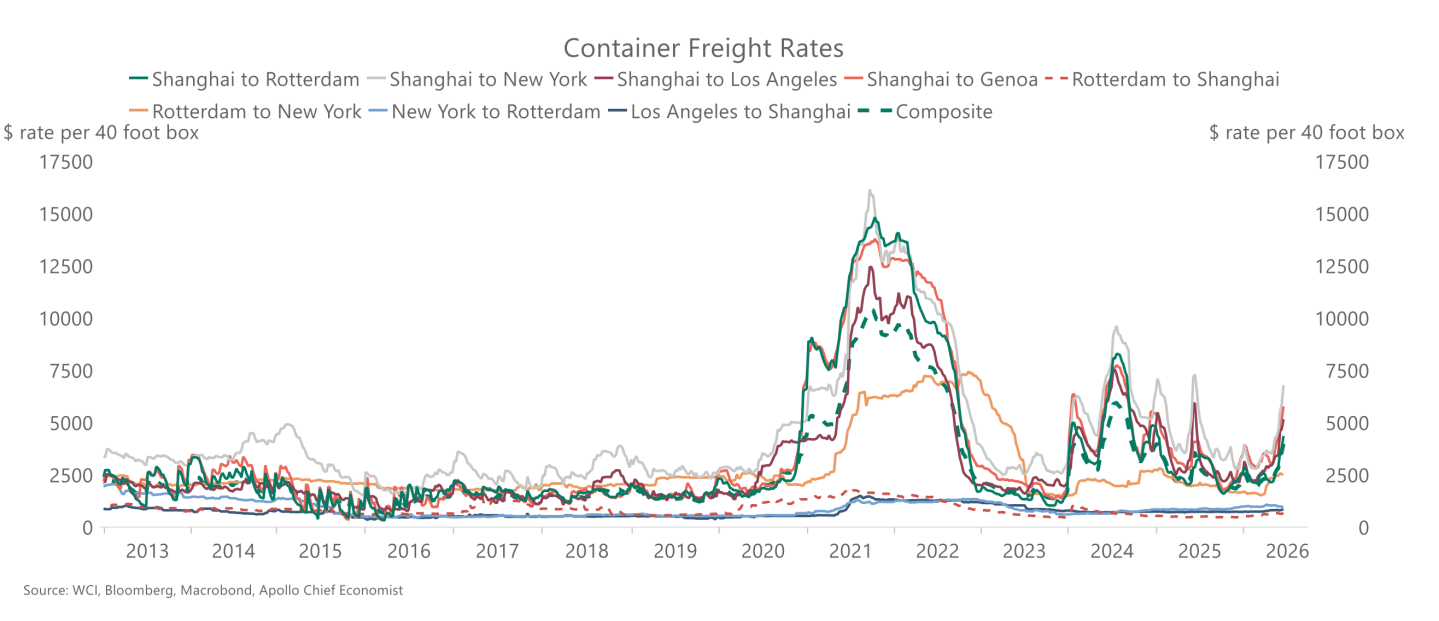
This chart from Apollo Global Management shows that the war with Iran put up the price of shipping globally, not just via the Strait of Hormuz. It wasn’t merely a restruction on the supply of oil—having hundreds of ships immobilized had knock-on effects elsewhere. “Looking at a broad set of supply chain indicators shows some mild signs of distress, with rising freight rates by container, truck and air,” Apollo’s Torsten Sløk says.
Good news: According to a recent note from Oxford Economics’ Grace Zwemmer and Sara Godfrey, “Surging shipping costs … have already begun to fall now that oil prices are heading lower.”
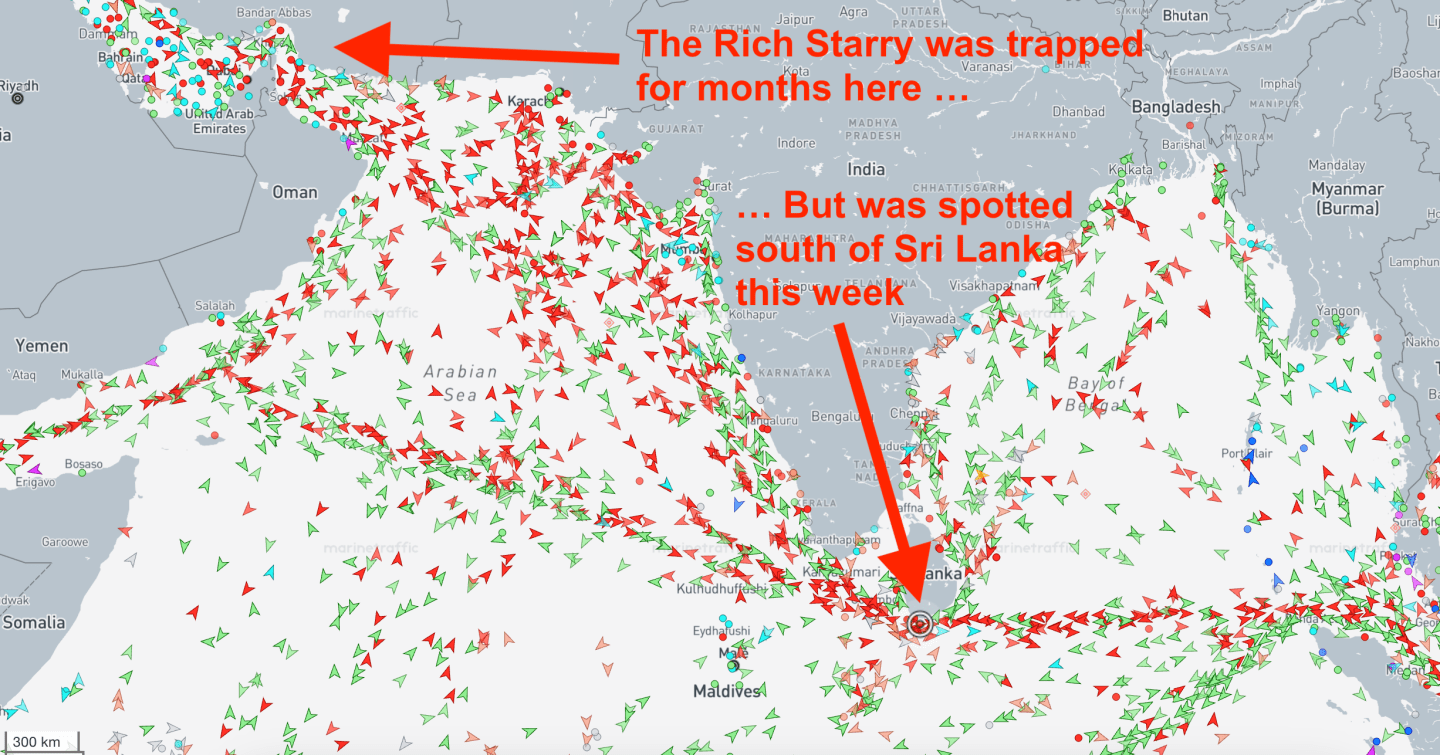
The Rich Starry made it out!
The Chinese-owned tanker that Fortune has been tracking—trapped in the Strait of Hormuz since the beginning of the war—was spotted near Sri Lanka yesterday:
THE COST OF CLIMATE CHANGE
The economic cost of heatwaves: $638 billion and counting
A record-breaking heat wave has been crushing Europe since late May, with Paris hitting 38°C, London 36°C, and Berlin matching it. Thousands of deaths are projected before it breaks. And while the images of crowded fountains and shuttered schools dominate the headlines, the economic damage is already accumulating in ways most employers and policymakers have barely begun to reckon with, Fortune’s Catherina Gioino reports.
Allianz has estimated that France, Italy, Germany, and Spain alone could absorb cumulative heat-related GDP losses of $638 billion by 2030, driven primarily by falling labor productivity and surging cooling costs.
The results can be seen everywhere. New York City public school students who take their high school exit exams on a 90-degree day are historically about 10% less likely to pass than they would be on a 65-degree day. Workers in both indoor and outdoor settings are between 5% and 45% more likely to experience a significant injury or accident on a day in the high 80s Fahrenheit or above. And even in the U.S., one of the most heavily air-conditioned countries on the planet, hotter-than-average years produce lower-than-average PSAT scores in what researchers describe as a highly unequal effect.
MORE FROM FORTUNE
The central bank of central banks just released its flagship annual report — and it sees a $1 trillion AI investment boom headed for a reckoning – Nick Lichtenberg
Ford on why it hired 350 ‘gray beard’ engineers: you need their mentorship for younger workers — and to drive huge AI productivity gains – Sasha Rogelberg
‘Cop on your wrist’: Wearables offer tons of data, but people are still going to sleep to Netflix and TikTok – Amanda Gerut
CHART(S) OF THE DAY
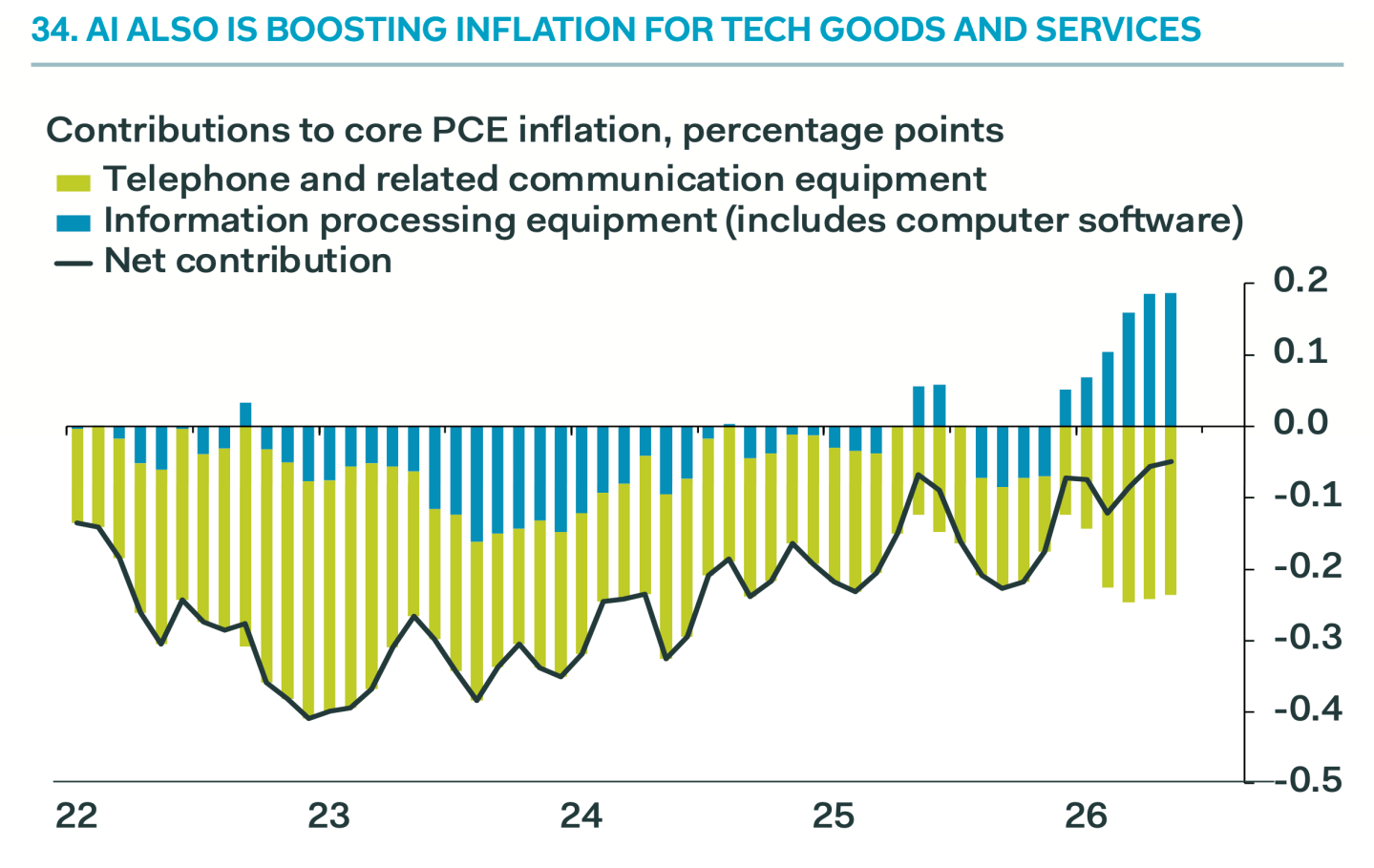
AI promised to kill inflation. Instead, it may be feeding it.
The promise of artificial intelligence is that it will deliver new highs of productivity and thus lower prices, in much the same way that the dot-com boom did: by increasing competition and making everything easier and quicker.
But these charts suggest that, so far, AI seems to be generating inflation in some areas. This chart from Pantheon Macroeconomics shows that tech spending is largely disinflationary, but prices are on the rise for AI-related tech spending, as a contributor to personal consumption expenditures (PCE) index:
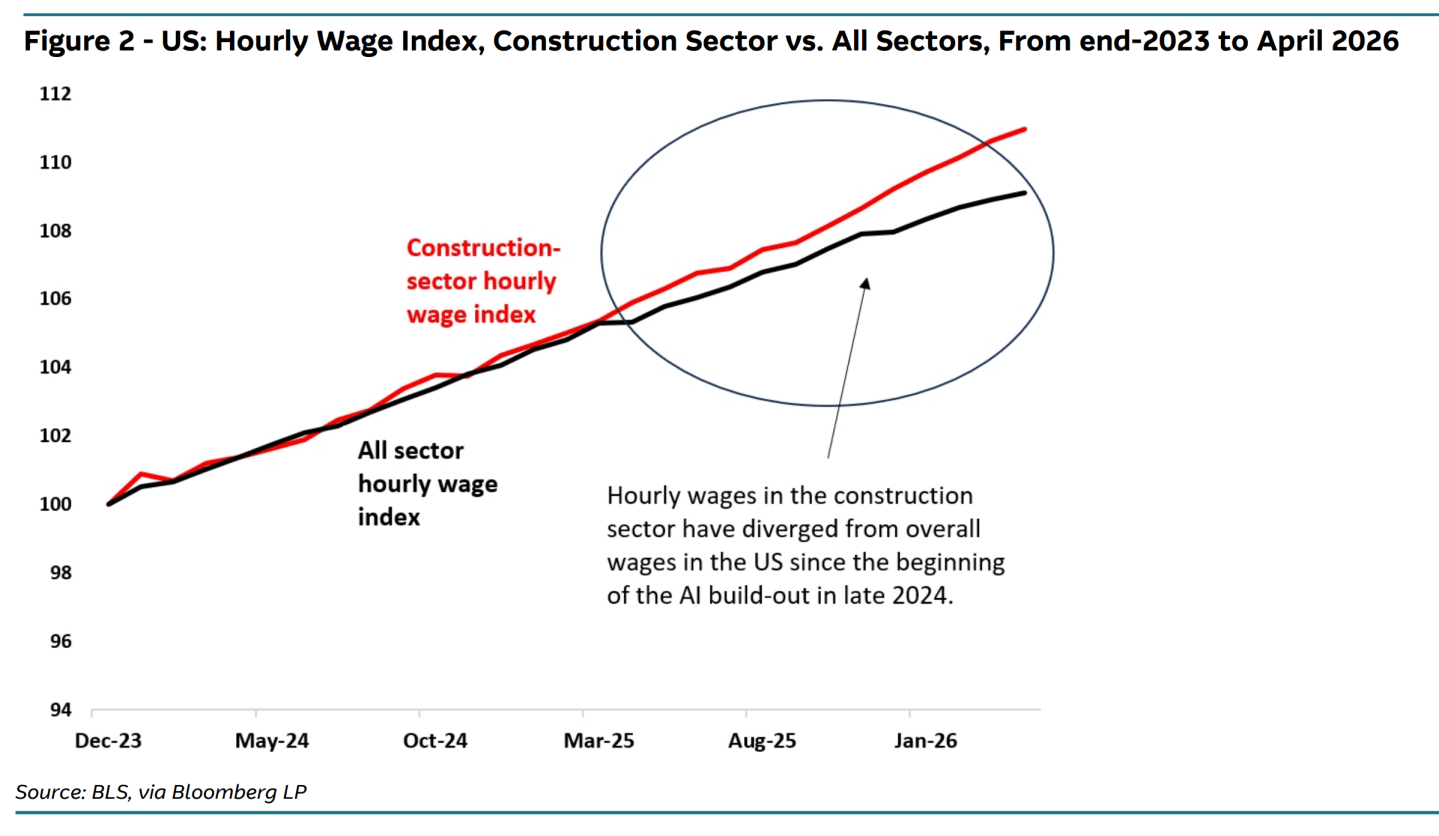
And this data from Macquarie shows that wages in the construction sector are rising faster than wages generally since the AI data center boom began:
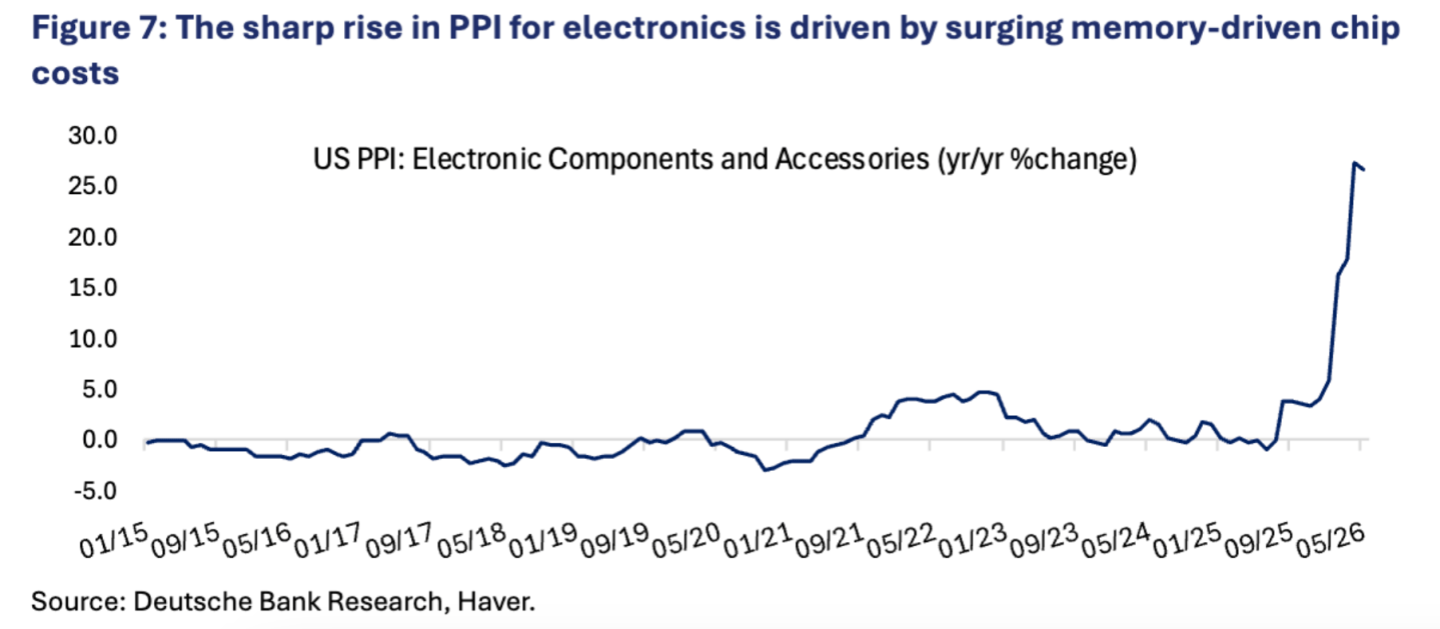
And, of course, as the hyperscalers race to deploy as much “compute” as possible, the price of chips has gone through the roof, as this chart from Deutsche Bank shows:
NUMBER OF THE DAY
55
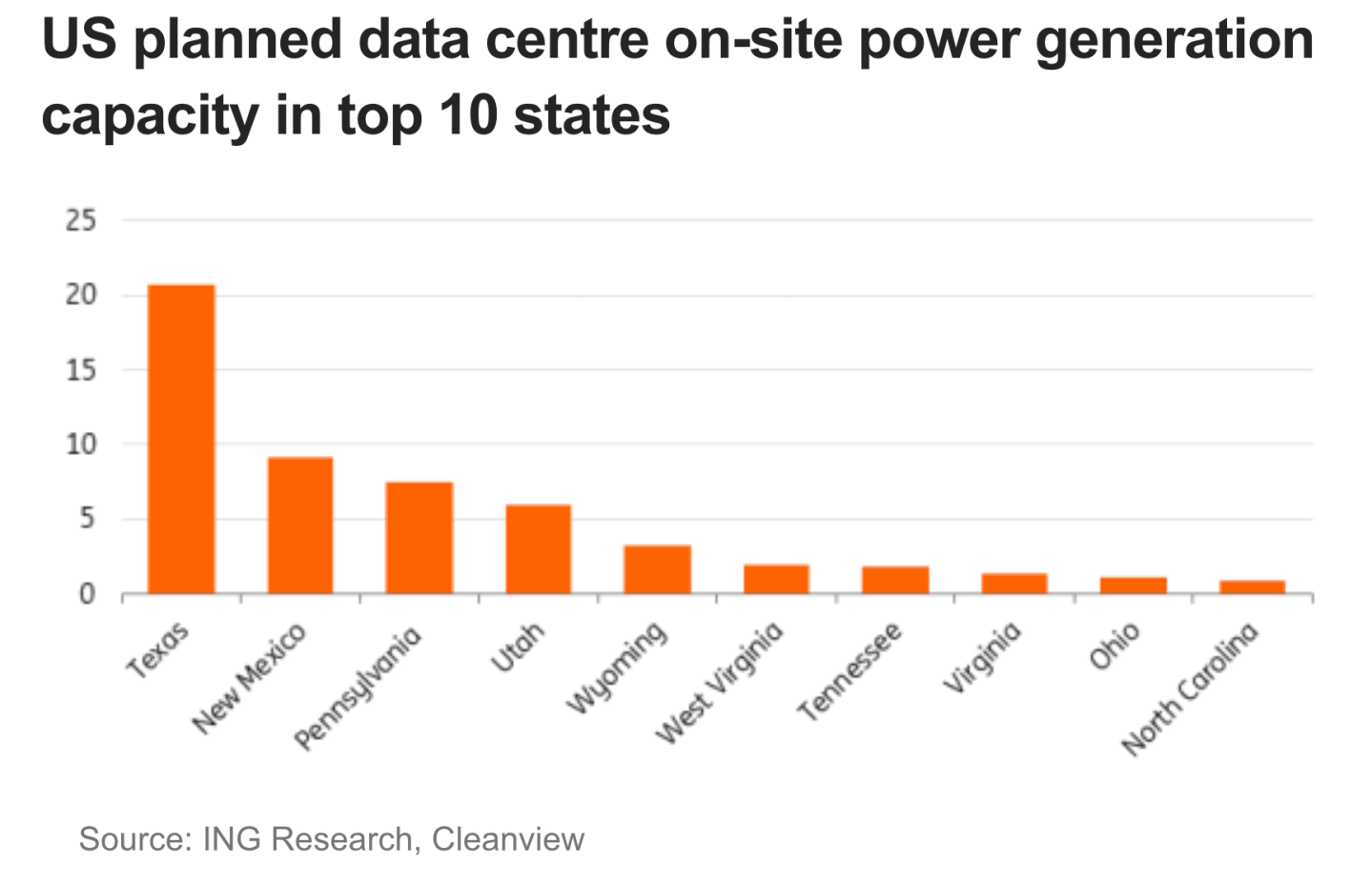
The number of gigawatts of “behind the meter” power planned for AI data centers in the U.S. (“Behind the meter” means generating energy on-site, rather than taking metered energy from the grid.)
“That is higher than the total installed power capacity in the state of New York. Texas has the most planned on-site capacity, followed by New Mexico and Pennsylvania,” ING’s Coco Zhang said in an email.
THE FRONT PAGES TODAY
EY employee charged with accessing Australian prime minister’s bank details – FT
Buffett delays annual donation to Gates Foundation pending review of Jeffrey Epstein ties – CNBC
Supreme Court rules Trump can fire independent agency heads, with Federal Reserve exception – Axios
Chatbots Are Replacing Therapists With Little Scientific Evidence Behind Them – WSJ
Iran Ratchets Up Talk of Controlling Hormuz Before New Talks – Bloomberg
We’re Only Starting to Grasp the Pitfalls of Using A.I. at Work – NYT
ONE MORE THING
Ivy League prof gave students a break after a shooting. They repaid him with mass cheating.
Following a December shooting incident that killed two and wounded eight, Brown University Professor Roberto Serrano allowed his students to take a midterm exam at home. Of the 86 students who took the March 5 exam, 40 scored a perfect 100. The class average was 96. In previous years, the average ranged between 65 and 80. Many of the students’ answers matched responses you’d get from ChatGPT, Serrano told Fortune.
“If [students] are just going to press a button to ask an AI agent to do the work for them, that’s inscribing a world in which humanity has chosen to become idiots,” he said. “We stop thinking.”
After he called out his students, many of them dropped the class. When the final exam came around, only 59 showed up in-person, and 19 failed. The class average collapsed to 48 out of 100.