After a half-hour of aimlessly walking the mall, he realized he had been scanning faces for his daughter.
Nine months had passed since he had seen her, before entering rehab. He had heard from her just once, when she replied to one of his letters by saying she needed time.
At some point, he knew, they would run into each another. They lived in the same small town. There were only so many places to go.
He played out how their encounter might go. On darker days, he imagined her turning away. He needed things to be OK with her, to buttress the fragile equilibrium he reached in rehab.
The first month, coming off nitazenes, had been the hardest of his life. It was the worst drug he had ever tried, worse than heroin. Worse than fentanyl.
“The withdrawal from nitazenes is a lot worse,” he said. “But the worst thing about nitazenes is how fast you need more of it.”
With fentanyl, he didn’t obsess about using all the time, and could manage without it, he said.
“With nitazenes, it’s all you think about, all the time,” he said.
Everything about it came faster — his addiction, his tolerance, the withdrawals. When he began, one dose could provide 10 hits. After a month, he was using four doses a day.
“My fear of withdrawal was stronger than my fear of death,” he said. “It became all that mattered to me.”
When he hit bottom — after his divorce, after leaving his ex with almost everything — he turned up at the Viljandi Hospital, Estonia’s main rehab center.
He had gotten sober before and stayed clean for more than a decade, but he knew kicking nitazenes would be harder. The center’s staff knew, too.
“Their nervous system is more damaged,” a nurse there, Sire Ladima, said of nitazene addicts. “The physical pain is more severe.”
“Lots of the patients who come in with nitazene addictions leave the program early,” she added. “They can’t stand the withdrawal.”
For Mr. Kochegarov, routine helped: lectures, the gym, therapy. He saw a psychologist and acquired the language of recovery — the stark self-awareness, a desire to seek forgiveness, to forgive oneself.
When he left, he took the bus back home to the country’s northeast, where the majority of Russian speakers like himself live. He moved in with his mother, who has cancer, and immediately missed the predictability of rehab.
“Here, you have to do it yourself,” he said.
Plans hatched in recovery felt unrealistic back home. Resuming his career, making amends, financial and emotional stability: None of these came quickly. He realized that his primary focus should be navigating disappointment.
Estonia’s eastern region shares a border with Russia, across the Narva River. It is still the center of opioid use in the country, a battered former Soviet region where hulking relics of industry lie in ruin.
Mr. Kochegarov’s mother and father were members of the once-favored Russian community, but lost their jobs after the Soviet Union fell. His said his father became an alcoholic, and his mother worked all hours to support them. His older brother, now deceased, became involved in organized crime, which flourished in the collapse.
At 15, Mr. Kochegarov began using marijuana. A few years later, he was drinking poppy milk. Heroin followed, then fentanyl. In 2014, in his 30s, he got clean and stayed that way for a decade.
“I wanted a better life,” he said. “I saw how other people lived and wanted that normality.”
He married, built a family and devoted himself to work, becoming a master carpenter. But the long hours wore him down, and he began seeking something to relax. He started with beer, sure he could handle it. Within a few months, he was using methadone, diverted from opioid substitution centers and bought off the streets.
When the methadone was no longer strong enough for him, the only thing available was “the dog” — nitazenes. He spiraled quickly.
He steered clear of home, afraid he would sell whatever he could find to sustain the high, or that his daughter might see him. He vowed never to use around her.
She found out after he entered rehab, and then spoke to a psychologist there to help her process the trauma of it, he said.
He sent her two letters, one during rehab, which went unanswered, and the other right after, when she asked for more time.
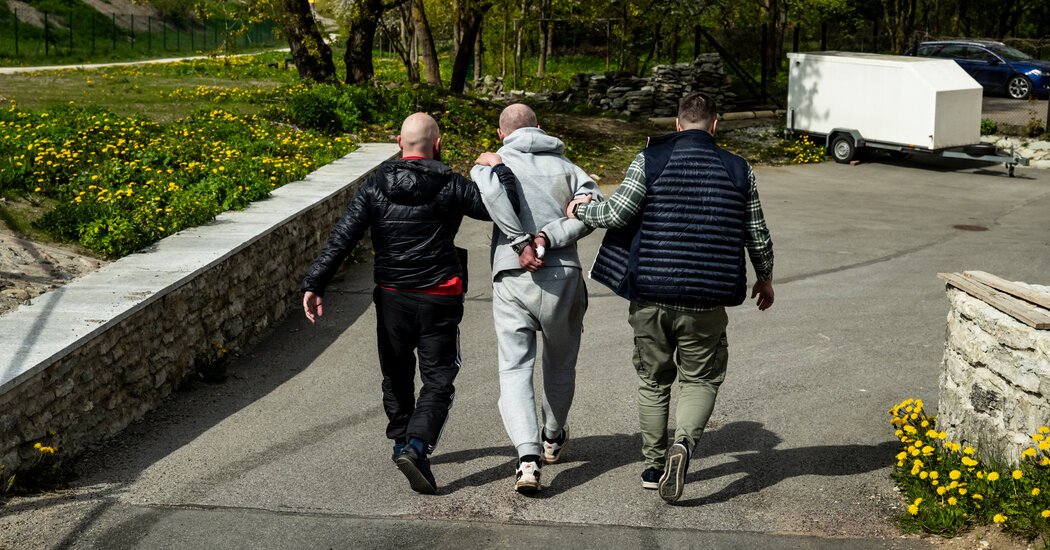
Now he was meandering the shopping mall, hoping to run into her. He had put some effort into his appearance — clean shaven, with a pressed T-shirt, black jeans and a slim fitting leather jacket.
He peered through the glass facades of shoe stores, and scanned the tables of restaurants that spilled onto the esplanade.
And then, seated at one of the tables, he spotted her, her brown hair and slight frame, as if he had willed her into existence. He couldn’t move.
For all his preparations for this moment, he worried she might not want to see him, or be angered that he had ignored her request for space.
He tried to remember his steps, the tools he had learned to conquer his self-defeating tendencies. He found himself walking toward her, bracing for disappointment.
Suddenly, she saw him. Her face lit up instantly. She stood and smiled, then made a joke. He began to cry without realizing it.
She asked him about work, his life and whether he needed anything.
“Your attention, just a little bit,” he admitted.
He asked shyly if he could take a selfie with her, and when she said “yes,” he felt everything would be all right.