Less than 10 days away from the World Cup final, it’s pretty hard to have missed the “FIFA 15” culinary diplomacy that’s happening around the World Cup. We have the Tartan Army drinking the city of Boston dry; the massive lines forcing a famed Joe’s Kansas City BBQ to close on Sundays; and an influx of tourists from all over trying yerba mate for the first time. What’s more, we’ve see the rise of social media surrounding foods that have been ingrained into what foreign visitors see as pure Americana: Buc-cees, Ranch dressing, and of course, Raising Cane’s.
“THIS IS THE BEST FRIED CHICKEN FOOD EVER. THE SAUCE MANNN!” A Tartan Army fan wrote on X. “WE NEED THIS IN THE UK!!” Another fan posted a TikTok of her first Raising Cane’s experience, unboxing a chicken finger box combo and proclaiming it to be a “10 out of 10,” before adding: “The sauce is delish.”
Courtesy of Raising Cane’s
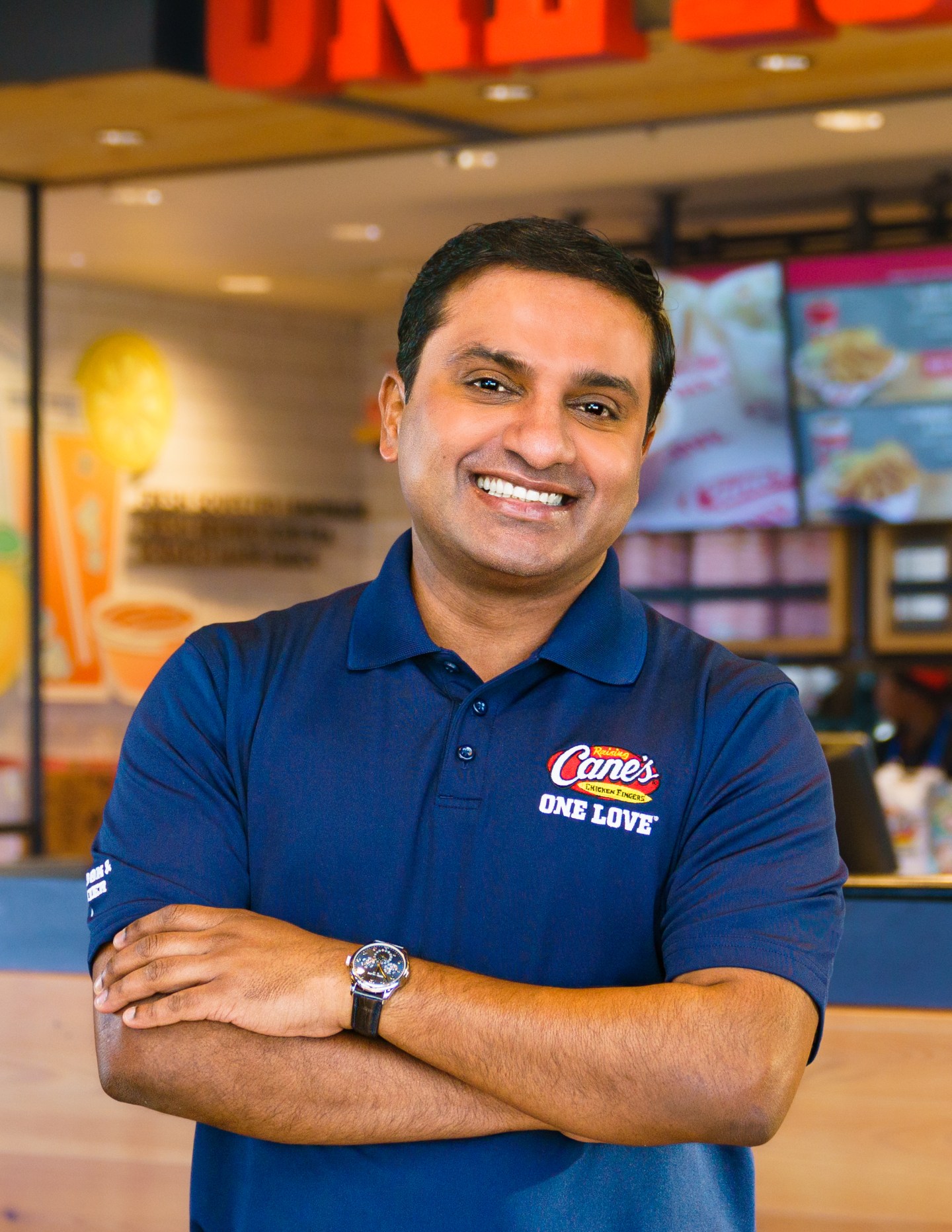
Raising Cane’s co-CEO AJ Kumaran has watched the videos: Fans from Scotland, England, and beyond, fresh off matches in host cities across the country, posting their first bite of a chicken finger box combo to audiences in the hundreds of thousands. His reaction: “We don’t push any of those. It’s just organic stuff that people want to do, and we are pretty grateful.”
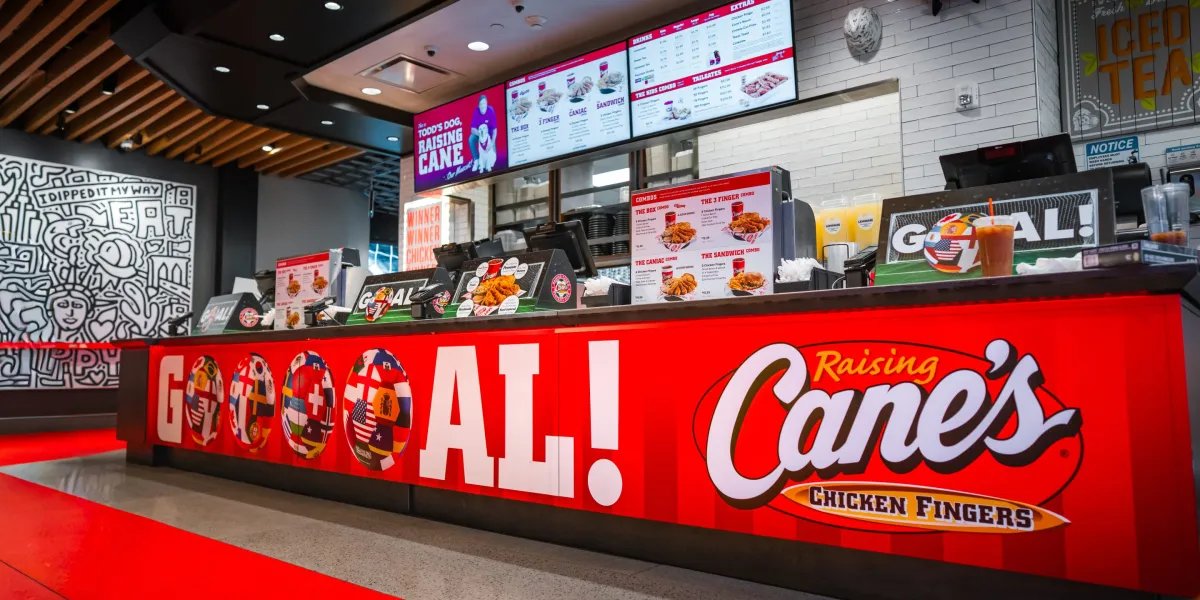
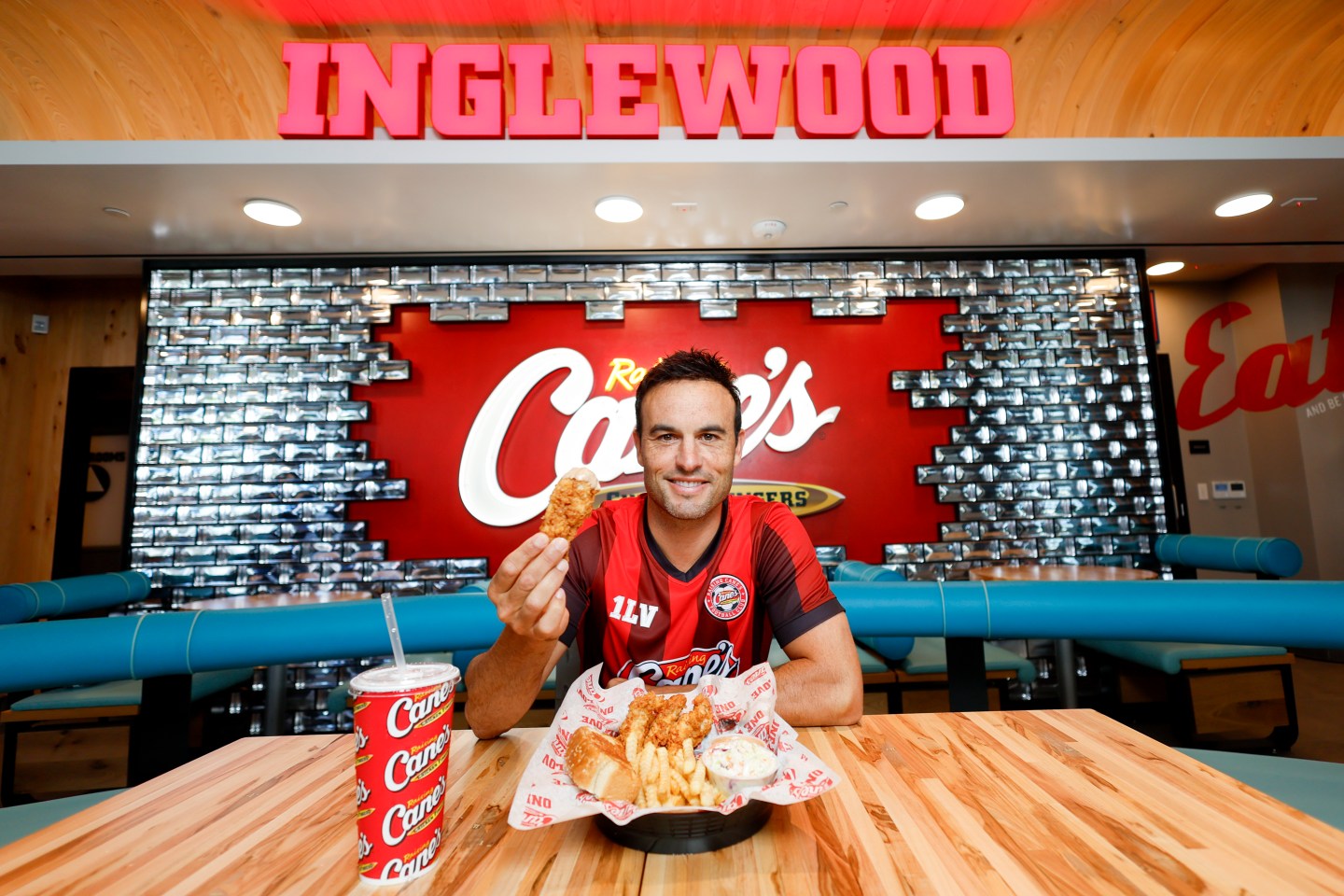
The company has leaned into the tournament on its own terms, too. Raising Cane’s built a “Kick It With Cane’s” campaign around USMNT star and FIFA World Cup analyst Landon Donovan, including exclusive “Cane’s FC” merchandise and a soccer-themed takeover of its Times Square flagship. Donovan also worked the first “shift” at the company’s Inglewood flagship, which opened June 11, a day before the USA’s opening match a few steps away at SoFi Stadium—known as Los Angeles Stadium for the 2026 FIFA World Cup thanks to FIFA’s strict sponsorship rules.
But according to Kumaran, the fan enthusiasm driving the current wave of attention goes beyond anything the company planned.
“We now get requests and fans from all over the world,” he told Fortune. “In fact, a lot of my family from India, they’re coming over and other parts of the world as well, for World Cup, and the kids, that’s all they want to do, is to go to Raising Cane’s.”
Focusing on the four things it does well
In 1994, the last time the U.S. hosted a World Cup, Raising Cane’s didn’t exist. Founder Todd Graves opened the first location at the north gates of Louisiana State University in Baton Rouge in 1996, two years after that tournament. Today, the company says it has roughly 130 restaurants near the stadiums hosting games, in the 11 host cities for this year’s tournament: Atlanta, Boston, Dallas, Houston, Kansas City, Los Angeles, Miami, New York/New Jersey, Philadelphia, San Francisco, and Seattle.
Courtesy of Raising Cane’s
Kumaran said the acceleration in the brand’s global visibility was specifically due to the Times Square flagship opening three years ago, which he said is when momentum around global awareness and tourism “really took off.” Asked why tourists gravitate to his chain over other chains in the same host cities, his answer was about focusing in on what it does best.
“We do one thing and one thing only,” he said, comparing the model to a specialist position on a soccer pitch. “When you do only one thing and really zone in on it and focus on it, you tend to get really good at it.”
“We tend to be chicken finger fanatics, so we do that exceptionally well,” he added. “Our crew members focus only on that one job that they have to make customers happy, have a smiling face, and then serve them the best chicken finger meal as possible.”
Part of that is the autonomy the company—there are no franchises, but Raising Cane’s does hire locally and encourages each store manager to bring an entrepreneurial spirit—offers to each store. Each Raising Cane’s is integrated into the community, so you may very well see photos of the local high school football team hanging on the wall at one location and members of the community garden in another.
“Our belief and philosophy is that the local spelling bee champion is equally as big as Landon Donovan, who is now announcing for FIFA,” Kumaran said. “They’re equally important for that local community. That kid is the Landon Donovan when they play soccer.”
The love that foreign tourists are showing Raising Cane’s is more than just culinary.
“I think it’s a cultural diplomacy, and we’re proud that we can share a little bit of America with them, and hopefully someday with the globe,” he said.
Kumaran was watching the tournament as a fan himself, too, rooting for players rather than any one team.
“Some of my favorites are already out, some of the favorites are still in, so we’ll see where it lands,” he said. “The Mexico–England game the other day was just incredible.”
As a result of the new influx of tourists trying the chain for the first time, Kumaran said he’s received a lot of letters requesting they expand worldwide. Currently, Raising Cane’s operates more than 1,000 restaurants globally, including more than 50 in the Middle East, and across 44 states, Guam, and six countries, among them the UAE, Kuwait, Saudi Arabia, Bahrain, and Qatar. The company says it fields thousands of requests annually from fans and prospective partners hoping to bring Cane’s to new markets, part of what it describes as a long-term vision to reach 1,600-plus restaurants worldwide.
“We are operators. We just really want to do it well and not have any compromise on how well we do it,” he said. “That makes it difficult to quickly react and jump on to a different country. But yes, for sure, someday everywhere.”