USTR Greer on the EU Google fine:
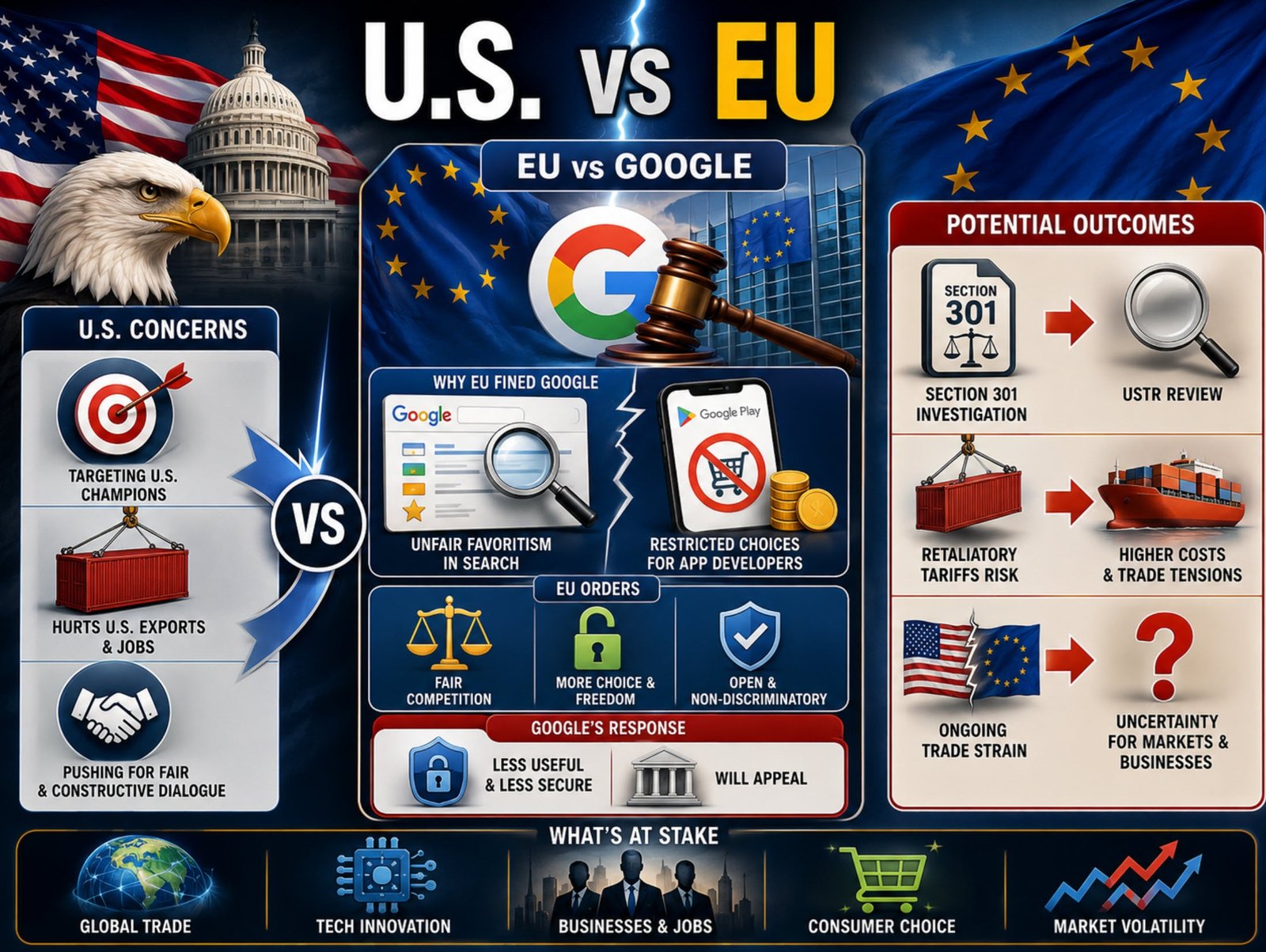
- It is clear the EU continues to target the most competitive U.S. companies.
- These actions are creating massive uncertainty for U.S. exports of goods and services to Europe.
- The U.S. is working to resolve concerns over the EU’s Digital Markets Act and other actions through responsible, constructive dialogue.
- The EU’s recent actions are undermining these efforts.
The European Commission fined Google €890 million ($1.0 billion) for violating the Digital Markets Act (DMA), saying the company unfairly favored its own services in Google Search and restricted app developers from directing users to alternative payment options outside Google Play.
The EU ordered Google to change those practices, while Google said the ruling will make its products less useful and secure and plans to appeal. The decision adds to growing U.S.-EU trade tensions, with U.S. Trade Representative Jamieson Greer arguing that the EU is disproportionately targeting successful American technology companies.
The action could strengthen the Trump administration’s argument that the EU is discriminating against U.S. technology companies, which is one basis for pursuing action under Section 301 of the Trade Act of 1974. Section 301 allows the U.S. Trade Representative (USTR) to investigate foreign policies or practices that are deemed unreasonable or discriminatory and that burden U.S. commerce, and, if warranted, recommend retaliatory tariffs.
For markets, the takeaway is:
- The Google fine raises the risk of renewed U.S.-EU trade tensions.
- It could provide additional justification for a Section 301 investigation or retaliatory tariffs if the administration concludes the EU is unfairly targeting U.S. firms.
- However, the fine does not itself trigger tariffs; a separate USTR process and presidential decision would still be required.