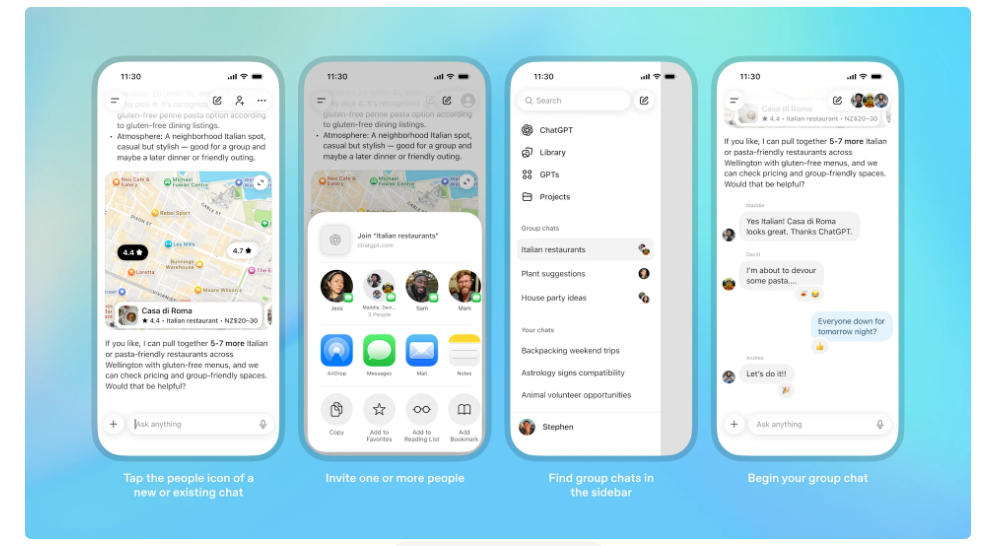
Weeks after OpenAI rolled out a new family of conversational models and updated ChatGPT’s voice mode, rival Anthropic is making its move to make Claude more voice-friendly with a new update. The company said Thursday that users can choose between Opus, Sonnet, and Haiku models.
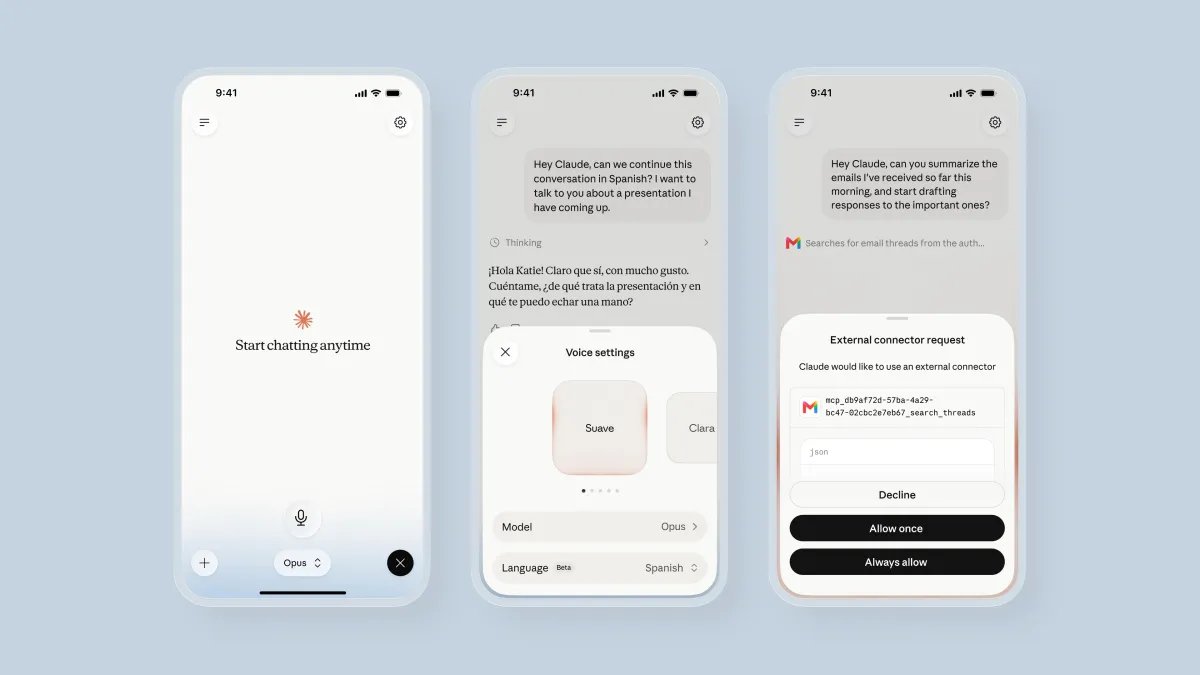
Claude’s voice mode, which was released last year and powered by the Haiku model, provided quick responses, but wasn’t well suited for complex work. The company said that with the new update, voice mode picks the last model people used in the text chat and uses its fastest version by default.
Anthropic said that the new voice mode can help users with longer conversations, including providing feedback on their communication style, talking through a pitch to a client, and brainstorming product market research.

What’s more, Claude’s voice mode can tap into other apps like Gmail, Google Calendar, Slack, Canva, and Notion. This means that users can ask it to update a meeting slot, draft an email, or create a document in Notion.
Notably, this is a big difference from OpenAI’s voice mode, which updated its conversational style but still isn’t able to use different tools to get work done.

Earlier this year, Anthropic added multilingual support to Claude’s voice mode in beta. It said that now users can talk in various languages, but they have to manually specify the language. At the moment, Anthropic supports English, French, German, Hindi, Indonesian, Italian, Japanese, Korean, Portuguese (Brazilian), and Spanish (Latin America/Spain).
The new voice mode is available to all users in beta across platforms. However, free users will be restricted to using the Haiku model with only one connected app.
Anthropic didn’t make any changes to the voice model with this release, and it hasn’t detailed what kind of voice stack it uses. That means, unlike OpenAI’s release, users might not find any coversational improvements such as better interruption handling.
When you purchase through links in our articles, we may earn a small commission. This doesn’t affect our editorial independence.