
A Biden-appointed majority on the First Circuit Court of Appeals handed President Donald Trump a major setback Saturday, refusing to lift an injunction blocking key election-integrity provisions of his executive order in 23 states and the District of Columbia.
The three-judge panel denied emergency stay requests filed by the Trump administration and 12 Republican-led states, leaving in place a lower-court order that prevents the Department of Homeland Security from distributing federal citizenship lists and blocks the U.S. Postal Service from applying new mail-ballot requirements in the plaintiff states for elections held on or before November 3, 2026.
Judges Gustavo Gelpí and Julie Rikelman, both appointed to the First Circuit by Joe Biden, formed the majority.
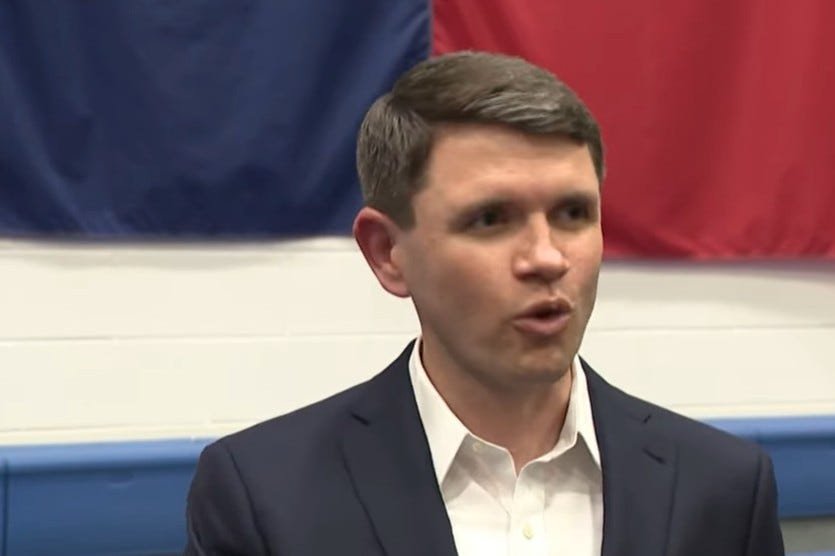
Trump-appointed Judge Joshua Dunlap concurred in part and dissented in part, arguing that the states lacked standing to block DHS from merely providing citizenship information.
The ruling is not a final decision on the administration’s appeal. Instead, the 20-page court order denies the administration’s request to suspend the injunction while the appeal proceeds.
The administration could now seek emergency relief from the U.S. Supreme Court.
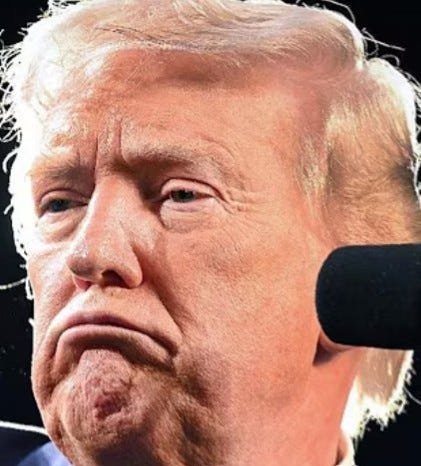
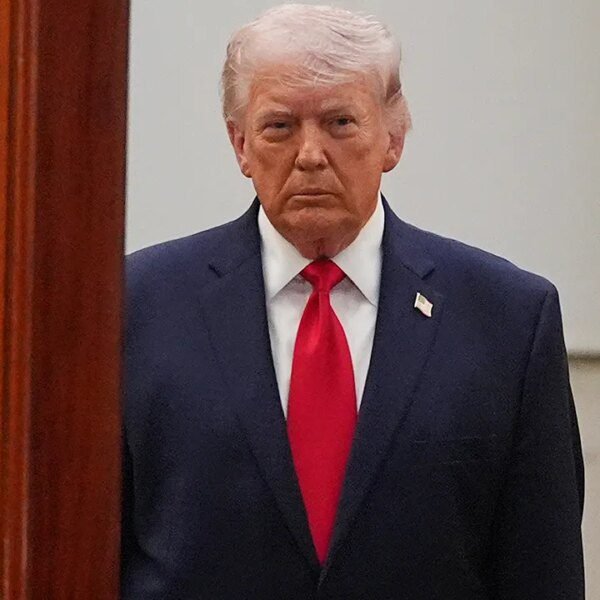
President Trump issued Executive Order 14399, titled “Ensuring Citizenship Verification and Integrity in Federal Elections,” on March 31 to enforce existing federal law that reserves federal elections exclusively for U.S. citizens and to bring basic accountability to the chaotic, fraud-prone mail-in ballot process.
The order directed DHS, working with the Social Security Administration, to compile state-by-state lists of confirmed American citizens who would be eligible to vote in upcoming federal elections. Those lists were scheduled to be transmitted to state election officials by September 4.
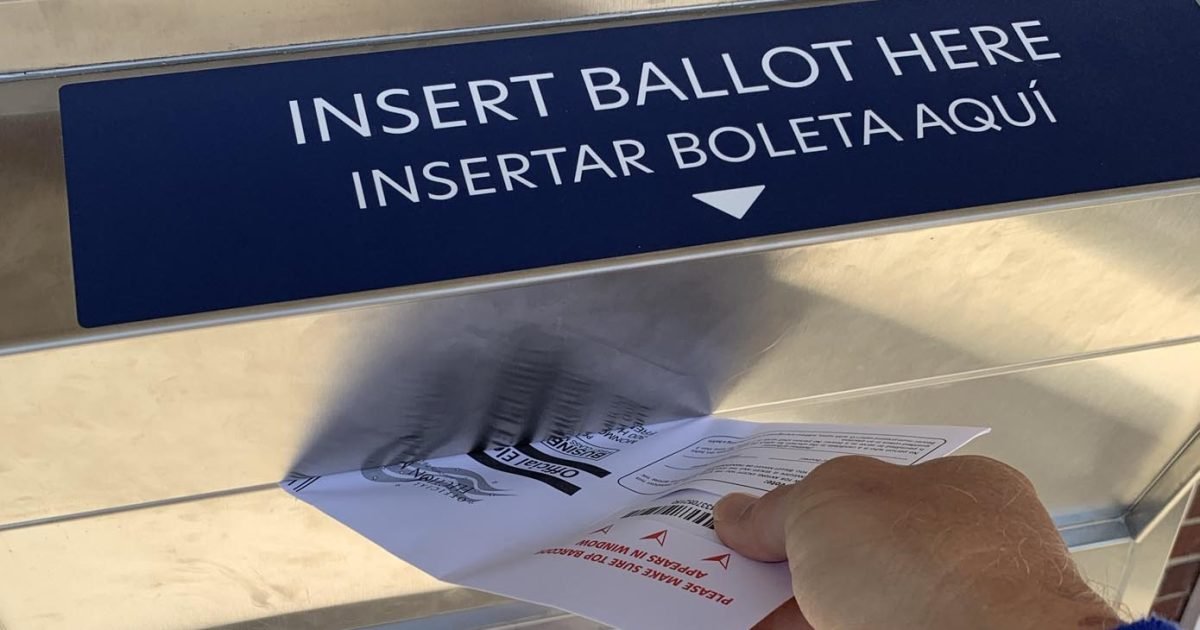
Trump’s order also instructed the USPS to create new safeguards for mail-in and absentee ballots, including uniquely serialized barcodes and state-provided lists identifying voters authorized to vote by mail.
Under the proposed system, the Postal Service would not transmit certain mail ballots unless the voter appeared on the appropriate state-specific participation list.
The order further directed the Justice Department to prioritize investigations and potential prosecutions involving election officials who knowingly issue federal ballots to people who are not legally eligible to vote.
In other words, the Trump administration sought to use existing federal citizenship data, modern tracking technology, and the Postal Service’s nationwide infrastructure to help ensure that only eligible American citizens participate in federal elections.
Naturally, Democrat officials raced to court.
A coalition consisting of California, Massachusetts, Nevada, Washington, Arizona, Colorado, Connecticut, Delaware, Illinois, Maine, Maryland, Michigan, Minnesota, New Jersey, New Mexico, New York, North Carolina, Oregon, Rhode Island, Vermont, Virginia, Wisconsin and Pennsylvania, through Democrat Governor Josh Shapiro, along with the District of Columbia, sued to stop the order.
Obama-appointed U.S. District Judge Indira Talwani ultimately declared Sections 2 and 3 of Trump’s order “ultra vires” and in violation of the separation of powers. Her final judgment prohibited federal officials from implementing those sections in the plaintiff jurisdictions for the 2026 elections.
The Trump administration and 12 intervening states, Alabama, Missouri, Florida, Indiana, Kansas, Louisiana, Montana, Nebraska, Oklahoma, South Carolina, South Dakota and Texas, asked the First Circuit to freeze Talwani’s injunction while the appeal moved forward.
The Biden-appointed majority refused.
First Circuit Judges Gelpí and Rikelman rejected the DOJ’s emergency motion. Biden-appointees claimed the Democrat-led states would suffer “pocketbook injuries” over envelope costs and “credible threats of prosecution” if federal law was enforced
Notably, the administration’s emergency motion focused on standing and ripeness. It argued that the states’ lawsuit was premature because DHS and USPS were still developing their final implementation plans.
The majority responded that the approaching election deadlines had already forced states to spend money, divert staff and prepare for potential changes.
“The Plaintiff States have no practical choice but to respond to the EO now,” the majority wrote.
The judges also cited the possibility that election officials could face investigations or prosecution if ballots were issued to people missing from DHS’s admittedly incomplete citizenship lists.
That reasoning effectively allows Democrat-run states to claim “injury” merely because they must prepare to comply with election-integrity safeguards months before a federal election.
The majority also claimed the administration had failed to establish that allowing two different mail-ballot systems, one for the plaintiff states and another for the rest of the country, would create irreparable operational confusion for the Postal Service.
The injunction does not prevent the Trump administration from implementing the order in states that did not join the lawsuit. It also does not prevent federal agencies from preparing to use the system nationwide in elections held after November 3.
This means the ruling could force USPS to operate a bizarre two-tier election-mail system in 2026: enhanced safeguards in participating states and the old system in the Democrat-led states that sued to block them.
Judge Joshua Dunlap rejected the majority’s conclusion concerning the DHS citizenship lists.
Dunlap pointed out that Section 2(a) merely directs DHS to provide information to state officials. It does not require states to remove anybody from their voter rolls or take any action based on the lists.
“Section 2(a) thus merely orders the provision of information to States,” Dunlap wrote. “It does not order States, including Plaintiffs, to take any action.”
Because the states were not required to do anything with the citizenship lists, Dunlap concluded that their alleged injury was “speculative and hypothetical.”
Dunlap would have lifted the injunction against the compilation and distribution of those lists. He also would have allowed the Justice Department to prioritize enforcement of existing federal laws prohibiting noncitizen voting.
However, Dunlap agreed that the injunction should remain in place against the USPS portion of the order because several plaintiff states had already purchased ballot envelopes that might not comply with the proposed requirements.
Separate D.C. Circuit Victory Remains
As The Gateway Pundit previously reported, the Trump administration recently won a separate battle before the D.C. Circuit involving the USPS mail-ballot rule.
In that case, the D.C. Circuit stayed an order issued by Judge Emmet Sullivan in litigation involving the NAACP and a settlement agreement left over from the 2020 election.
The D.C. Circuit concluded that USPS had made a strong showing that it was likely to succeed and could suffer irreparable harm if prevented from finalizing the rule before the November midterms.
Saturday’s First Circuit ruling involves a different lawsuit filed directly by the coalition of states. It does not overturn the D.C. Circuit’s decision, but it leaves the Trump administration unable to apply key portions of the election order in nearly half the country while the appeal continues.
The First Circuit majority has not yet issued a final merits decision affirming that Trump’s executive order is unconstitutional. It merely refused to pause Judge Talwani’s injunction.
The Justice Department previously warned that it could be forced to seek intervention from the Supreme Court if the First Circuit refused to grant relief, according to Reuters.
Ad block users: Some site features may not work correctly while an ad blocker is enabled, because they break scripts and content this website depends on. If you can’t see comments below, for example, please disable your ad blocker.