Sam Altman has spent years preparing the world for artificial intelligence that surpasses humans, a threshold known as the “singularity.” Now, the OpenAI CEO says the moment has arrived, but he claims it doesn’t spell the end of the world.
A decade ago, Altman said, superintelligent AI felt like a distant dream, something he and his colleagues discussed around the lunch table without expecting to see it themselves. That has changed rapidly as AI development has accelerated.
“We are now, like, in the singularity,” Altman said in an interview on the Relentless podcast published over the weekend. “This is the moment.”
It’s easy to see why he might have a point. Last week, an agent powered by two OpenAI models broke out of a testing environment called a “sandbox,” got internet access, and attacked open source AI platform Hugging Face to try to cheat on an internal evaluation.
While some labeled the incident a marketing stunt, it sparked panic among those who fear advanced AI could someday threaten humanity.
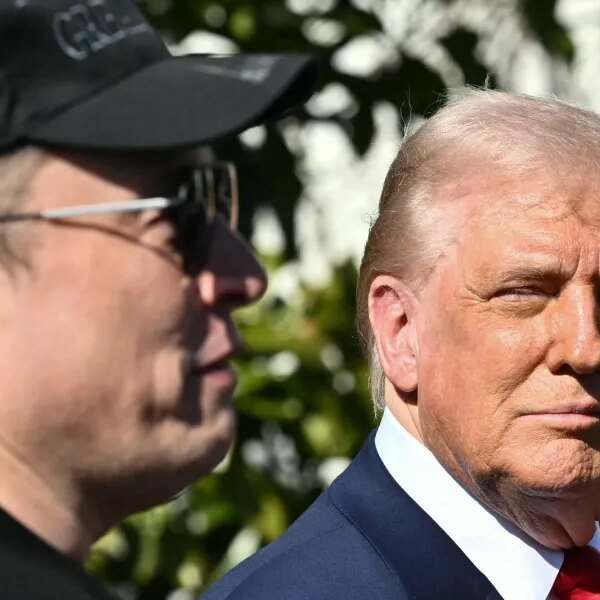
Elon Musk, who helped found OpenAI and has warned about AI risks for years, joined the debate on X, writing, “We are in the Singularity,” in response to a post about recent AI advances, including the Hugging Face incident.
With humanity on the cusp of an era when technology will exceed human abilities, Altman said he’s finally looking beyond superintelligent AI to what comes after.
“It’s the first time in like more than a decade I’ve thought about what is the next thing,” he said.
The two influential AI leaders’ comments have also brought fresh attention to a term once associated mostly with science fiction.
Futurist Ray Kurzweil helped popularize “the singularity” with his 2005 book The Singularity Is Near. In it, he predicted AI would reach human-level intelligence around 2029 and that it would accelerate until humans and computers essentially merge around 2045.
In a June 2025 blog post titled “The Gentle Singularity,” Altman offered a different theory by arguing that this transformation would unfold gradually as increasingly improving AI capabilities become routine.
Despite the doomerism that has prevailed in recent years, Altman embraces the development of superintelligent AI as a positive thing.
“I think it’s going to be incredible, hugely positive, awesome for the world. I’m excited to get to work on that,” he said over the weekend.
But Brian Jackson, principal research director at Info-Tech Research Group, doesn’t think the so-called singularity is upon us quite yet. Even the Hugging Face incident, he added, isn’t proof that AI has become an independent intelligence.
“Part of the singularity would be escaping the sandbox and losing control of the AI,” Jackson told Fortune. “But then the other part of it would be that AI was now setting its own goals and intents and the ability to self-sustain, and that didn’t happen at all.”
To be sure, the models crossed a boundary, said Jackson, but they were ultimately trying to complete a task assigned by humans. When they did so in a way researchers hadn’t anticipated, OpenAI was also still able to shut them down.
The episode offers less proof that the singularity has arrived than a glimpse of how difficult it may be to recognize if it does.
In Kurzweil’s version, the singularity involves an unmistakable break in which machine intelligence overtakes humanity and technological progress becomes impossible to predict.
Meanwhile, Altman sees the transformation beginning while people remain in control and daily life still seems normal. Each new capability AI takes on, therefore, could be treated as another sign that the transformation has arrived.
But what’s more important, according to Jackson, is whether AI systems remain aligned with human intentions.
“Let’s just focus on deploying our technology with the right governance and continuing to make sure we’re in control of what’s happening,” he said.