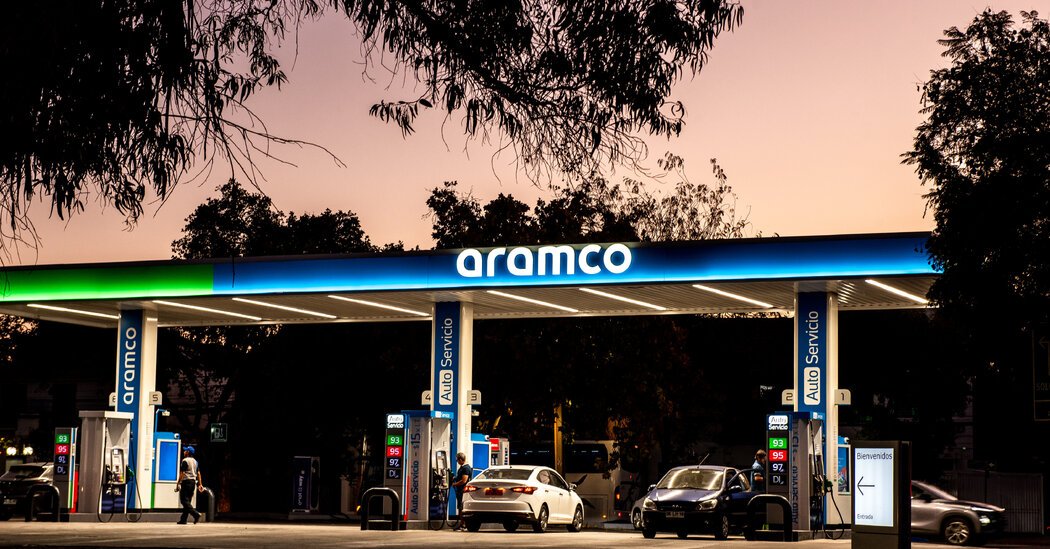
Saudi Aramco, the world’s largest oil company, on Tuesday reported a 33 percent increase in profit despite severe disruptions to its supply routes caused by the war in the Middle East.
The company said it earned $33.4 billion in adjusted net income in April through June, versus $25.2 billion in the same quarter last year.
Oil companies have reported multibillion-dollar windfalls for the second quarter because the war has driven energy prices higher. By some measures, Aramco’s quarterly profit was the biggest since 2022. The performance underscores the strength of Saudi Arabia’s state-owned energy giant, which has scrambled to find new export paths for its oil.
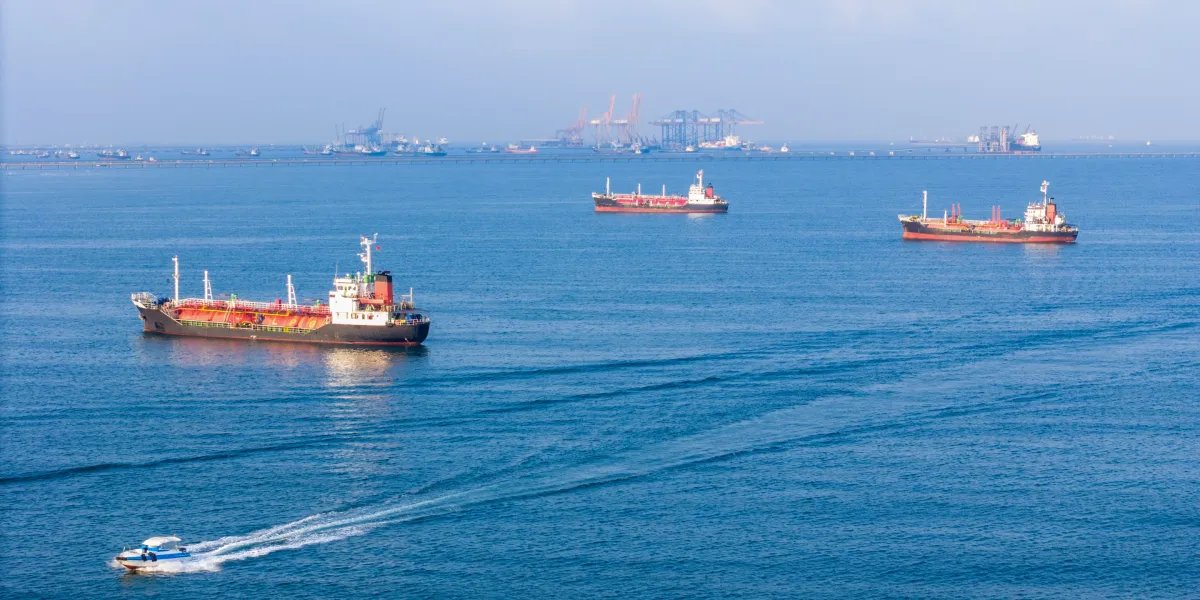
The United States and Israel launched military strikes against Iran on Feb. 28. Since then Tehran has effectively paralyzed vessel traffic through the Strait of Hormuz, a critical waterway for oil and gas shipments from the Persian Gulf. Saudi Arabia quickly redirected more than 70 percent of its oil through a pipeline from its eastern fields to western port terminals on the Red Sea.
That allowed Aramco to continue to export millions of barrels per day. The company produced the equivalent of 9.5 million barrels of oil per day in the second quarter, down sharply from 12.6 million barrels in the previous quarter. But it sold that oil for an average of $108 per barrel, a big jump from about $77 per barrel in the first quarter of the year.
Amin H. Nasser, the company’s chief executive, called the past months “one of the most challenging ever in the history of Saudi Aramco.” On a call with investors he credited the pipeline in part with allowing Aramco to limit supply losses.
But now that alternative route, through the Bab al-Mandab Strait, has also become dangerous. On July 20, the Houthis, an Iran-aligned militia in Yemen, declared a blockade on Saudi vessels transiting the Red Sea. The Houthis have claimed attacks on several ships since then.
Much of Saudi Arabi’s oil exports have now rerouted through Egypt, though tankers there have been vulnerable to drone strikes. The Saudi defense ministry said last week the country is forming a military coalition to protect Red Sea shipping from further attacks.
Iran said on Monday that it was holding talks with Oman on temporarily reopening the Strait of Hormuz. President Trump said he canceled a threatened assault on Iran over the weekend, citing possible progress in reopening the strait, and pleas for calm by Saudi Arabia and other allies.
On Tuesday Mr. Nasser said Houthi attacks had “no material impact” on Aramco’s capabilities. But, he added, “continued disruptions” to shipping in the region could damage the global economy.
Aramco’s profits are crucial to Saudi Arabia. The government directly owns more than 80 percent of the business, while its sovereign investment fund, the Public Investment Fund, holds 16 percent, according to Fitch Ratings, a credit ratings firm. Aramco employs more than 76,000 people.
Saudi Arabia’s economy has been hit hard by the war. Gross domestic product fell about 4.8 percent in the second quarter compared with the same period a year earlier, according to estimates released last week by the Saudi statistics authority.
Other oil companies whose refineries and production infrastructure is not as heavily centered in the Persian Gulf had banner performances in the second quarter. Exxon Mobil, the largest U.S. oil company, reported $14.5 billion in profit, more than twice as much as the previous year. Chevron’s profit surged to $12.1 billion, from $2.5 billion a year earlier.
Also on Tuesday, the British oil giant BP reported it had doubled its profit from a year ago. The company said its preferred measure of earnings were $5.7 billion for the second quarter.
Meg O’Neill, BP’s chief executive, said on Tuesday the company has “more to do” despite the profits, which were better than expected.
“We need to take a clear look at ourselves and assess what is holding us back,” Ms. O’Neill said on a call with journalists.
In May, investors were taken by surprise when BP’s board abruptly fired the company’s chairman, Albert Manifold. Ms. O’Neill declined to discuss the decision on Tuesday. She said the company was working to reduce debt and streamline its operations.
As part of that, BP announced last week it would exit from the North Sea after more than six decades of production in the oil and gas basin off the coast of Britain.
“This is a significant decision, but it’s one taken pragmatically and unemotionally,” Ms. O’Neill said, adding that the company would not hold on to assets because of “legacy attachment.”
President Trump this week bristled at the financial windfall for oil companies, and called out the two top U.S. companies by name.
“Chevron, too much money. Exxon Mobil, too much, too much money,” Mr. Trump said in the Oval Office on Monday. “They ought to give some of that back to the public, and they better cut the retail price, the consumer price,” he said.