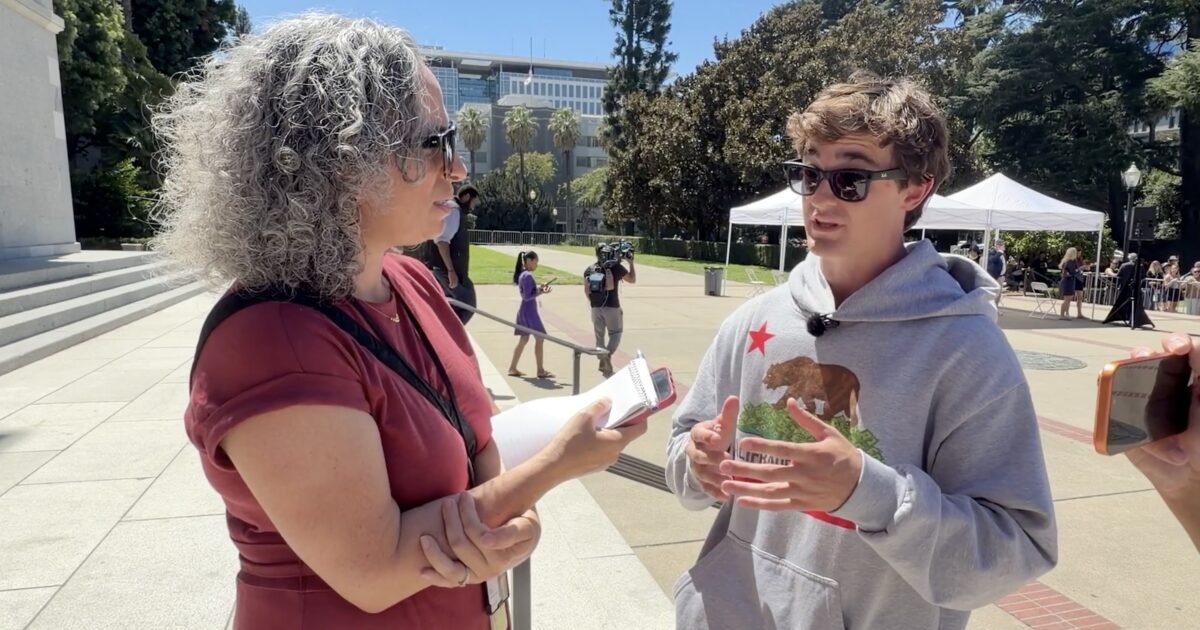

Independent journalist Nick Shirley turned the tables on a New York Times reporter who repeatedly pushed the Democrat defense of California’s so-called “Stop Nick Shirley Act.”
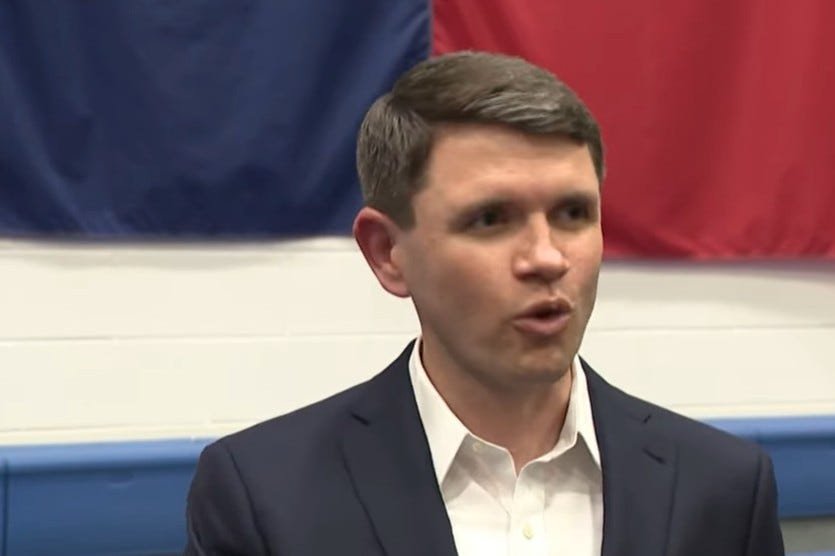
Independent journalist Nick Shirley, the 24-year-old YouTuber whose viral reporting on empty Somali-run “learing centers” in Minnesota and hospice schemes in California helped blow open a national fraud scandal, was interviewed by NYT reporter Laurel Rosenhall outside the State Capitol after a rally against Assembly Bill 2624.
Rosenhall is The Times’ Sacramento-based California politics correspondent. She showed up with a notepad. Shirley showed up with a camera, a “Califraudia Republic” hoodie, and a simple question the paper of record could not answer: why is California writing a law that protects the people spending public money instead of the people exposing how that money disappears?
Shirley posted the clip Thursday with a caption that said it all:
“Here is the New York Times realizing they are advocating for a law that would effect journalism and fraud from being exposed.”
Rosenhall starts in defense mode. According to her, lawmakers maintain that the bill was already being developed before Shirley traveled to California.
Shirley immediately shot back: “Not true.”
“Because I announced on January 31 that I was coming to California,” Shirley explained. “I had already filmed the videos. The word had already gotten out that I filmed inside these immigration support service providers, and then they created the bill before I published the video.”
Official legislative records show Democrat Assemblywoman Mia Bonta introduced AB 2624 on February 20, approximately three weeks after Shirley says he publicly announced his California investigation. Bonta is married to California Attorney General Rob Bonta.
Rosenhall continued pressing the Democrat talking point, telling Shirley that immigration-service providers claim they had experienced problems “for quite a long time” and were supposedly unaware of his work when they decided the legislation was necessary.
“It’s a lie, quite frankly,” Shirley responded.
Shirley argued that California already has laws against doxxing and threatening people and warned that AB 2624 creates a special protected class for virtually anyone associated with an immigration-service organization.
“There’s no need for this bill,” Shirley said. “They’re making a protected class by specifically saying immigration support service providers.”
The enacted legislation defines “immigration support services” broadly to include legal representation, advocacy, case management, humanitarian relief, referrals, translation, counseling, and healthcare.
Even more troubling, the law’s definition of a protected provider includes a person who “provides, assists in providing, or receives” those services.
The law also defines protected “personal information” to include names, physical descriptions, photographs, video footage, telephone numbers, employment histories, license plate numbers, and financial information.
Rosenhall then claimed that individuals could not simply receive the law’s protections automatically and suggested they would need law-enforcement approval.
But that is not the full story.
Under the enacted text, a restraining order is only one possible form of documentation. An applicant may alternatively submit a certified statement from the immigration-service organization, or from the employee or volunteer claiming to have experienced threats or harassment, along with a sworn statement of fear. Knowingly submitting false information is classified as a misdemeanor.
Shirley warned that the system could be exploited by someone attempting to conceal fraud.
“Imagine a fraudster who knows he’s committing fraud,” Shirley said. “He’s like, ‘Oh, well, now under this bill, if I’m committing fraud, I’m just going to go enroll in this program.’”
The New York Times reporter then pointed to language stating that posting information becomes unlawful when it is done with the specific intent to incite violence or issue a threat.
“If you’re just posting it for information to inform the public, that wouldn’t be a violation, would it?” Rosenhall asked.
Shirley responded by raising the nightmare scenario facing independent journalists: Who ultimately gets to decide what the journalist intended after an unrelated third party responds to a report?
The harassment standard in the bill, he noted, includes “unwelcome visitation” and “unreasonable fear.”
“If I go expose a fraudster, are they going to be fearful? Well, of course.”
Rosenhall reached for the last talking point: the ban only applies if someone posts information “to incite violence or make a threat.” Informing the public, she suggested, would be fine.
Shirley asked the question the New York Times never asks about Democrat legislation.
“Who’s to say that? … If I expose it and then I expose it to somebody else and then a third party comes in and incites violence or harassment, what does that mean? That means that they could literally hire somebody to go commit the crime and say that third party was because of Nick Shirley, then Nick Shirley is responsible for that crime, and then we’re gonna give Nick Shirley a $4,000 fine.”
He put it on her.
“So you as a journalist, if you go expose a Learing Center — do you know what a Learing Center is?”
She admitted she had watched his videos. He finished the thought.
“If you go expose a Learing Center where there’s no kids at the daycare, they receive $1.9 million, and it just opens up a whole entire fraud ring, and then I expose it, a bunch of other people come in and say someone throws a — I don’t know, say somebody paintballs the building, right? They cause fear for that building, and then you’re responsible for the actions of a third party. But that fraud was real. It completely breaks the trust and the amendment of the freedom of the press by putting other crimes upon another person for reporting the truth.”
Rosenhall goes quiet and has to allegedly stop the interview, according to Shirley.
WATCH:
Here is the New York Times realizing they are advocating for a law that would would effect journalism and fraud from being exposed pic.twitter.com/AQ88oUZziu
— Nick shirley (@nickshirleyy) August 27, 2026
Independent reporter Jonathan Choe, standing a few feet away, later identified her by name and said he was “shocked she was this clueless.”
Libs of TikTok summed up what millions of viewers saw: Shirley “leaves NY Times reporter SPEECHLESS after she attempts to defend the Stop Nick Shirley Act.” Then the interview ends.
The paper that lectures America about “democracy dying in darkness” could not finish a sidewalk conversation with the kid they spent months smearing as an “influencer.”
The NY Times reporter is Laurel Rosenhall. I was next to them during this exchange. Shocked she was this clueless. pic.twitter.com/Nfudglibp8
— Jonathan Choe (@choeshow) August 27, 2026
Ad block users: Some site features may not work correctly while an ad blocker is enabled, because they break scripts and content this website depends on. If you can’t see comments below, for example, please disable your ad blocker.