A novelist I know recently wanted to do something that is now forbidden in Russia: publish a story about two women in love.
To do so, she had to hide her characters’ genders by writing in the present tense (present-tense verbs carry no gender in Russian) and by choosing names that both men and women use, Sasha, say, or Zhenya. Yet only a few years ago, none of these linguistic gymnastics were necessary. From the late 1980s through the first two decades of President Vladimir Putin’s rule, literature enjoyed near total freedom in Russia.
That may surprise those familiar with the Kremlin’s systematic takeover of journalism, television, movies and more. But consider that before 2024, Ficbook, the internet’s largest Russian-language fan fiction archive, contained an easily accessible trove of gay fantasies depicting Mr. Putin getting intimate with other world leaders, including President Joe Biden and President Emmanuel Macron of France. My first book, “We Will Meet Again,” featured an array of anti-Kremlin and queer characters and was published in 2020 without a single cut.
But after Mr. Putin declared all-out war on Ukraine in 2022, he unleashed a devastating crackdown on free speech at home. That was initially confined to criticism of the war. Over time it spread, attacking a range of cultural expression. Now, for the first time since the Soviet era, the Kremlin is placing literature squarely in its cross hairs.
On Sept. 1, new professional standards go into effect in Russia, dictating what it means to be a writer. A writer, the standards say, is anyone who “realizes the artistic concepts in a literary work,” and those who “revise (process, dramatize) literature,” including proofreaders. If such a person wants to receive certain grants, be eligible for state-funded literary awards or receive a government pension, he or she must now possess state-sanctioned knowledge of Russian history and culture and receive a degree from a university.
This is not merely bureaucratic theater. The consequences will be far-reaching. After all, many of Russia’s literary giants — Joseph Brodsky, Anna Akhmatova and Ivan Bunin among them — never obtained a college degree. Lawmakers have made no secret of the reason these standards exist. Literature is “a matter of state importance,” they wrote, central to the country’s identity. The Kremlin must control it.
Shortly after the full-scale invasion of Ukraine, Russia’s Parliament outlawed all forms of “L.G.B.T. propaganda,” and the authorities set up an “expert center” to determine whether books were in compliance. The center created lists of objectionable literature that included Russian classics by Fyodor Dostoyevsky, as well as works by Western authors like Susan Sontag and Stephen King. Last year, police used the law as a pretext to raid publishing houses in connection with a teen romance novel with L.G.B.T.Q. themes. Then prosecutors charged three employees with “extremism” for their role in distributing that book and others like it.
The employees’ predicament became known as the Publisher’s Case, seemingly the first criminal case brought over the content of books since the collapse of the Soviet Union. The case ended this month after the employees spent a year under house arrest, pleaded guilty, surrendered tens of thousands of dollars in fines and received suspended prison sentences of up to four years.
Strikingly, the books at the heart of the case broke no laws at the time of its publication. Mr. Putin signed the “L.G.B.T. propaganda” law at least a year after they were published. That is precisely the point: The Kremlin is creating an environment of uncertainty and fear, based on arbitrary punishment. The aim, in the publishing industry and beyond, is to promote self-censorship and eliminate dissenting speech.
Reporting this piece felt like a foray into investigative journalism. To communicate with writers still inside Russia, I exchanged voice messages that disappeared in an hour. One writer would speak to me only through an intermediary. A dozen others did not answer at all. No one explicitly refused to speak with me — a refusal would have had to be put into words — and the silence tells its own story.
From relative safety abroad, Russian exiles can test the boundaries of free speech in their home country. When they speak openly and often about literary censorship, the government brands them “foreign agents.” (Russia’s Ministry of Justice did this to me 10 days ago.) At one point, the best-selling Russian author Alan Charoit, a transgender man who now lives in France, planned to send copies of his fantasy novels to friends to distribute at home. But after the Publisher’s Case he abandoned the idea, because he “refused to take part in the system,” he told me.
In 2022, the line between acceptable and unacceptable speech was clear. That year, three poets who performed antiwar verses at a monument to the poet Vladimir Mayakovsky were brutalized and imprisoned. When the writers Boris Akunin and Dmitry Glukhovsky became outspoken critics of the war from abroad, they received lengthy prison sentences in absentia. Today, you no longer need to speak publicly against war to fall afoul of the Kremlin. You no longer need to be a prominent person. You need only to be involved with a text — as a writer, an editor, a publisher, a distributor, a vendor — that the authorities take issue with, now or in the future.
Nobody knows where the lines are anymore. The rules must be interpreted not only for what they prohibit today but also for what they make possible tomorrow. When a law that expanded what constitutes “drug propaganda” took effect earlier this year, publishers started using artificial intelligence to review manuscripts and the books in their archives for compliance. The systems flagged classics by Alexander Pushkin, Mikhail Bulgakov and Leo Tolstoy, which suddenly appeared on Russian e-book platforms with drug-related warnings.
On Sept. 1, the danger is not that writers in Russia who fail to meet the state standards will suddenly be forbidden from writing books. The danger is that publishers will think twice before working with them. Unsanctioned writers books’ simply won’t be released, and a generation of new voices may disappear before they are ever heard.
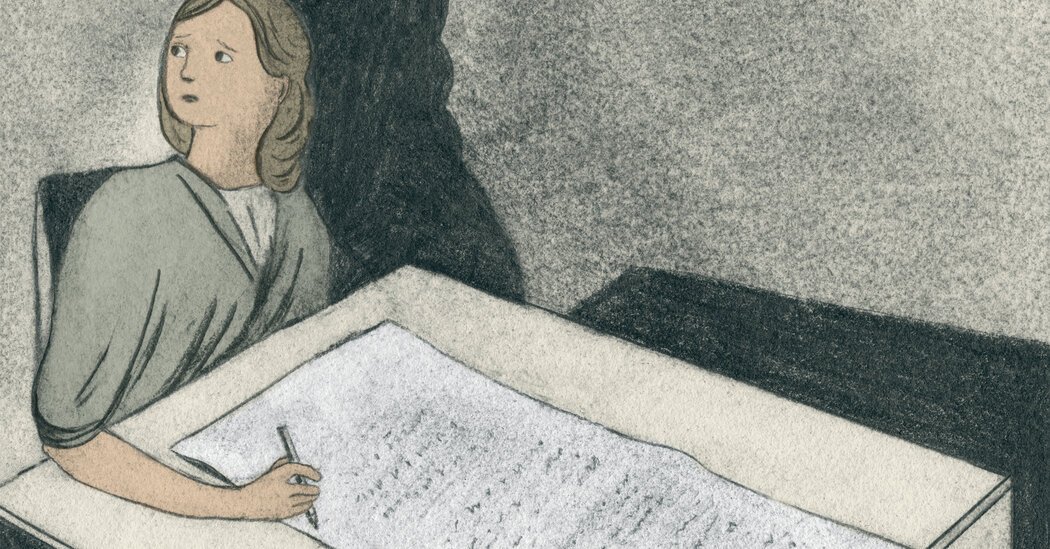
The novelist in Moscow used an old Soviet expression to explain that now writers must produce two books at once. There’s the one that can be published and the one “v stol” — “for the drawer.”