
Star Wars Zero Company provides a deep mission system where players can interact with several activities, manage time, and progress through the campaign. There are three main aspects to the game’s mission system, namely Operations, tactical missions, and Cycles. Each of these aspects complements one another, as one requires everything else to function.
This article goes over how cycles, missions, and operations work.
How do missions and cycles work in Star Wars Zero Company
Missions and cycles go hand-in-hand in terms of their mechanics in the game.
A “mission” refers to an encounter where the player must engage in combat to progress the campaign.
With each mission, a cycle is completed, allowing players to enter a new cycle in the campaign. Cycles are the progression/time system in Star Wars Zero Company, and can only be triggered with tactical missions.
To look for a tactical mission, go to the Holotable in your Den, and look for the mission nodes within the “Mission” tab that have a “red hourglass” icon on them.
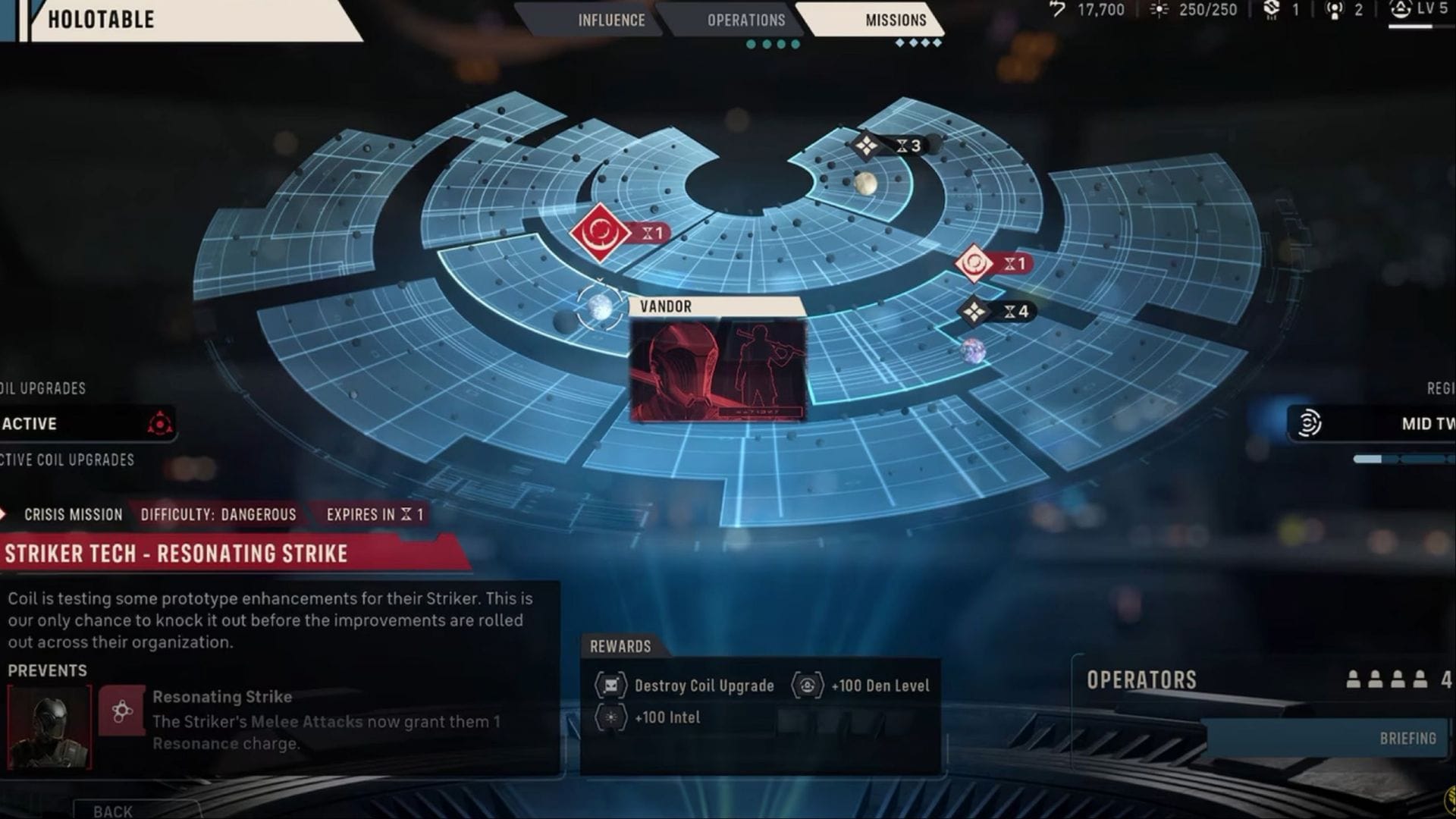
At any stage, there can be multiple such missions to choose from. However, you have to do only one of them to advance through the campaign and enter a new cycle.
What are operations, and how do they work in Star Wars Zero Company
Operations are different from tactical missions in many ways, primarily with the aspect of being text-based missions rather than interactive combat missions. However, an operation requires you to make decisions that can affect rewards and bonds you can end up with.
These can be activated from the Holotable as well. Each operation requires a certain amount of “Intel” to activate, a currency that can be earned by completing tactical missions.
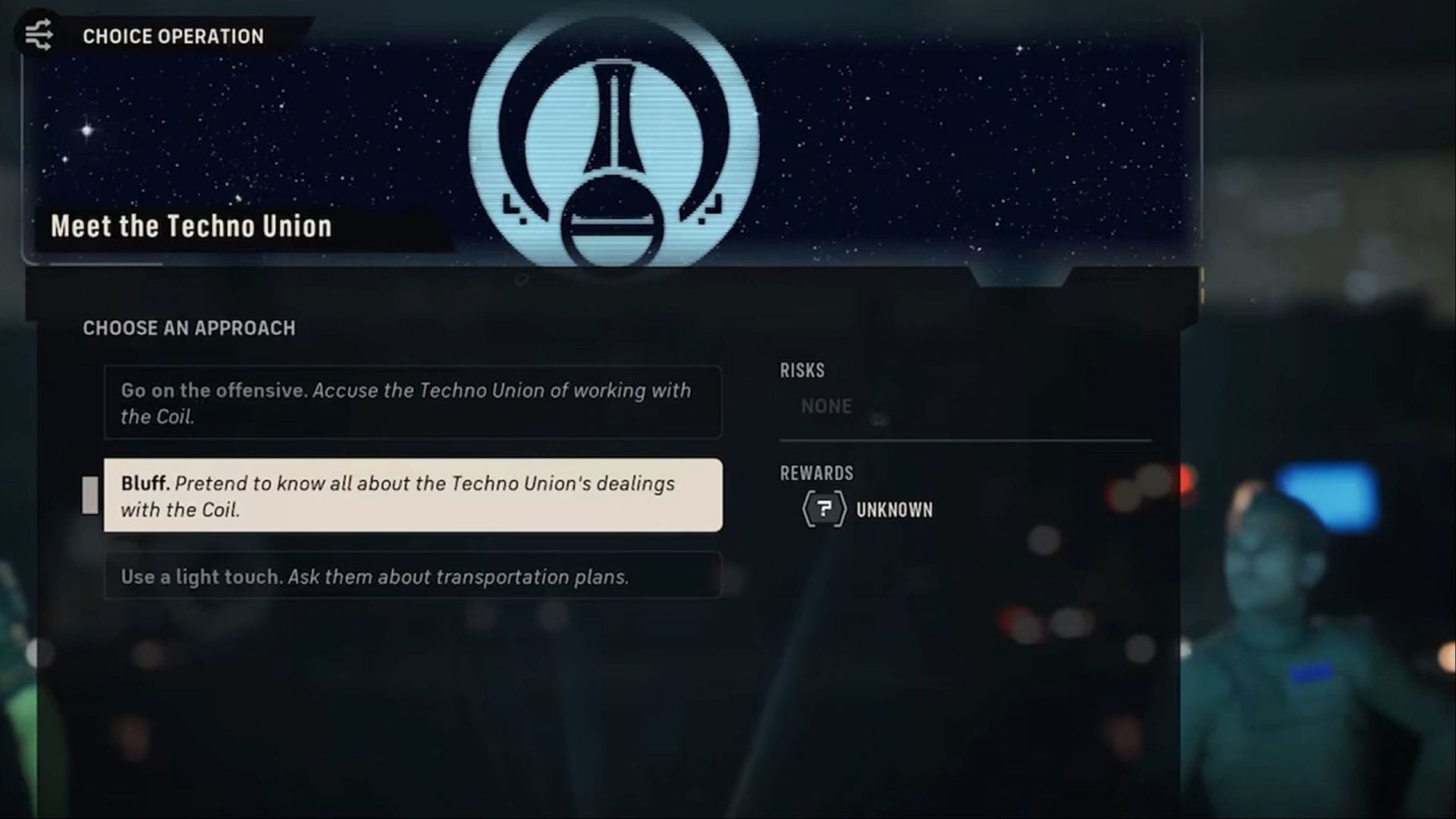
Choosing an option can contribute directly to a Den’s feature, the tactical mission available within the cycle, influence towards a certain race, Exotic weapon mods, or a bond between you and another character.
Follow Sportskeeda for more articles on the game:
Are you stuck on today’s Wordle? Our Wordle Solver will help you find the answer.
Edited by Soumyadeep Banerjee