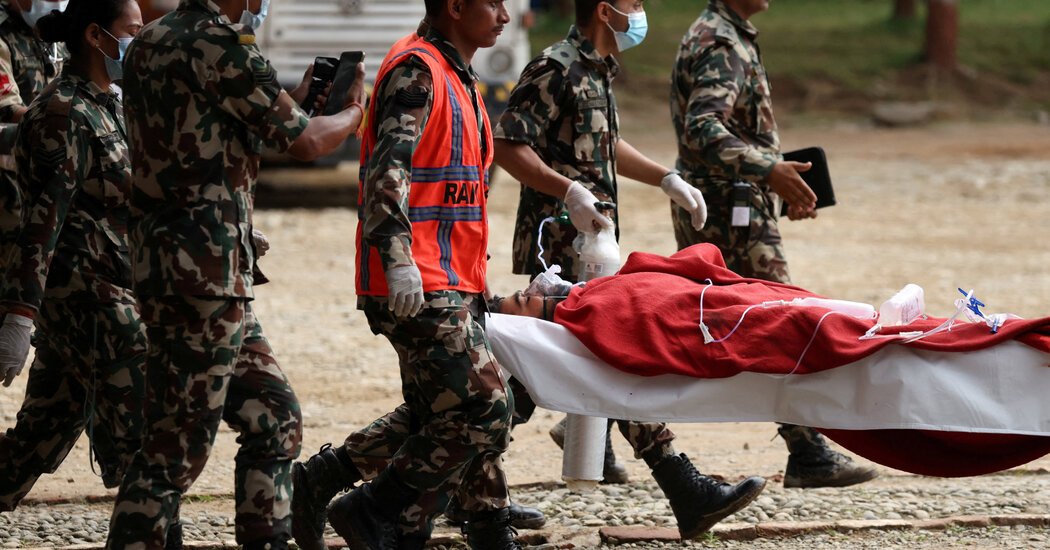
At least two workers trapped in one of the hydropower project tunnels hit by Nepal’s flash flood last week were rescued on Friday morning, an army spokesman said.
Officers from the Nepali Army, with assistance from technical teams sent by India, China and other countries, have been working day and night to make their way through a dense mixture of sludge and mud to bore into the tunnels.
Hundreds of workers have been missing in the tunnels since last Wednesday, when a glacial collapse sent tsunami-like waves of water mixed with rock and debris through two river valleys, killing more than 1,200 people. More than 4,000 people remain missing in Nepal and neighboring Tibet.
Raja Ram Basnet, a spokesman for the Nepali Army, said the workers were rescued from the Trishuli 3A hydropower project.
The Nepali government reported a week ago that more than 900 people were missing in the tunnels, after hydroelectric producers submitted their tally of workers unaccounted for. For days there had been dwindling hope of finding survivors.
To try and get to missing workers, rescue teams have had to dig through dense mud and debris, then bore through thick tunnel doors or walls, or blast them open with explosives. Some of the tunnels were filled with the sludge swept in by the flood
On Saturday, the army said that two thermal drones used by the Nepal Army had not detected any signs of life, but that the search would continue. Late that night, Sudan Gurung, the home minister of Nepal, said on social media that rescuers had reached the crown of the Trishuli 3A tunnel and had started supplying air through the hole while they conducted excavation work.
Nepal has built a robust hydroelectric industry, harnessing the fast-flowing waters in the Himalayas to generate megawatts of electricity. Those projects, which require both manual and engineering work to construct deep tunnel systems, have also attracted foreign investments. Many hydropower projects were built along the Bhotekoshi and Trishuli rivers, which bore the brunt of the flooding.
This is a developing story. Check back for updates.