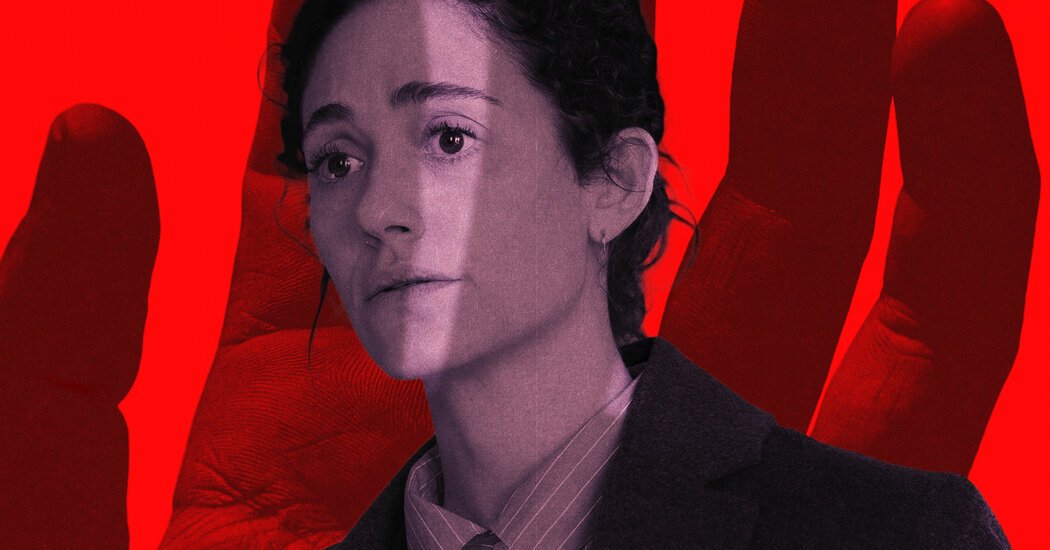
Ms. Rossum, who developed “Furious” along with the show’s creator, Liz Meriwether, plays Alice Black, a former police detective turned F.B.I. special agent who’s sorting through the wreckage of an abusive relationship with another cop. Alice’s superior, Nora Washington, head of the F.B.I.’s sex crimes unit — played with breathtaking command by Quincy Tyler Bernstine — has run out of faith that the system she serves is capable of doing much of anything for the girls it’s supposed to protect. Mx. Petticrew plays Catherine, the terrifying killer who is also a terrified victim; trafficked as a girl, she is seeking revenge against the powerful men who abused her and her closest friend.
“Furious” turns out to be a mystery that’s less about whodunit (we know that from the very first scene) than who’s complicit — an indictment of a social system that damages and discards women and corrupts everyone it touches. It’s the first time I’ve seen onscreen a story that so precisely captures the day-in-and-day-out emotional toll of living in a society that perpetually victimizes, persecutes, undermines and abuses women — the physical, emotional, spiritual grind of it. The show never feels prim, scolding, or woke, but it also could exist only now, after years of the diligent, painful real-world exposure of the realities of patriarchal abuse of power, as demonstrated in the details of the Epstein case. It chronicles how vast, deep and far the corrosion travels, forcing a reckoning not just with what happened to these girls, but with who was entertained by the trauma the girls experienced and who got to look away.
“Furious” is a big-swing show with big-swing characters, who are damaged in lurid, grotesque, highly dramatic ways. But as I watched it, a slide show of scenes from my own life played subconsciously in tandem with the show: a superior’s hand on my thigh under the table at a bar after my first big professional win; showing up to interview a band backstage at the Bowery Ballroom for Rolling Stone and being barred by the bouncer because the band was “waiting for a journalist from Rolling Stone”; feeling a stranger’s fingers go up my skirt and inside my underwear on a crowded subway train, freezing, saying nothing. It also recalled scattered moments from the world I grew up in: that photo of Christine Blasey Ford from behind, facing down a wall of mostly stone-faced dudes on the Senate Judiciary Committee, and Susan Sarandon’s character in “Thelma & Louise,” gun in hand, shaking, and telling an attempted rapist, “In the future, when a woman’s crying like that, she isn’t having any fun.”
“What’s the punishment for people who know what’s happening and do nothing?” Catherine asks one of her captives, and the show doesn’t pretend there’s a satisfying answer. Later, Nora puts it even more bluntly: No one cares about anyone who takes money for sex. “Furious” takes as its premise the grim reality that no one will fix this, and too few people care about the type of sickening, brazenly wide-reaching crimes against women presented here. Yet the show conveys a surprisingly thrilling, almost giddy hopefulness in the act of saying this out loud — in seeing the awareness and recognition of this reality as it passes, like an unspoken password of understanding, between the cop and the killer, then watching it inform and animate these characters’ actions.
There’s a pivotal scene in the sixth episode, one the show builds up to for weeks, after the two leads finally meet and are cornered together in a shower at a women’s shelter. Catherine calls out Alice on the fact that she never formally reported the abuse she suffered at the hands of her boyfriend — and does it in a way that’s so piercing, so perfectly designed to both deepen the bond between them and sharpen the social critique underneath it, that, oddly, I felt my shoulders relax as I watched. I also found myself in tears, shouting at the screen for Alice to explain herself.