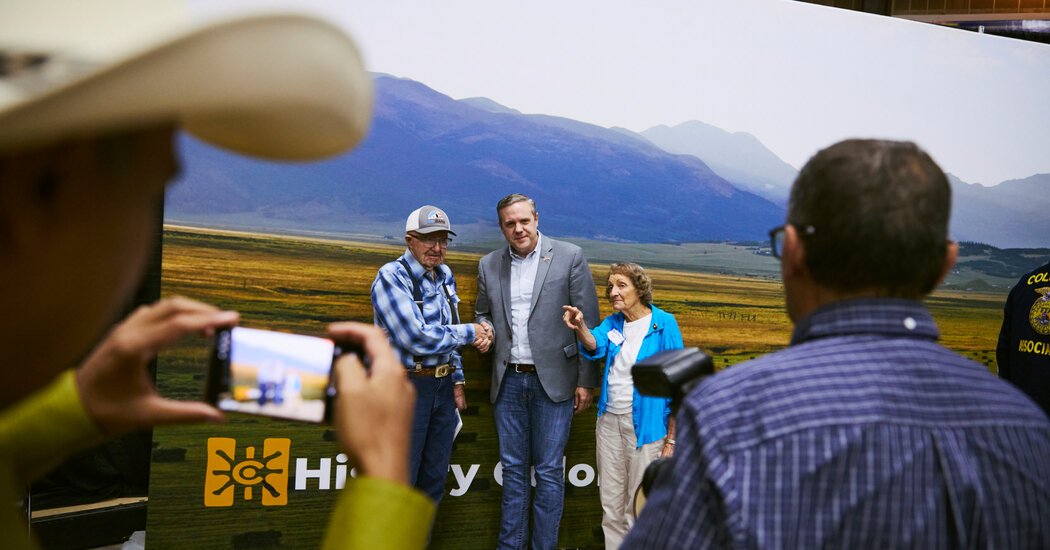
Colorado’s annual state fair in historic Pueblo is a celebration of the state’s deep farming and ranching roots and agriculture’s significant contribution to the state economy, a reality sometimes lost in the public focus on the region’s stunning mountain vistas, adventurous outdoor sports and glitzy ski towns.
This year, the party was a bit muted.
Colorado’s farmers and ranchers are struggling against factors beyond their control, with higher costs for fuel and fertilizer resulting from President Trump’s decision to wage a trade war featuring steep tariffs and an actual war against Iran. In a bid to lower meat prices last month, the president also agreed to allow cheaper beef imports to compete with domestic cattle producers who were finally turning the corner after difficult years.
“For the first time, our cow-calf producers are making a living and being able to sell their calves at a reasonable price,” said Erin Spaur, the executive vice president of the Colorado Cattlemen’s Association, as youngsters showed off their prize hogs in the fair’s livestock exhibition hall. “We believe in fair trade, but we don’t believe this is the best avenue forward,” she said of the administration’s move to temporarily lift duties on beef.
The economic anxieties of these generally conservative Coloradans — as well as voters in similar communities throughout the country buffeted by Mr. Trump’s whipsawing trade decisions — are one reason Democrats are hopeful about their chances of winning control of Congress in November. The party is optimistic about picking up at least one seat in Colorado, and potentially more as the president’s popularity sinks.
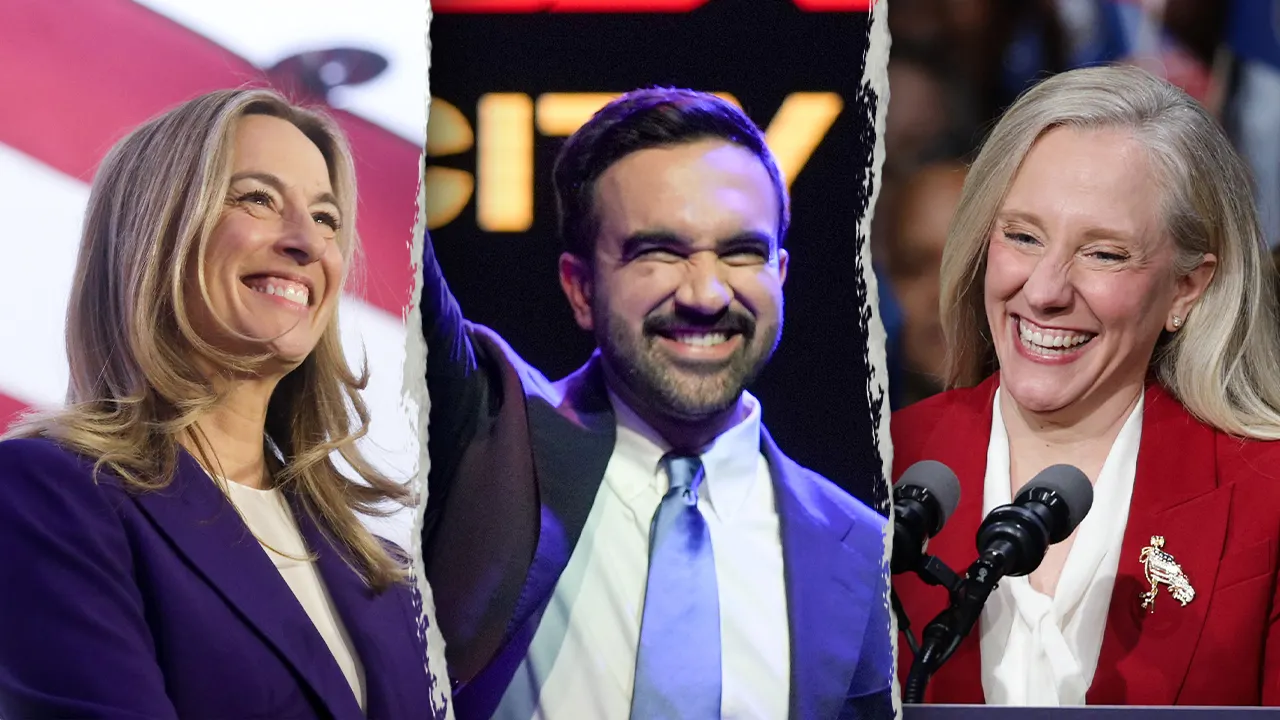
Two House Republicans fighting to hold onto their jobs have responded with divergent strategies — one stressing his opposition to Mr. Trump’s moves and the other hugging him tightly — in a state where the president has grown more unpopular.
In the state’s Third District, which sprawls across almost its entire western half, Representative Jeff Hurd, a first-term Republican, has leaned into his differences with Mr. Trump. Earlier this year, the president unendorsed and then re-endorsed Mr. Hurd, who broke with him and voted in February to end his tariffs on Canada.
“I value the relationship that I have with the president, with the administration, and I support his goals,” Mr. Hurd said during an interview after a fair luncheon recognizing families that have owned their ranches for at least a century. “But at the end of the day, Congress has a role under Article I, Section 8 of the Constitution,” he added, referring to the portion that gives the legislative branch power to regulate trade, “and also, I have a duty to serve the people that elected me.”
In the more competitive Eighth Congressional District immediately north of Denver, with its mix of economically pressed blue-collar workers and ranchers, Representative Gabe Evans, another first-term Republican, has instead emphasized his allegiance to the president. He has been a reliable supporter of Mr. Trump’s tariff policy and blames Democrats, including his state’s governor, Jared Polis, for regulatory restrictions he argues have pushed up fuel prices and contributed to high costs.
“There are national drivers, but here in the state of Colorado, the state has declared war on oil and gas,” Mr. Evans said as he accepted an endorsement from the U.S. Chamber of Commerce at a Mexican restaurant on his district’s border with Denver. “People know that Jared Polis and his Democrats have wrecked this state. They have uniquely wrecked my district, which is based on oil, gas and ag.”
It is a high-stakes strategy in a state where Mr. Trump has grown unpopular after targeting Colorado for its resistance to some of his policies, as well as the jailing of a former county elections official and 2020 election denier before Mr. Polis reduced her sentence under White House pressure. Tariff and trade issues could be decisive not just here in the Rocky Mountains, but also in marquee contests for the Senate in Maine, Michigan, Alaska, New Hampshire and Ohio, as well as competitive House races across the Midwest.
Underscoring the potential for conservative backlash, Senator Mike Rounds, Republican of South Dakota, said ranchers feel like Mr. Trump “pulled the rug right out from underneath” them. “They’re hurt. I mean, they feel like they’ve been let down,” Mr. Rounds told reporters at the Capitol last week.
In Colorado, Mr. Evans is being challenged by Manny Rutinel, a 31-year-old state representative who emphasizes his family’s economic struggles as he was growing up — noting that he used to sell his blood plasma to help pay the bills.
As he mingled with supporters at the popular Tacos Los Viejones Mexican street food stand across from a gas station that showed diesel selling at nearly $5.50 a gallon, Mr. Rutinel said Mr. Evans’s constituents deserved a change given the congressman’s support of White House policies making their lives unaffordable.
“Tariffs are the reason why our grocery prices are soaring at the moment, and they are also at the same time kicking the teeth of our farmers and ranchers and putting their livelihoods at risk,” Mr. Rutinel said. “And Gabe Evans has been in lock step with Donald Trump in enabling these policies that are making life impossible in America.”
The concentration of cattle ranchers in the district has added a twist to the race: Mr. Evans likes to note that, in Mr. Rutinel’s younger days, he was a very public vegan and animal rights activist.
“We have my opponent, who has called for vice taxes on meat, dairy and eggs and says that we have to transition away from animal agriculture and everyone has to eat tofu,” Mr. Evans said. “That doesn’t sell in this district.”
Mr. Rutinel, who very noticeably ate carne asada at the street food stand for the cameras of a local Hispanic food influencer, dismissed the criticism as irrelevant and said his vegan days were behind him.
“The truth is Coloradans don’t care what’s on my plate,” he said in an interview. “They care about being able to afford what is on theirs.”
In the Third District, the Democrat Dwayne Romero, a former Aspen city councilman, West Point graduate and decorated military veteran who is challenging Mr. Hurd, said a single vote against Mr. Trump’s tariff policies hardly makes a maverick of his opponent.
“One alternative vote doesn’t make the man,” said Mr. Romero, the former state director of economic development who has served on multiple local boards. “Doesn’t make the backbone. Doesn’t make the position of defending his constituents. It is almost a throwaway.”
He said Mr. Hurd had been aligned with Mr. Trump on almost every issue, including a major tax and policy measure that included health care and safety net cuts, and that both the congressman and the president have retreated from pledges to lower costs and avoid drawn-out military conflicts. The push to import cheaper beef is just the latest economic weight placed on ranchers by the administration, he said.
“It is really just putting a finger in the eye of our ranching community to import beef at a discounted price just to relieve some of the expense,” Mr. Romero said. “It really is salt in the wound.”
Mr. Hurd conceded that ranchers in the district were alarmed by the White House policy coming after they thought they had weathered the worst: contending with drought, wildfires and the voter-mandated reintroduction of wolves to the mountains. He said he believed those ranchers recognized that he would do what he can to back them.
“The people that I represent, at the end of the day, I trust them,” Mr. Hurd said. “I trust them to see me as somebody who reflects their values.”
As Democrats try to take over these districts, that is one of their chief obstacles: persuading Republican-leaning voters that it is time to make a change.
Jake Bachman, a coffee shop owner and rancher from Johnstown, whose son, Gavin, was showing his lambs at the fair, said the economic pressures were formidable, but he was still backing Mr. Evans over the Democrat.
“We are getting squeezed,” he said. “Obviously, costs across the board are going up. Sometimes it is like when there’s a flood: You are doing the best you can to try to stop some of it, even though you may not be able to stop all of it. That’s what it feels like.”