Crude oil futures are trading higher, with the current price up $1.27, or 1.39%, at $92.75. The high price reached $93.29, while the low was at $90.87.
Technically, the price moved lower earlier today, but the decline stalled near the rising 100-hour moving average, currently at $91.04. Holding that moving average gave buyers the go-ahead to push the price back to the upside.
The rally extended above the 50% midpoint of the move down from the April 2026 high to the July low. That retracement level comes in at $92.47. However, buyers have so far been unable to extend above the swing highs going back to June 10 near $93.50.
That makes the area between $92.47 and $93.50 the key technical barometer for buyers and sellers going forward.
A sustained move above $93.50 would strengthen the bullish bias and open the door for additional upside momentum. The next major target would be the June 3 swing high near $97.00. Above that level, the 61.8% retracement of the April-to-July decline comes in at $98.41.
Conversely, if the price cannot break through $93.50 and rotates back below $92.47 (50%) with momentum, the failed break would be a warning sign for buyers. That would shift attention back toward the rising 100-hour moving average at $91.04 currently.
As long as the price remains above that moving average, buyers retain more control over the short-term technical bias. However, a break below it would weaken the bullish structure and could encourage additional selling toward the swing lows from Friday and Wednesday near $88.72.
The technical battle is centered on the $92.47 to $93.50 area. Move above it, and buyers increase their control. Move back below it, and the sellers would have an opportunity to take back more some control – at least in the short term.
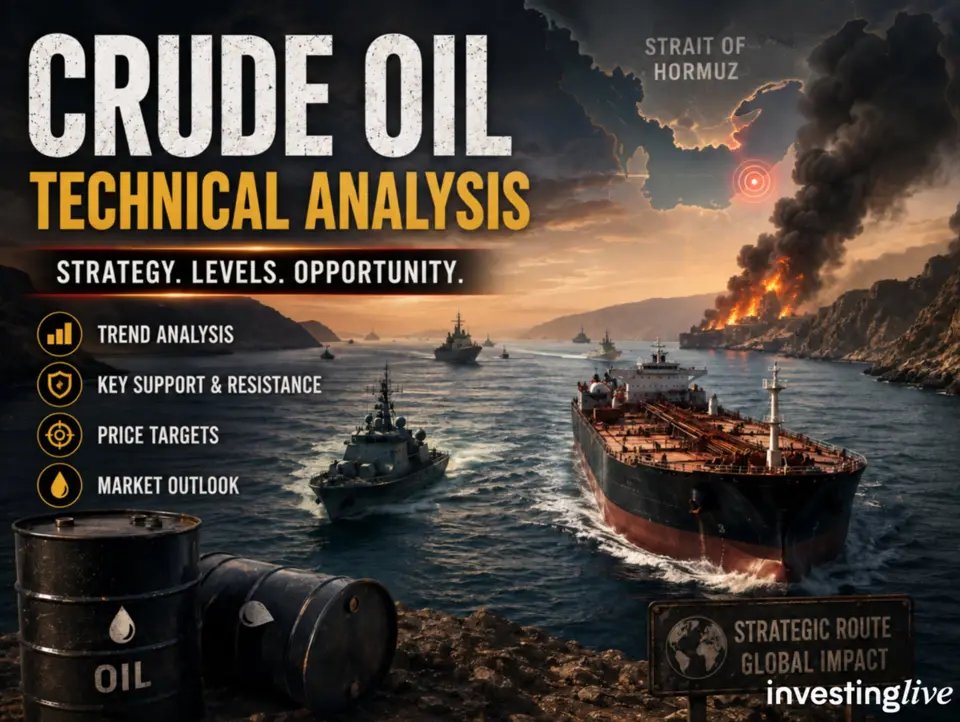
The fundamental backdrop remains supportive as tensions between the United States and Iran escalate around the Strait of Hormuz.
Over the weekend, U.S. forces struck three Iranian oil tankers, including one near Iran’s key Kharg Island export hub. Iran’s Revolutionary Guard said it responded by targeting three tankers traveling through what it called unauthorized routes, along with three U.S. vessels elsewhere in the region.
The renewed attacks have increased concerns that the disruption to Middle East oil supplies could last longer than previously expected. An average of only 10 commodity vessels per day passed through the Strait of Hormuz during the past 10 days—the lowest level since May. The strait historically handles about one-fifth of the world’s oil supply.
Iran has also said it plans to establish a new restricted zone near the Strait of Hormuz. Any additional restrictions or attacks on commercial vessels would increase the risk premium built into crude oil prices.
Meanwhile, OPEC+ left its October production policy unchanged over the weekend. That decision provides little immediate relief for a market that is increasingly focused on shipping disruptions and the potential for a prolonged reduction in Middle East exports.
For traders, the geopolitical news provides the fundamental support, but the technical levels still determine whether buyers can extend the move. The market now needs to break decisively above the $92.47–$93.50 resistance area to open the door toward $97.00 and potentially $98.41.