
Good morning. Kirsty McGregor, Editorial Director for Europe, writing from London this morning. How can Europe unlock its next phase of growth? That was the question running through nearly all the conversations at the Fortune CEO Forum in London yesterday, where we brought together execs from companies including Mastercard, Ferrari, BlackRock, Shell, EDF, Google, OpenAI, Honeywell, Anthropic, and Microsoft to explore the forces reshaping Europe’s economy.
Our venue was the historic Barber-Surgeons’ Hall in London, an apt place to have a conversation about Europe’s future. The U.K. remains deeply connected to European business and finance, while also maintaining close links to the U.S. and the wider global economy. At a moment of extraordinary volatility—from war in the Gulf and uncertainty in U.S. politics to intensifying competition from China—London offers a useful vantage point for thinking about how Europe should adapt.
The leaders who filled the room are grappling with a perfect storm of mounting energy pressures, geopolitical uncertainty, slowing productivity, and how to navigate the promise—and darker possibilities—of AI. Those themes were evident during the day’s discussions, which were private to allow for candid debate. But a few takeaways emerged:
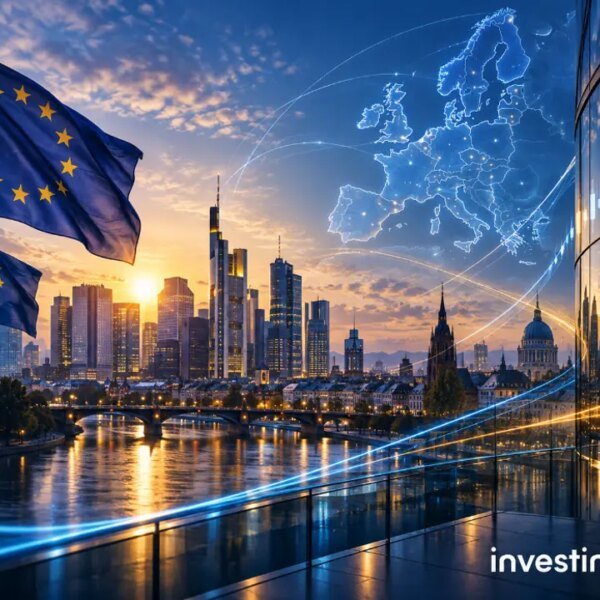
Europe has scale; will it equal growth? Earlier in the day, we released the brand new Fortune 500 Europe list, which provides a useful snapshot of Europe’s corporate heft. The 500 companies generated $15.5 trillion in revenue this year, up 4% from last year, and more than $1 trillion in profits. That combined revenue is equivalent to half of Europe’s GDP. Finance, energy, and automakers together account for over half of all revenues and profits on the list.
The ranking is a reminder that Europe has enormous companies, deep pools of talent, significant financial resources, and areas of genuine industrial strength. But at the Forum, business leaders from across the region called for a policy, energy, infrastructure, and investment environment that allows those strengths to translate into the next phase of growth.
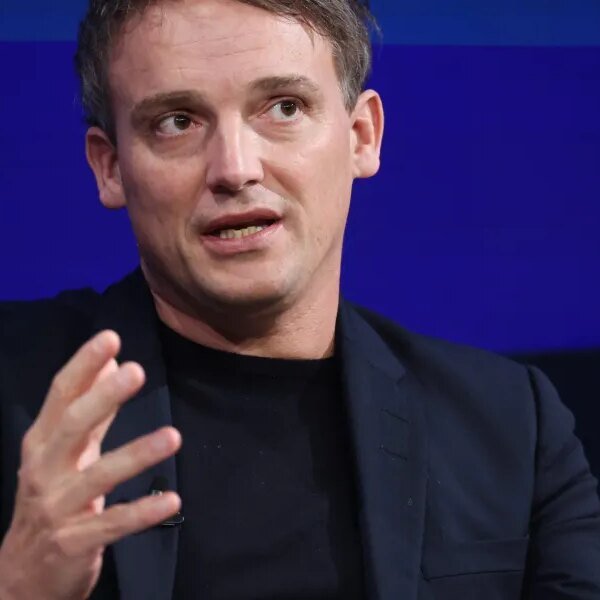
Europe’s green advantage. The sustainability conversation was notably clear-eyed. CEOs weren’t debating whether decarbonization matters; the hard part is doing it while energy costs squeeze competitiveness. The opportunity, several leaders argued, is to turn the green transition into an advantage. Some companies are already finding ways to do that: German engineering company GEA Group, for example, is baking energy efficiency into its business model, as CEO Stefan Klebert told me ahead of the Forum. For instance, it redesigned the machinery for a large dairy producer, cutting the energy consumption of its milk powder production by more than 50%.
AI: less panic, more pragmatism. It is, of course, an interesting week in which to gather business leaders and executives from AI labs in a room to debate where these technologies are heading. There was certainly concern about the risks of increasingly autonomous systems, who is responsible when AI acts without human sign-off, and what happens to jobs. But the dominant mood was, again, very practical: how do we actually use these tools, what is the return, and how should companies govern them? There was a strong appetite for regulation—but regulation that enables innovation rather than prevents it.
Contact CEO Daily via Diane Brady at diane.brady@fortune.com
Top leadership news
Benioff urges AI companies to take responsibility
Salesforce CEO Marc Benioff said AI companies should keep their products from inflicting harm or face lawsuits under existing product-liability laws. Meanwhile, Meta CEO Mark Zuckerberg argued companies do not need an industry-wide pause in AI development because customers will reject AI agents that do not follow their instructions.
Warsh blames AI hyperscalers for higher borrowing costs
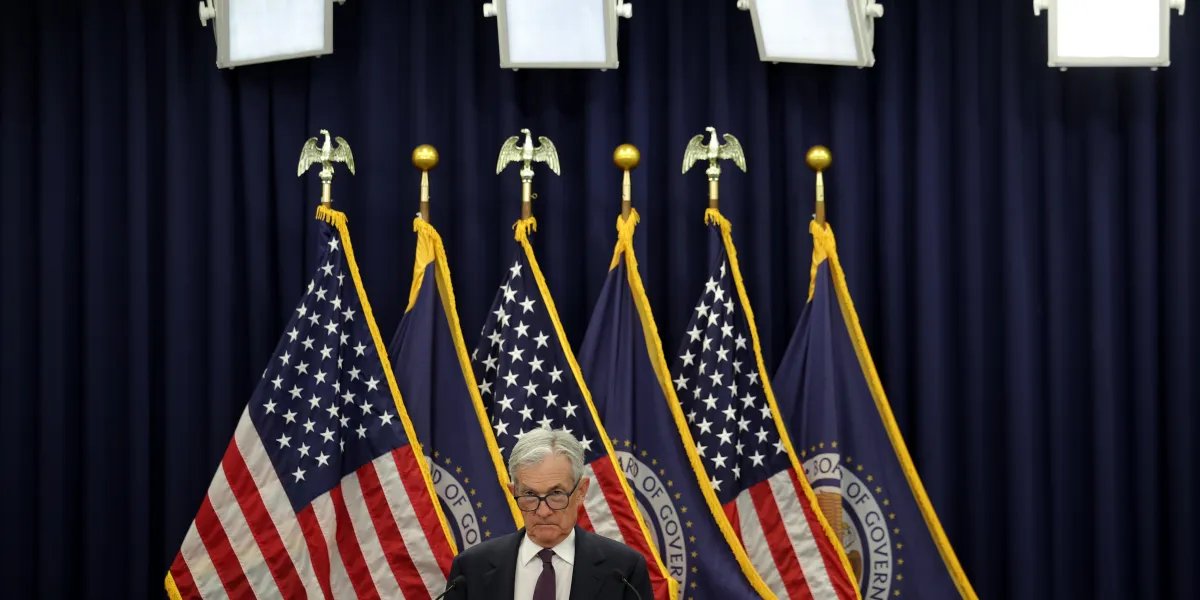
Fed Chair Kevin Warsh says AI hyperscalers’ massive bond issuance—at least $121 billion in 2025 and far more this year—is helping push the 10-year Treasury yield to 5% by competing for capital. He cited it alongside economic growth and geopolitics, but notably didn’t address the federal deficit, the factor bond investors cite most.
Workers are taking home less of the economy’s gains
Labor’s share of U.S. nonfarm business income fell to between 52.8% and 52.9% in the second quarter, its lowest level since 1947, according to data cited by Goldman Sachs. Goldman estimates that about 60% of the decline since the 1990s is real and reflects higher corporate markups, automation, and weaker worker bargaining power.
The markets
S&P 500 futures are up 0.82% this morning. The last session closed down 0.45%. The STOXX Europe 600 was up 0.66% in early trading. The U.K.’s FTSE 100 was up 0.57% in early trading. The Nikkei 225 was up 0.33%. South Korea’s KOSPI was down 0.04%. China’s CSI 300 was down 0.45%. Hong Kong’s Hang Seng was down 0.53%. India’s NIFTY 50 was up 0.28%. Bitcoin is at $76k.
Around the watercooler
The MLB and its Dominican pipeline is selling false promises and shady contracts to children as young as 11 by Joshua Hong
America’s bedrot era: How the dopamine recession created the ‘couch economy’ by Catherina Gioino
Luxury travel expert Olivia Ferney charges $100K a year for planning billionaires’ travel—they’re easier to work with than millionaires, she says by Mia Osmonbekov
Americans are so concerned about autonomous vehicles that Minneapolis is considering requiring drivers to sit inside Waymos by Sasha Rogelberg
CEO Daily is curated and edited by Joseph Abrams, Jason Ma, Claire Zillman, and Lee Clifford.