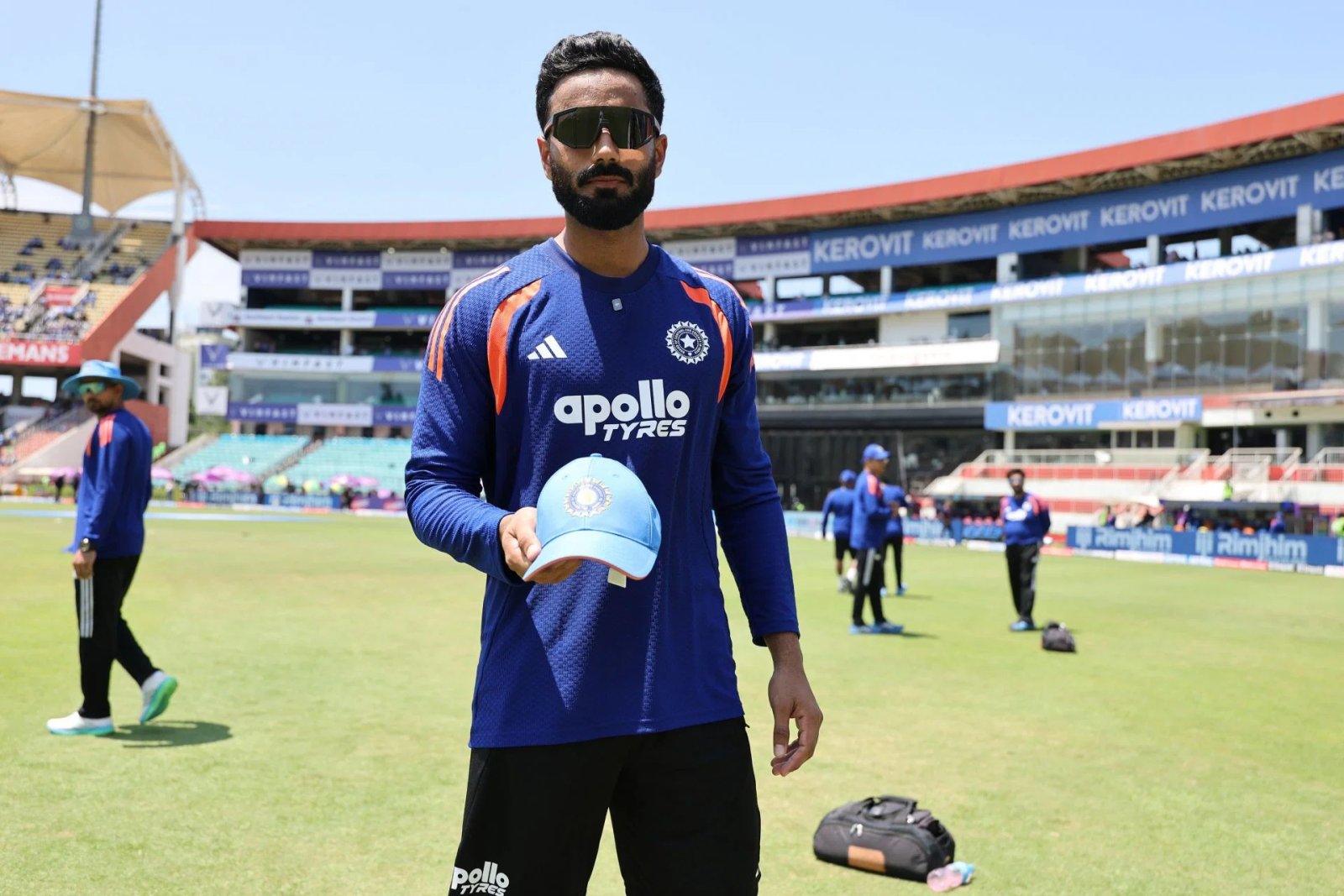

Mumbai Indians (MI) star Naman Dhir is making his international debut in the first ODI between India and West Indies. The opening game of the three-match series is being played on Sunday, September 27, in Trivandrum.
Naman Dhir was included in the 15-member squad and was among the two new faces getting their maiden call-ups. Ahead of the first ODI, he received his India debut cap from skipper Shubman Gill in the team huddle.
The 26-year-old made his domestic debut in 2022 and plays for Punjab across all formats. He made his IPL debut in 2024 and has been an integral part of MI’s setup in the last two seasons. Dhir has played 20 first-class, 14 List A, and 61 T20s so far.
While it is a moment of utmost pride for any player to make his international debut, here are three reasons why India picking Naman Dhir instead of another frontline bowler for the first ODI against the West Indies is the wrong move.
#1 With enough batting depth, India needed another wicket-taking option
With the top order loaded with skipper Shubman Gill, Rohit Sharma, and Virat Kohli, followed by Ruturaj Gaikwad, KL Rahul, and two all-rounders in Ravindra Jadeja and Nitish Kumar Reddy, India have enough depth in the batting. With considerable batting cover, Naman Dhir’s inclusion adds another batting option to a lineup that arguably does not need it as much as it needs bowling depth.
India are playing with just three specialist bowlers in Gurnoor Brar, Prasidh Krishna, and Kuldeep Yadav, along with Jadeja and Reddy as the fourth and fifth bowling options. India’s specialist bowling group is relatively thin, with Mohammed Siraj and Auqib Nabi being the other options in the squad.
In the absence of a senior pacer like Jasprit Bumrah, the Men in Blue needed an extra wicket-taking option. Using a place on another batting all-rounder rather than a specialist bowler could leave India short of wicket-taking options if any of the frontline bowlers have an off day.
#2 Naman Dhir’s bowling is not established enough to compensate for dropping a specialist
Naman Dhir has been picked in the squad as an all-rounder to add to the bowling options. However, Dhir is a batter who has the ability to occasionally bowl when required. His credentials with the ball are not as impressive and his bowling is not established enough to drop a frontline bowler.
In 19 first-class innings, he has 17 wickets at an average of 32.00. Out of the 14 List A games he has played, he has bowled in just eight innings, picking up seven wickets at an average of 37.14. In 61 T20s, he has bowled in just 18 innings, bagging eight wickets at an average of 37.62.
Being a batter who can bowl, India would expect Naman Dhir to bridge the gap between just three specialist bowlers and a bowling attack with other all-rounders. If Dhir is not expected to bowl a substantial workload, his presence effectively means India enter the game with only three genuine frontline bowling options, along with the two genuine all-rounders.
#3 India should not make Naman Dhir solve their balance problem on his debut
Naman Dhir’s ODI debut comes with a lot of responsibility, coming into the side as someone who will be expected to contribute with both bat and ball right from his first outing.
Making his ODI debut in a combination where he could be expected to contribute with both bat and ball puts unnecessary pressure on him, given he is not yet well established as a bowler. With India using him as the sixth bowling option, he will be expected to bowl important overs, which he is not experienced enough for at this stage of his career.
Given the role that he will be expected to play coming into this combination, it is a very different responsibility from the role he has generally played in T20 cricket. Had India gone with a frontline bowler and given Dhir an opportunity later in the series, he would have had a more clearly defined role than having to come in and straightaway be expected to solve the balance issue.
Edited by Rishab Vm