- Daiwa: BOJ shifts focus from reaching 2% inflation to keeping it there, wages hold the key
- MUFG says firmer China growth offers yuan support, but uneven demand limits the upside
- PBOC to run daily overnight reverse repos to Nov 2 in first step after policy rate signal
- Are US Treasuries still a hedge? Citi Australia CEO says the bonds are losing their edge
- ICYMI: Morgan Stanley names Amazon a top pick, lifts target to $350 on five catalysts led by AWS
- China holds loan prime rates for 17th month as policy focus shifts to short-term rates
- PBOC sets USD/ CNY mid-point today at 6.7200 (vs. estimate at 6.6813)
- The Hormuz shipping attacks nobody is counting: inside the US Navy’s go-dark guidance
- JPMorgan brings JPM Coin to Ethereum mainnet: what changes, and what it means for ETH
- BlackRock says French bond sell-off is a lesson in selectivity, upgrades US Treasuries
- Trump holds up Patriot missiles for Ukraine as Russian strikes intensify, officials say
- Explainer: China eyes overnight rate as main policy tool, what it means for markets
- Goldman Sachs sees $25 war risk premium in Brent, forecasts $90 in December and $80 in 2027
- UBS sees euro recovering to $1.16 by year-end, says slide to $1.11 overshoots fundamentals
- UBS says neocloud sell-off does not derail AI boom, favours hyperscalers and chipmakers
- US strategic oil reserve falls to lowest since 1982 as Iran war release drains stocks
- Goldman Sachs estimates central banks bought 79 tonnes of gold in August, led by China
- Bank of Canada preview: Scotiabank expects a 25 bp hike next week despite softer core CPI
- Morgan Stanley IM says bond yields are rising for the right reasons, favours US and Japan
- Goldman Sachs says rising global bond yields reflect a growing competition for capital
Summary:
- China left its one-year loan prime rate at 3.0% and five-year at 3.5% for a 17th straight month, as expected.
- The PBOC set its USD/CNY reference rate at the strongest level for the yuan since 2 February 2023.
- The PBOC will run daily overnight reverse repo operations from 21 October to 2 November, a day after Governor Pan flagged a possible shift to an overnight policy rate.
- Asian equities slipped: the Hang Seng fell about 1%, the Shanghai Composite around 0.5% and the Nikkei about 0.6%.
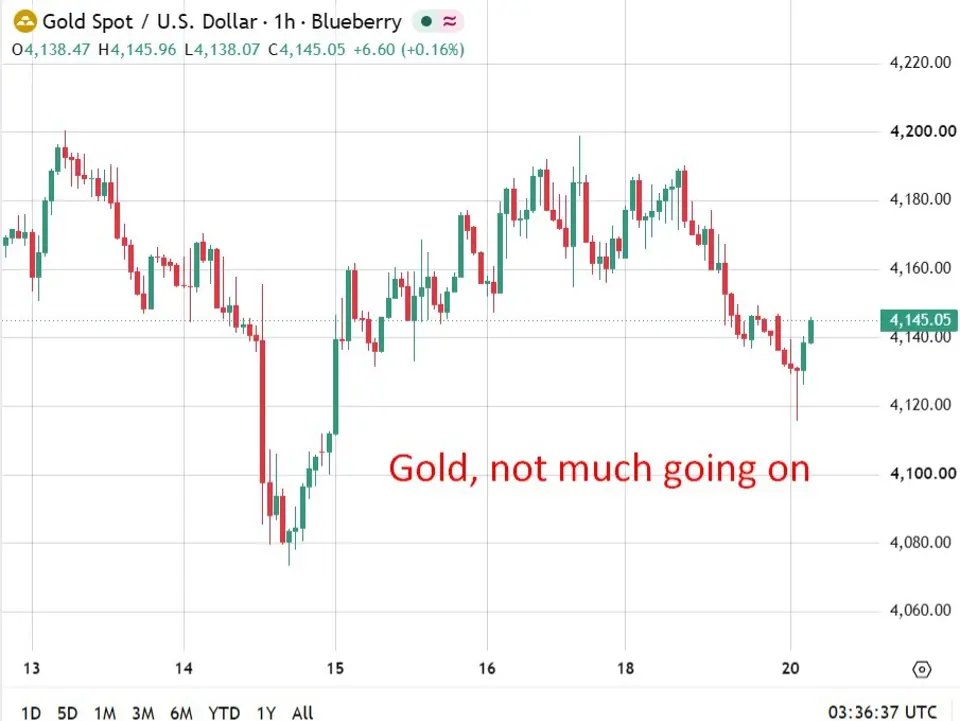
- Oil edged higher with no fresh Middle East news, with WTI near $99 and Brent around $110; gold dipped toward $4,125 before recovering to around $4,140.
- Bank research dominated a light news day, with Goldman Sachs, BlackRock, Morgan Stanley and Citi weighing in on higher bond yields and their role in portfolios.
Asian markets drifted lower on Tuesday in a session light on fresh news, as China kept its benchmark lending rates on hold and guided the yuan to its strongest official fixing in more than three and a half years.
China left its one-year loan prime rate at 3.0% and the five-year rate at 3.5%, extending the hold to 17 months. The decision was widely expected after stronger-than-forecast third-quarter growth reduced pressure for easing. The rates have taken a back seat as policy tools, with the central bank’s seven-day reverse repo rate serving as its main policy signal, though the LPR remains the benchmark for most loans and mortgages.
The bigger policy story came from China’s money markets. The People’s Bank of China said it will conduct daily overnight reverse repo operations from 21 October to 2 November, capped at 1 trillion yuan a day, a day after Governor Pan Gongsheng said the central bank would study making the overnight rate its main policy rate. The rate attached to the operations has not yet been confirmed and will be closely watched for signs of whether a lower policy anchor is coming.
The PBOC also set its daily yuan reference rate at the strongest level for the Chinese currency since 2 February 2023, signalling comfort with a firmer yuan. MUFG said this week that improving Chinese activity offers a more supportive backdrop for the currency, though it cautioned that weak household demand and a deepening property slump could limit the gains.
Regional stocks were softer. Hong Kong’s Hang Seng fell about 1%, the Shanghai Composite eased around 0.5% and Japan’s Nikkei slipped about 0.6%, following last week’s tech-led selling on Wall Street.
Oil prices edged higher despite no new developments in the Middle East, with WTI around $99 a barrel and Brent near $110. Goldman Sachs said last week that Brent carries a risk premium of nearly $25 a barrel above fair value tied to the Iran war, and data showed the US Strategic Petroleum Reserve has fallen to its lowest level since 1982. Gold dipped toward $4,125 an ounce before recovering to around $4,140, with Goldman estimating central banks bought 79 tonnes in August and describing official demand as a structural support.
Bank research filled much of the gap left by the light news calendar, with a common theme of higher yields forcing harder choices. Goldman Sachs said intensifying competition for capital from government borrowing and AI investment has made higher yields the global norm. BlackRock said France’s bond sell-off shows why investors must be selective, and upgraded US Treasuries. Morgan Stanley Investment Management argued yields are rising for the right reasons, reflecting strong growth. Citi Australia Chief Executive Mark Woodruff took a more cautious line on bonds, telling reporters in Sydney that rising supply, sticky inflation and higher neutral rates are making Treasuries a weaker hedge for stocks.
In technology, UBS said last week’s sell-off in specialist AI cloud providers does not derail the broader AI investment cycle, and Morgan Stanley named Amazon a top pick on faster cloud growth.
Geopolitics remained in focus after US officials said Washington has not approved the transfer of Patriot interceptor missiles to Ukraine, the Washington Post reported, amid a dispute over Ukrainian strikes on Russian energy infrastructure.
Looking ahead, attention turns to UK inflation data and Moody’s review of France’s credit rating, followed next week by central bank decisions from the Bank of Canada, where Scotiabank expects a rate hike, and the Bank of Japan, where Daiwa sees a hold but a shift toward keeping inflation anchored at 2%.